How a Briquetting Machine Enhanced Scrap Handling in an Aerospace Machining Facility

Introduction
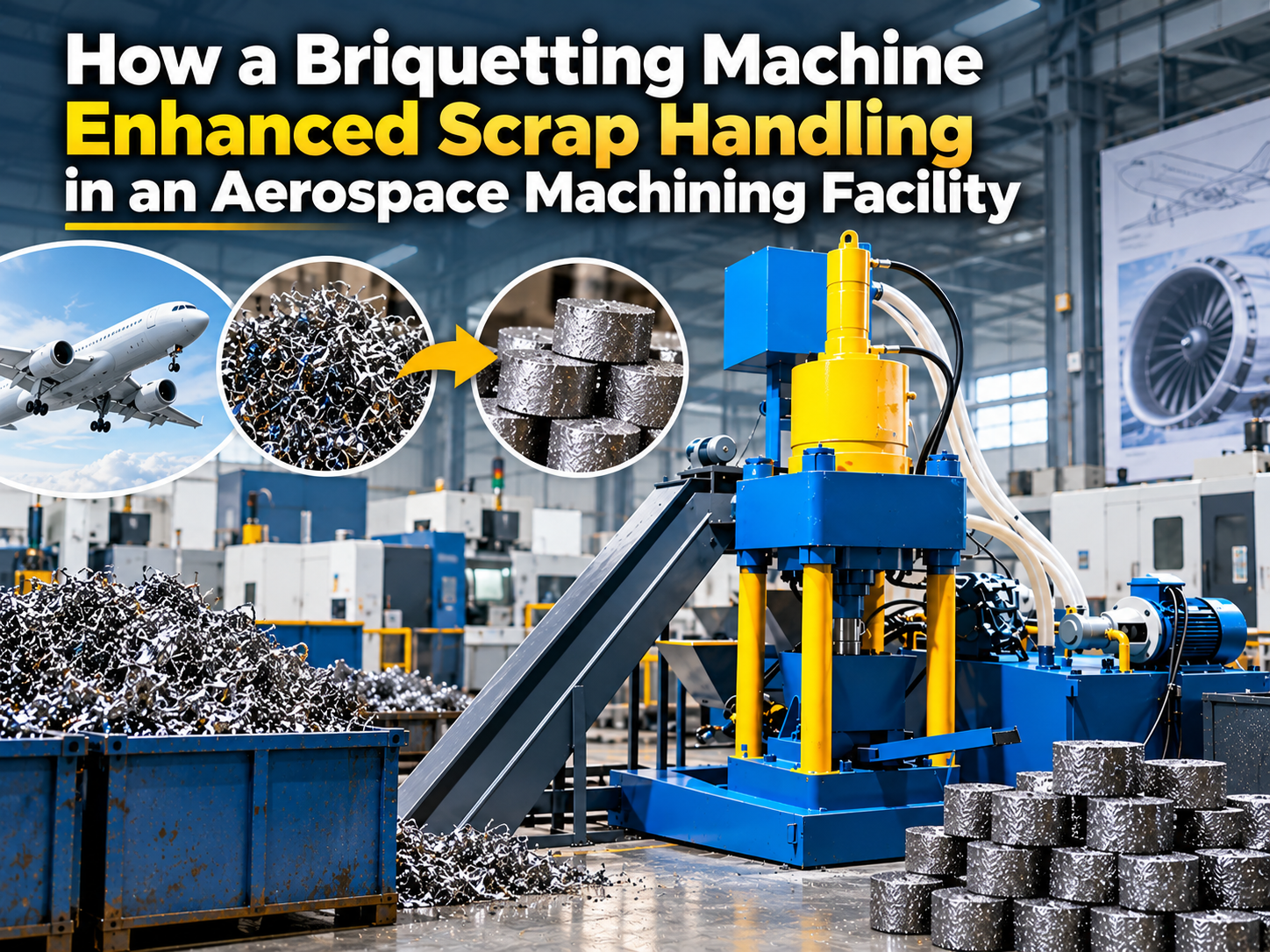
In the high-precision world of aerospace manufacturing, the management of metal waste is often overlooked until it becomes a significant operational bottleneck. Aerospace machining facilities generate vast quantities of high-value metal chips—typically titanium, aluminum, and stainless steel—that occupy excessive floor space and complicate logistics. When a leading aerospace component manufacturer faced mounting costs associated with scrap storage and coolant disposal, they turned to HARSLE for a specialized solution. This article explores how a briquetting machine enhanced scrap handling in an aerospace machining facility, transforming a logistical burden into a streamlined, revenue-generating process.
The challenge for many aerospace shops is the sheer volume of “loose” chips produced during CNC milling and turning. These chips are bulky, saturated with expensive cutting fluids, and difficult to transport. By integrating a high-performance briquetting press, the facility was able to compress these loose materials into dense, uniform pucks. This transition not only reduced the physical footprint of their scrap yard but also allowed for the reclamation of thousands of gallons of coolant, significantly lowering their environmental impact and operational overhead.
As we delve into this case study, we will examine the technical mechanics of the briquetting process, the specific advantages realized by the aerospace facility, and the critical factors that other manufacturers must consider when evaluating their own scrap management strategies. HARSLE’s commitment to engineering excellence ensures that these machines are not just tools, but essential components of a modern, lean manufacturing environment.
Understanding the shift from traditional scrap handling to automated briquetting is vital for any facility aiming to improve its bottom line. The aerospace industry, with its stringent quality and material traceability requirements, provides the perfect backdrop for demonstrating the efficacy of this technology. By the end of this guide, you will understand why investing in a briquetting machine is a strategic move for any high-output machining operation.
Key Considerations for Aerospace Scrap Management
Aerospace machining is defined by the use of exotic alloys and high-speed cutting processes. These materials are expensive, and the chips produced are often contaminated with high-performance synthetic coolants. The first consideration for any facility is the cost of storage. Loose chips have a low bulk density, meaning that a large percentage of a shipping container is actually air. This leads to frequent, expensive logistics runs to scrap dealers who pay less for uncompressed, contaminated material.
Secondly, environmental compliance and waste disposal costs are rising. Coolant-soaked chips are often classified as hazardous waste, requiring specialized handling and disposal protocols. By using a briquetting machine, the facility can extract up to 95% of the cutting fluid from the chips. This not only makes the briquettes cleaner and more valuable to recyclers but also allows the facility to recycle the coolant back into their CNC machines, drastically reducing the purchase of new fluids.
Thirdly, the issue of material purity is paramount in aerospace. Different alloys must be kept separate to maintain their resale value. A briquetting system allows for a dedicated, closed-loop process where specific alloys are processed through the machine, ensuring that the resulting briquettes are pure and easily identifiable. This prevents cross-contamination, which is a common issue when storing loose chips in mixed bins.
Finally, safety and housekeeping are major factors. Loose metal chips are sharp, slippery, and prone to causing workplace injuries. They can also create fire hazards if they accumulate near electrical panels or hot machinery. By automating the scrap handling process, the facility creates a cleaner, safer, and more organized shop floor, which is a prerequisite for maintaining the high standards required by aerospace certifications like AS9100.
Technical Details of the Briquetting Process
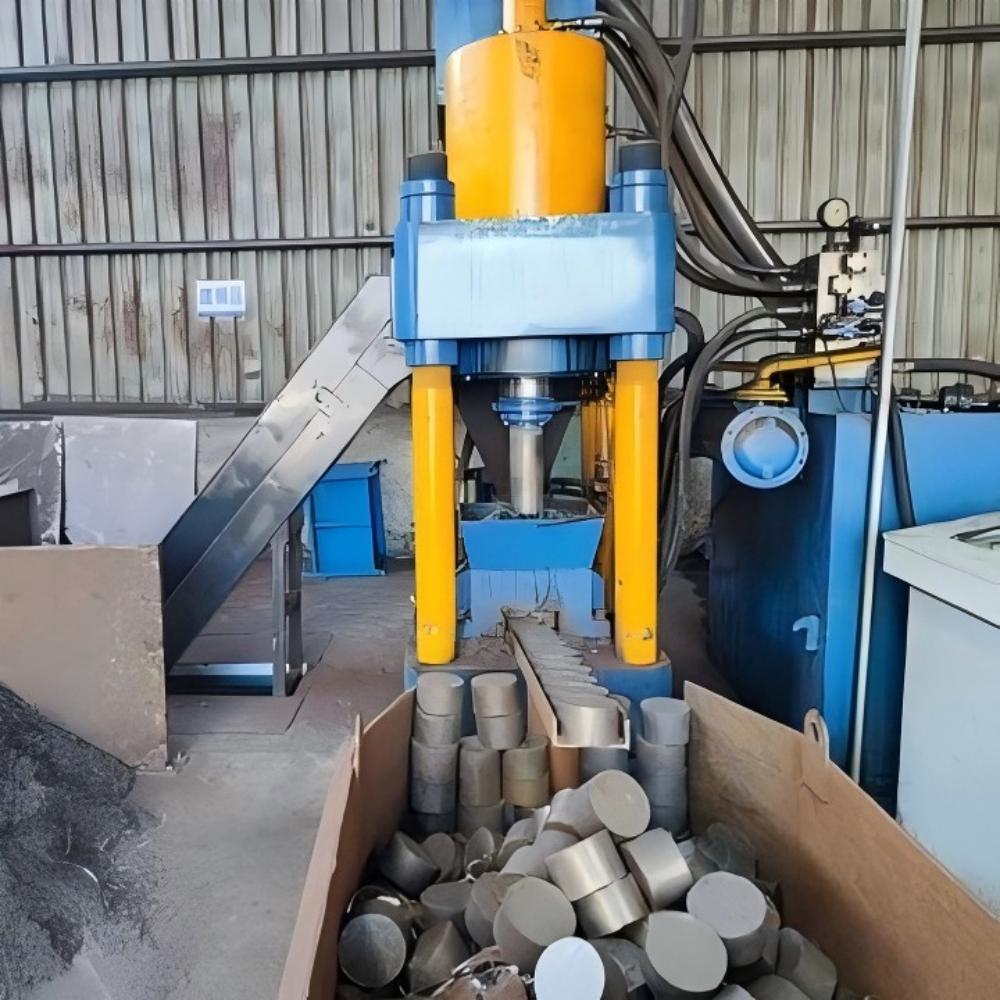
The core of the transformation lies in the hydraulic briquetting press. These machines operate by applying immense pressure to loose metal chips, forcing them into a compact, solid form without the need for binding agents. The process begins with a hopper that feeds the chips into a pre-compression chamber. Here, the material is leveled and prepared for the main pressing cycle, ensuring a consistent density in every briquette produced.
Once the material is in the main chamber, a hydraulic ram exerts thousands of pounds of force. This pressure is sufficient to overcome the elastic memory of the metal, causing the chips to interlock and form a solid puck. During this compression, the cutting fluid is squeezed out of the chips and directed into a filtration system. This recovered fluid is then cleaned and returned to the facility’s central coolant system, creating a circular economy within the shop.
The HARSLE briquetting machines are designed with advanced PLC controls that monitor the pressure, cycle time, and material flow. This allows the operator to adjust the settings based on the specific alloy being processed. For instance, titanium chips require different compression pressures compared to aluminum or brass. The ability to fine-tune these parameters is what makes the machine so versatile for an aerospace facility dealing with a wide variety of materials.
Furthermore, the structural integrity of the briquettes is a testament to the machine’s engineering. A well-made briquette should be able to withstand handling and transport without crumbling. The HARSLE design incorporates high-wear-resistant materials in the pressing chamber, ensuring that the machine can handle the abrasive nature of aerospace alloys over thousands of hours of operation without significant degradation in performance.
Selection Advice: Choosing the Right Briquetting Machine
When selecting a briquetting machine, the first step is to conduct a thorough audit of your scrap output. You need to know the volume of chips produced per day, the types of alloys, and the average moisture content of the chips. This data will dictate the size and capacity of the machine you require. A machine that is too small will become a bottleneck, while one that is too large may be an unnecessary capital expenditure.
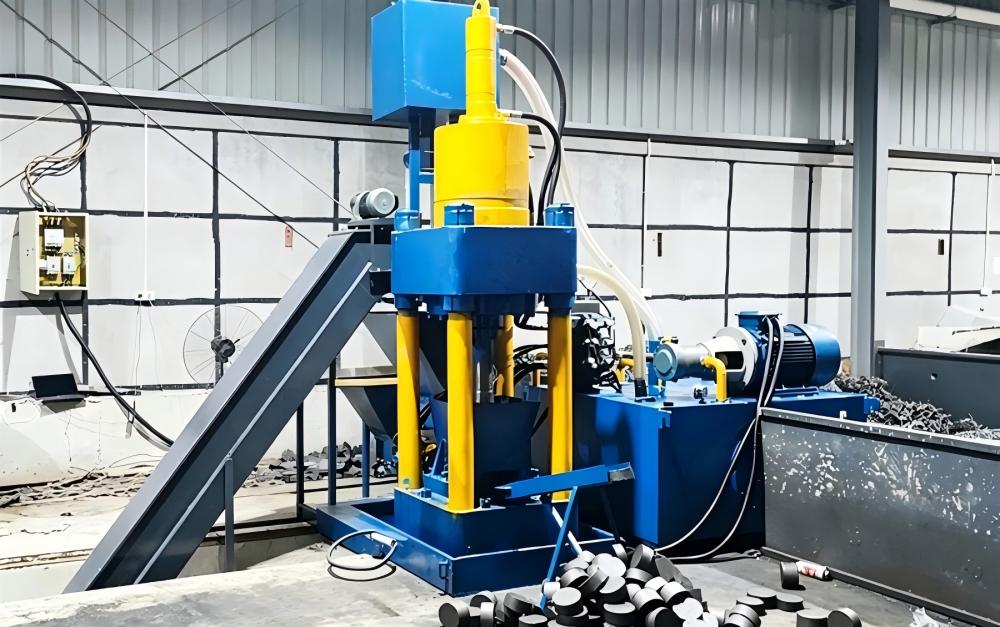
Another critical factor is the integration with your existing shop layout. Do you need a standalone unit that can be moved between departments, or a centralized system that is fed by a conveyor network? HARSLE offers various configurations, including compact units for smaller shops and fully automated, high-throughput systems for large-scale aerospace facilities. Consider the footprint of the machine and the accessibility for maintenance and chip loading.
Maintenance requirements should also be at the forefront of your decision-making process. Look for machines that feature easy access to hydraulic components, robust filtration systems, and user-friendly interfaces. A machine that is difficult to maintain will eventually be neglected, leading to downtime. HARSLE provides comprehensive documentation and support, ensuring that your team can perform routine maintenance efficiently.
Finally, consider the long-term return on investment (ROI). Beyond the immediate savings in logistics and coolant, look at the increased value of your scrap. Recyclers pay a premium for clean, briquetted metal because it is easier to melt down and has a higher yield. When you factor in the reduction in waste disposal fees and the savings on new coolant, the payback period for a briquetting machine is often surprisingly short, frequently under two years for high-volume facilities.
Frequently Asked Questions
1. How much coolant can be recovered using a briquetting machine?
Depending on the type of chips and the initial saturation level, a HARSLE briquetting machine can recover between 85% and 95% of the cutting fluid. This significantly reduces the need for new coolant purchases and lowers waste disposal costs.
2. Can a single machine handle different types of metal?
Yes, but it is important to clean the machine between different alloy runs to prevent cross-contamination. Many facilities use a dedicated machine for each primary alloy type to maintain the highest possible scrap value.
3. What is the typical lifespan of a briquetting press?
With proper maintenance and regular replacement of wear parts, a high-quality industrial briquetting press can last for 10 to 15 years or more. HARSLE machines are built with heavy-duty components specifically to withstand the rigors of continuous industrial use.
4. Does the briquetting process affect the metallurgical properties of the scrap?
No, the process is purely mechanical. It does not involve heat or chemical changes, meaning the chemical composition of the metal remains identical to the original chips. This makes the briquettes highly desirable for foundries and smelters.
5. How does the machine handle long, stringy chips?
For facilities that produce long, stringy chips, we recommend adding a chip shredder upstream of the briquetting machine. The shredder breaks the chips into smaller, manageable pieces, ensuring a consistent feed into the press and preventing jams.
Conclusion
The case study of how a briquetting machine enhanced scrap handling in an aerospace machining facility serves as a blueprint for modern industrial efficiency. By moving away from the traditional, labor-intensive, and wasteful methods of scrap management, the facility was able to achieve a cleaner, more profitable, and more sustainable operation. The investment in HARSLE technology provided immediate benefits in coolant recovery, logistics, and scrap valuation, proving that smart equipment choices are the foundation of competitive manufacturing.
As the aerospace industry continues to push the boundaries of precision and material science, the infrastructure supporting these processes must evolve in tandem. Briquetting is no longer an optional luxury; it is a fundamental requirement for any shop that values efficiency and environmental stewardship. By reducing the physical volume of waste and reclaiming valuable resources, manufacturers can focus their energy on what they do best: creating the components that power the future of flight.
If your facility is looking to optimize its scrap handling, reduce operational costs, and improve its environmental footprint, now is the time to explore the benefits of a HARSLE briquetting solution. With a range of models designed to meet the specific needs of the aerospace sector, we are here to help you transform your scrap into a valuable asset. Contact our team today to learn more about how we can tailor a solution to your unique production requirements.