
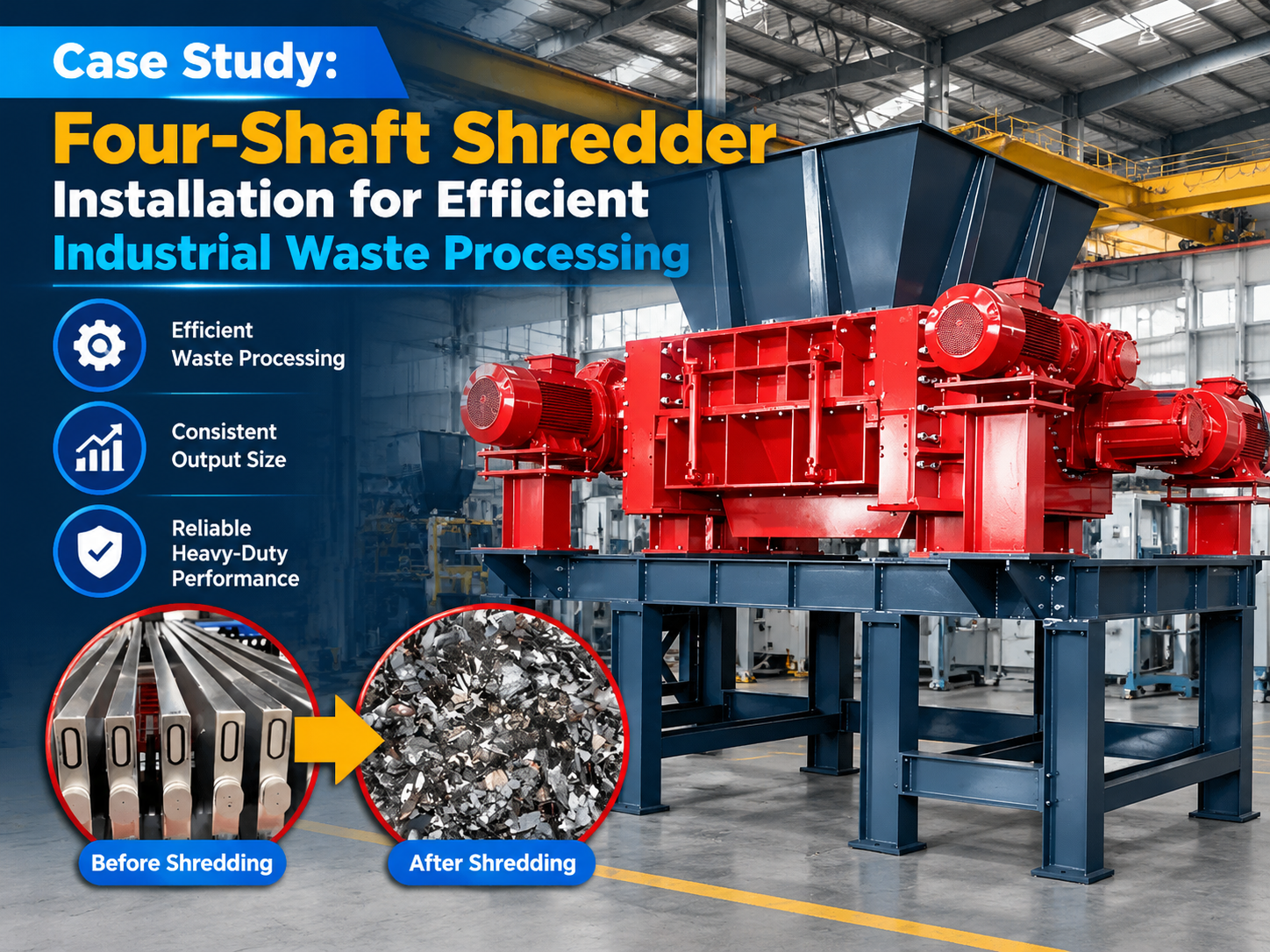
Case Study: Four-Shaft Shredder Installation for Efficient Industrial Waste Processing

Introduction
In the modern landscape of metal fabrication and industrial manufacturing, waste management has transitioned from a logistical burden to a critical operational efficiency factor. As companies strive for circular economy models, the ability to process scrap metal, electronic waste, and complex industrial byproducts in-house has become a competitive advantage. This article presents a comprehensive Case Study: Four-Shaft Shredder Installation for Efficient Industrial Waste Processing, highlighting how HARSLE technology transforms waste streams into valuable, manageable resources.
The installation of a four-shaft shredder represents a significant capital investment that pays dividends through reduced disposal costs, improved material recovery rates, and enhanced workplace safety. Unlike traditional two-shaft systems, the four-shaft configuration offers superior torque and precision, allowing for the processing of high-density materials that would otherwise stall standard equipment. This guide explores the technical intricacies and strategic benefits of integrating such advanced machinery into your production line.
HARSLE has consistently pushed the boundaries of industrial shredding, focusing on robust engineering and user-centric design. By examining a real-world deployment, we can better understand the challenges of industrial waste processing and how specific mechanical configurations address these hurdles. Whether you are managing aluminum offcuts, steel scrap, or complex composite materials, the principles outlined in this case study provide a blueprint for operational excellence.
As we delve into the technical specifications and selection criteria, it is important to recognize that efficient waste processing is not just about the machine itself, but the integration of the shredder into the broader workflow. From material handling conveyors to automated sorting systems, the four-shaft shredder acts as the heart of a high-performance recycling ecosystem. Let us explore the journey of implementing this technology for maximum industrial impact.
Key Considerations for Industrial Waste Processing
Before selecting a shredding solution, facility managers must conduct a thorough audit of their waste stream. The primary consideration is the material composition. Are you processing ductile metals, brittle alloys, or mixed-material waste? A four-shaft shredder is uniquely suited for materials requiring a uniform output size, as the secondary shafts act as a screen, ensuring that only material of a specific dimension passes through the cutting chamber.
Another critical factor is the throughput requirement. Industrial waste processing is often a bottleneck in production. If the shredder cannot keep pace with the generation of scrap, the facility faces accumulation issues, leading to safety hazards and floor space congestion. HARSLE engineers emphasize the importance of calculating peak load requirements rather than average daily volume to ensure the system remains operational during high-output shifts.
Space constraints and facility layout also play a vital role. A four-shaft shredder is a heavy-duty piece of equipment that requires a stable foundation and adequate clearance for maintenance. In our case study, the client had limited floor space, necessitating a custom-engineered feed hopper and discharge conveyor system. This highlights the need for modular equipment that can be adapted to existing factory footprints without requiring extensive structural modifications.
Safety and environmental compliance are non-negotiable. Industrial shredding generates noise, dust, and vibration. Modern installations must incorporate sound-dampening enclosures and dust extraction systems to meet occupational health and safety standards. Furthermore, the energy efficiency of the shredder is a growing concern. HARSLE systems are designed with high-efficiency motors and intelligent control systems that reduce power consumption during idle periods, contributing to lower operational costs over the machine’s lifecycle.
Technical Details of the Four-Shaft Shredder
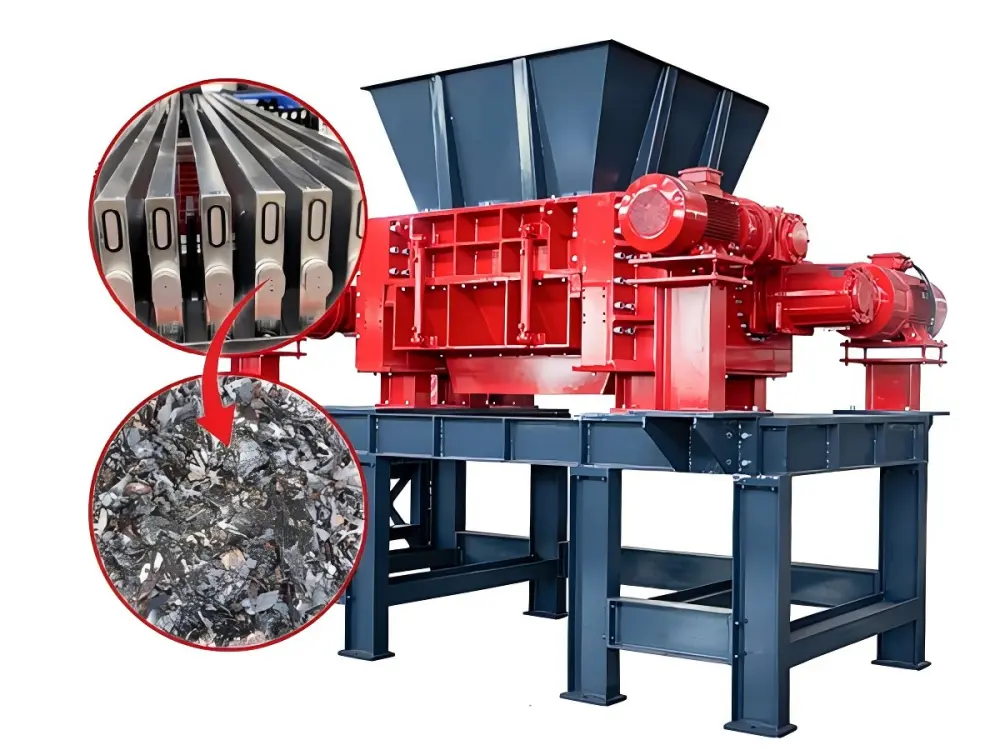
The core of the HARSLE four-shaft shredder lies in its sophisticated cutting mechanism. Unlike two-shaft shredders that rely on a shearing action, the four-shaft design utilizes two primary shafts for initial shredding and two secondary shafts for sizing. This dual-stage process ensures a consistent particle size, which is essential for downstream processes like smelting, briquetting, or material separation.
The cutting blades are manufactured from high-alloy, wear-resistant steel, heat-treated to withstand the extreme stresses of shredding hardened metals. The geometry of the blades is optimized for specific material types, allowing for a clean cut rather than a tear. This precision reduces the heat generated during the process, which in turn extends the life of the blades and reduces the risk of material deformation or oxidation.
The drive system is equally critical. HARSLE utilizes high-torque planetary gearboxes coupled with heavy-duty electric motors. This combination provides the necessary force to shred thick-gauge steel plates or tangled metal turnings without stalling. The intelligent PLC (Programmable Logic Controller) monitors the motor load in real-time. If the system detects an overload, it automatically triggers an auto-reverse cycle, clearing the obstruction before resuming operation.
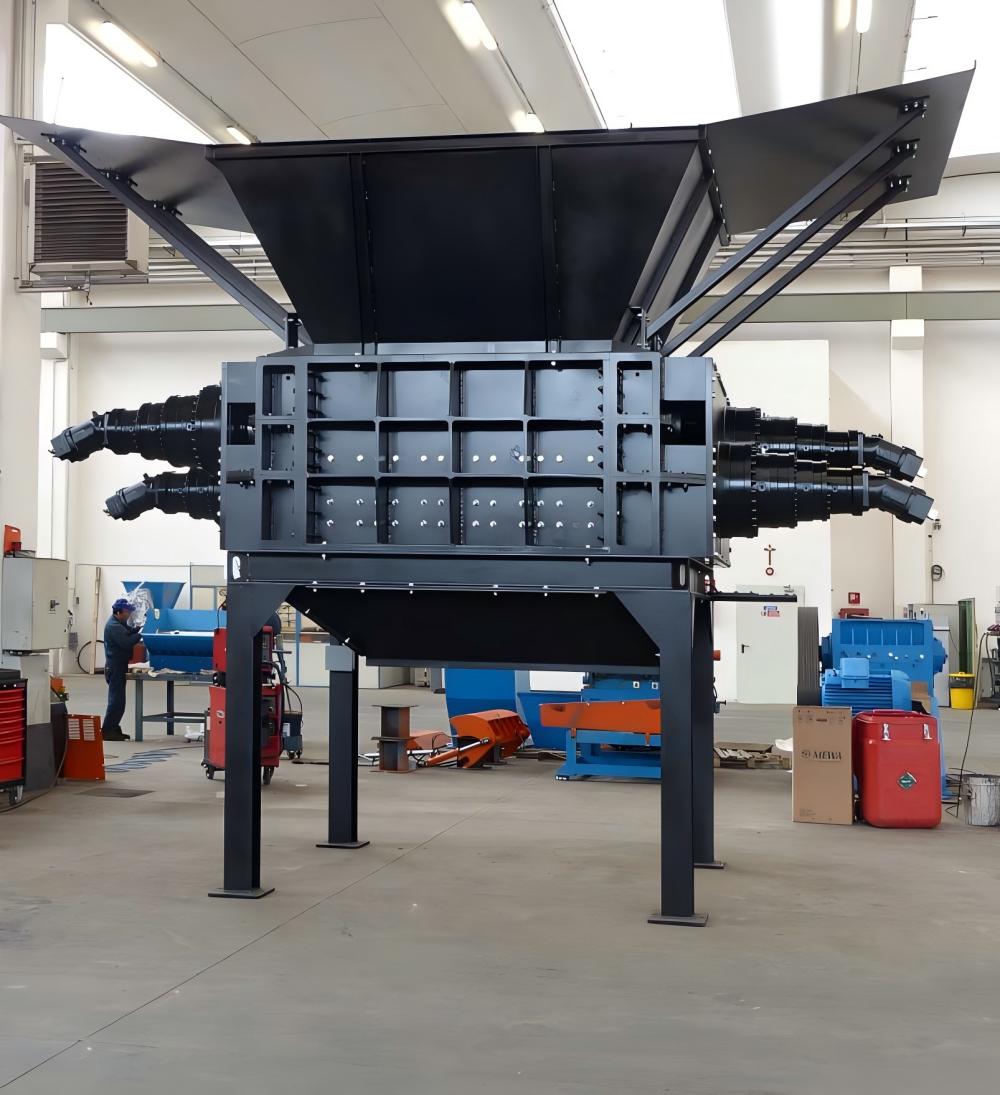
Maintenance accessibility is a hallmark of HARSLE design. The shredder housing is engineered with modular panels that allow for quick inspection and replacement of wear parts. In our case study, the maintenance team was able to replace a set of cutting discs in under four hours, significantly reducing downtime compared to legacy equipment. This focus on maintainability ensures that the machine remains a productive asset for years to come.
Selection Advice: Choosing the Right Equipment
Selecting the right shredder is a balance between technical capability and economic viability. The first step is to define your “End-of-Life” material goals. If your objective is simply volume reduction for easier transport, a lower-spec machine might suffice. However, if you intend to sell your processed scrap to smelters, you require a high-precision four-shaft shredder that produces a uniform, clean output that commands a higher market price.
Consider the integration of auxiliary equipment. A shredder rarely works in isolation. You should evaluate the need for magnetic separators to pull ferrous metals from mixed waste, or eddy current separators for non-ferrous recovery. HARSLE offers integrated solutions where the shredder, conveyor, and separation systems are controlled by a single interface, simplifying operator training and system monitoring.
Do not overlook the importance of after-sales support and spare parts availability. Industrial machinery is a long-term commitment. Ensure that the manufacturer has a robust local presence or a reliable logistics network for critical components. HARSLE provides comprehensive training for operators and maintenance staff, ensuring that your team is equipped to handle routine adjustments and troubleshooting, which is vital for maximizing the ROI of your investment.
Finally, request a material test. Reputable manufacturers like HARSLE will process a sample of your actual waste material to demonstrate the machine’s performance. This test provides empirical data on throughput rates, power consumption, and output quality, allowing you to make an informed decision based on your specific operational reality rather than generic marketing specifications.
Buyer Checklist for Industrial Shredders
- Material Analysis: Define the hardness, density, and volume of the waste stream.
- Output Requirements: Determine the required particle size and purity levels.
- Throughput Capacity: Calculate the hourly processing demand including peak surges.
- Space and Power: Verify facility floor load capacity and electrical supply availability.
- Funkcje bezpieczeństwa: Ensure the machine includes emergency stops, overload protection, and noise control.
- Maintenance Plan: Assess the ease of blade replacement and availability of spare parts.
FAQ: Frequently Asked Questions
What is the main advantage of a four-shaft shredder over a two-shaft model?
The primary advantage is the ability to control output size. The two additional shafts act as a screen, ensuring that material is shredded to a precise, uniform size before it exits the chamber, which is critical for high-value recycling.
How often do the blades need to be replaced?
Blade life depends on the material being shredded. For standard steel scrap, HARSLE blades are designed for long-term durability. Regular maintenance and proper material feeding can significantly extend the interval between replacements.
Can a HARSLE shredder handle mixed industrial waste?
Yes, HARSLE four-shaft shredders are designed to handle a wide range of materials, including mixed metals, plastics, and electronic components. However, it is essential to consult with our engineers to ensure the blade configuration is optimized for your specific mix.
What safety measures are included in the installation?
Our shredders come equipped with advanced PLC controls that feature auto-reverse functions, emergency stop buttons, and safety interlocks on all access panels to prevent accidental operation during maintenance.
Is the shredder energy-efficient?
HARSLE shredders utilize high-efficiency motors and smart load-sensing technology that adjusts power consumption based on the material density, ensuring optimal energy usage during operation.
Wniosek
The Case Study: Four-Shaft Shredder Installation for Efficient Industrial Waste Processing demonstrates that modern shredding technology is a cornerstone of sustainable and profitable manufacturing. By transitioning to a four-shaft system, facilities can turn waste into a revenue stream, reduce their environmental footprint, and streamline their internal logistics. HARSLE remains committed to providing the metal fabrication industry with the tools necessary to meet these challenges head-on.
Investing in the right machinery is about more than just the initial purchase; it is about building a partnership that supports your operational goals over the long term. With superior engineering, robust construction, and a focus on user-friendly maintenance, HARSLE shredders are designed to deliver consistent performance in the most demanding industrial environments. We encourage you to evaluate your current waste management processes and consider how an upgrade to four-shaft technology could transform your facility’s efficiency.
As the industry continues to evolve, the demand for high-quality, processed scrap will only increase. By positioning your facility with the right equipment today, you are not only solving immediate waste management problems but also preparing your business for the future of industrial recycling. Contact HARSLE today to discuss your specific requirements and learn how our shredding solutions can be tailored to your production needs.












