Come una pressa verticale ha aumentato l'efficienza operativa in una fabbrica di lamiera: un caso studio HARSLE

Introduction
In the high-paced world of modern metal fabrication, the focus is often placed entirely on the primary production line—the laser cutters, press brakes, and CNC punching machines. However, the hidden bottleneck in many sheet metal factories is not the production speed, but the management of the resulting scrap metal. When offcuts, skeletons, and trimmings pile up on the shop floor, they create safety hazards, impede material flow, and consume valuable square footage. This is where the strategic implementation of a vertical baler becomes a game-changer.
For many facility managers, the question of how a vertical baler increased operational efficiency in a sheet metal factory is answered through the lens of lean manufacturing. By compressing loose, bulky scrap into dense, manageable bales, factories can transform a logistical liability into a streamlined revenue stream. HARSLE has observed that facilities integrating these machines often see a drastic reduction in material handling time and a significant improvement in overall shop floor organization.
This article explores the technical and operational benefits of vertical balers, providing a comprehensive guide for fabrication shops looking to optimize their waste management processes. From space reclamation to improved scrap value, we will delve into why this piece of equipment is no longer an optional luxury but a necessity for competitive metal fabrication.
The transition from manual scrap handling to automated baling represents a shift in factory culture. It moves the facility away from a reactive state, where scrap is dealt with only when it becomes an obstruction, to a proactive state, where waste is processed as part of the standard manufacturing cycle. This shift is the cornerstone of modern industrial efficiency.
Key Considerations for Scrap Management
Before investing in a vertical baler, factory owners must assess their current waste generation patterns. Sheet metal fabrication produces a unique type of waste: high-density, sharp, and often awkward-shaped offcuts. Unlike cardboard or plastic, metal scrap requires high-pressure compaction to achieve a density that is profitable for recycling centers to collect. Understanding the volume and frequency of your scrap generation is the first step in selecting the right equipment.
Space optimization is another critical consideration. In a typical sheet metal factory, floor space is premium real estate. A vertical baler is specifically designed to have a small footprint while providing high compaction force. By consolidating waste into a single location, factories can eliminate the need for multiple large, overflowing scrap bins that clutter aisles and create tripping hazards for operators and forklift drivers.
Safety is perhaps the most significant factor. Loose metal scrap is notoriously dangerous. Sharp edges can cause severe lacerations, and the accumulation of scrap in walkways violates basic OSHA and international safety standards. By utilizing a vertical baler, the scrap is contained immediately upon being generated, significantly reducing the risk of workplace accidents and improving the overall safety culture of the facility.
Finally, consider the financial impact of scrap sorting. Recycling centers pay significantly higher premiums for clean, compacted, and sorted metal bales compared to loose, mixed scrap. By using a baler to create uniform bales, a factory can better segregate different alloys—such as stainless steel, aluminum, and mild steel—ensuring that the facility receives the maximum market value for its waste materials.
Technical Details of HARSLE Vertical Balers
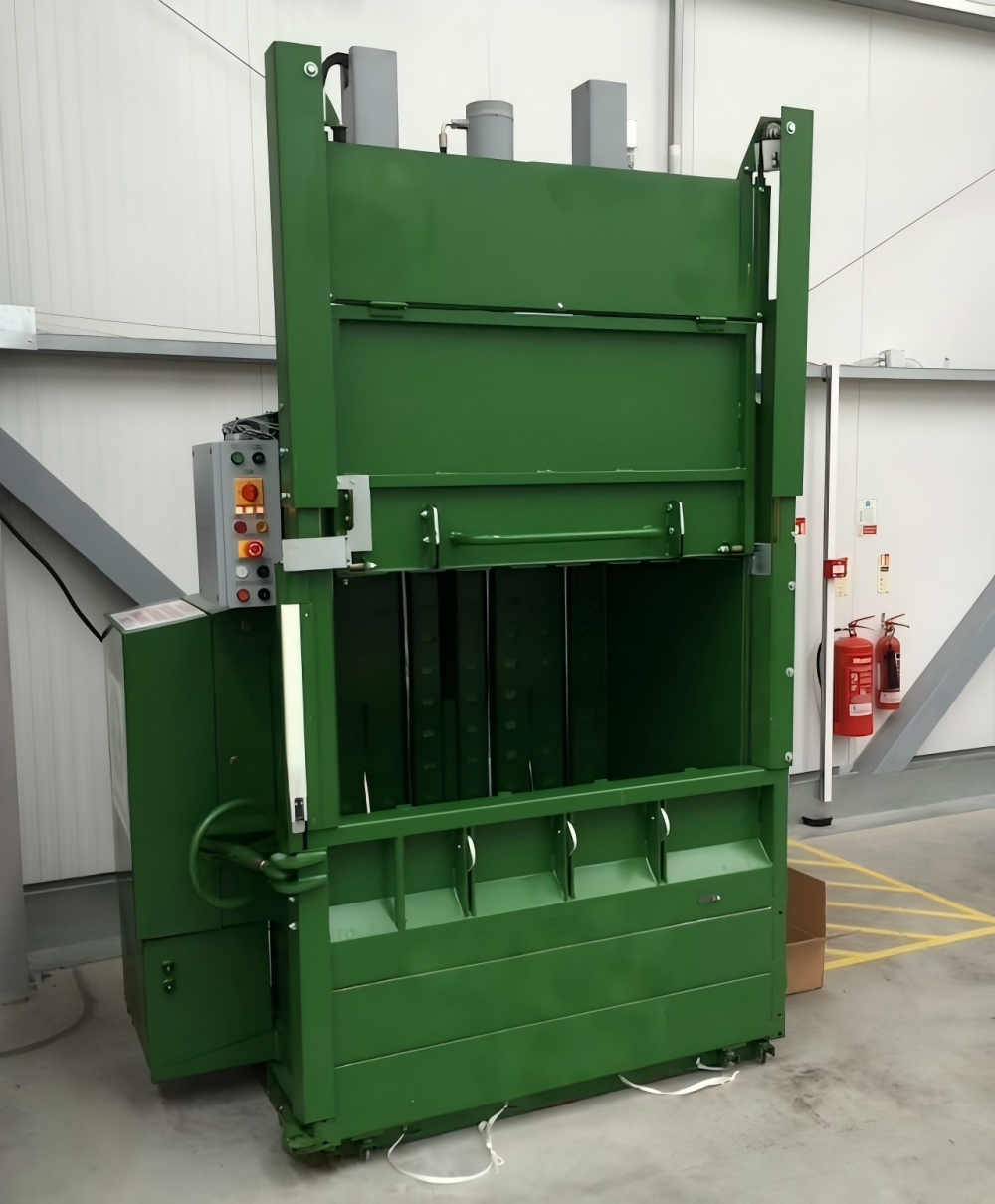
HARSLE vertical balers are engineered with the rigors of the metal fabrication industry in mind. Unlike standard balers designed for light materials, our metal-specific balers feature reinforced chambers and high-tonnage hydraulic cylinders. These components are essential for handling the high yield strength of steel and aluminum offcuts without compromising the structural integrity of the machine.
The hydraulic system is the heart of the baler. HARSLE utilizes high-efficiency pumps and precision-engineered valves to ensure consistent pressure throughout the compression cycle. This consistency is vital for creating dense, uniform bales that are easy to stack and transport. The hydraulic fluid cooling systems integrated into our units also allow for continuous operation during high-production shifts, preventing overheating and extending the lifespan of the seals and hoses.
Control systems in modern HARSLE balers are designed for ease of use and safety. Programmable Logic Controllers (PLCs) allow operators to adjust compression cycles based on the material type. Whether you are baling thin-gauge aluminum sheets or thicker steel skeletons, the machine can be tuned to provide the optimal force. Safety interlocks ensure that the chamber cannot be opened while the ram is in motion, protecting the operator from potential injury.
Maintenance is simplified through modular design. HARSLE balers feature accessible service panels, allowing maintenance teams to perform routine inspections of the hydraulic lines, electrical connections, and ram guides without extensive downtime. This focus on maintainability ensures that the machine remains a reliable asset in the factory, minimizing the total cost of ownership over the life of the equipment.
Selection Advice: Choosing the Right Equipment
When selecting a vertical baler, the primary metric to evaluate is the compaction force, measured in tons. For light-gauge sheet metal, a mid-range baler may suffice, but for heavy-duty fabrication involving thick plate scrap, a high-tonnage unit is required. Consult with your HARSLE representative to analyze your typical scrap thickness and volume to ensure the machine you select is appropriately rated for your specific workload.
Consider the chamber size and loading aperture. The size of your scrap pieces dictates the size of the opening. If your laser cutting process leaves large, intact skeletons, you need a baler with a wide loading door to avoid the need for secondary cutting or manual manipulation of the scrap before it enters the machine. A larger chamber also reduces the frequency of cycles, increasing overall throughput.
Integration into your existing workflow is crucial. Think about where the baler will be placed in relation to your cutting machines. Ideally, the baler should be located near the primary source of scrap to minimize the distance that operators must travel to dispose of waste. If the factory is large, consider a centralized scrap collection point or even multiple smaller balers strategically placed near high-output work cells.
Finally, look for long-term support and spare parts availability. Industrial machinery is a long-term investment. Choosing a manufacturer like HARSLE ensures that you have access to technical support, genuine replacement parts, and expert guidance throughout the machine’s lifecycle. Do not prioritize the lowest initial purchase price over the reliability and support that keep your factory running smoothly.
FAQ: Domande frequenti
How does a vertical baler improve scrap value?
Recycling centers prefer dense, uniform bales because they are easier to transport and process. By baling your scrap, you reduce the volume, which lowers shipping costs, and you can often command a higher price per ton for sorted, high-density bales compared to loose, mixed scrap.
What types of metal can be processed in a HARSLE vertical baler?
HARSLE balers are designed to handle a variety of metals, including mild steel, stainless steel, aluminum, and copper. However, it is essential to ensure the machine is rated for the thickness and hardness of the material you are processing.
How much space does a vertical baler require?
Vertical balers are designed for a small footprint. Most models require less than 10-15 square feet of floor space, making them ideal for crowded factory floors. Always check the specific dimensions and the required clearance for the door swing and maintenance access.
Is operator training difficult?
No, HARSLE balers are designed with user-friendly interfaces. Most operators can be trained to safely and efficiently operate the machine in under an hour. We provide comprehensive manuals and safety guidelines with every installation.
How often does a vertical baler require maintenance?
Routine maintenance, such as checking hydraulic fluid levels and inspecting the ram guides, should be performed monthly. A professional service inspection every six months is recommended to ensure the machine continues to operate at peak efficiency.
Conclusione
The integration of a vertical baler into a sheet metal factory is a strategic move that pays dividends in safety, organization, and profitability. By addressing the often-overlooked challenge of scrap management, manufacturers can reclaim valuable floor space, reduce labor-intensive waste handling, and maximize the revenue generated from their byproduct. As we have explored, the answer to how a vertical baler increased operational efficiency in a sheet metal factory lies in the transition to a cleaner, more organized, and more profitable production environment.
HARSLE remains committed to providing the robust, reliable equipment necessary for modern fabrication facilities to thrive. Whether you are looking to streamline your current operations or planning a new facility layout, our team is ready to assist you in selecting the perfect baling solution. Investing in the right machinery is not just about keeping the floor clean; it is about building a more efficient, safer, and more competitive business for the future.
As you evaluate your factory’s needs, remember that the most successful shops are those that treat every aspect of their operation—including waste—with the same level of precision as their primary manufacturing processes. A vertical baler is the tool that brings that level of precision to your scrap management, ensuring that your factory remains a leader in the metal fabrication industry.