
How a Four-Shaft Shredder Improved Safety and Waste Control in a Manufacturing Plant

Introduction: The Evolution of Industrial Waste Management
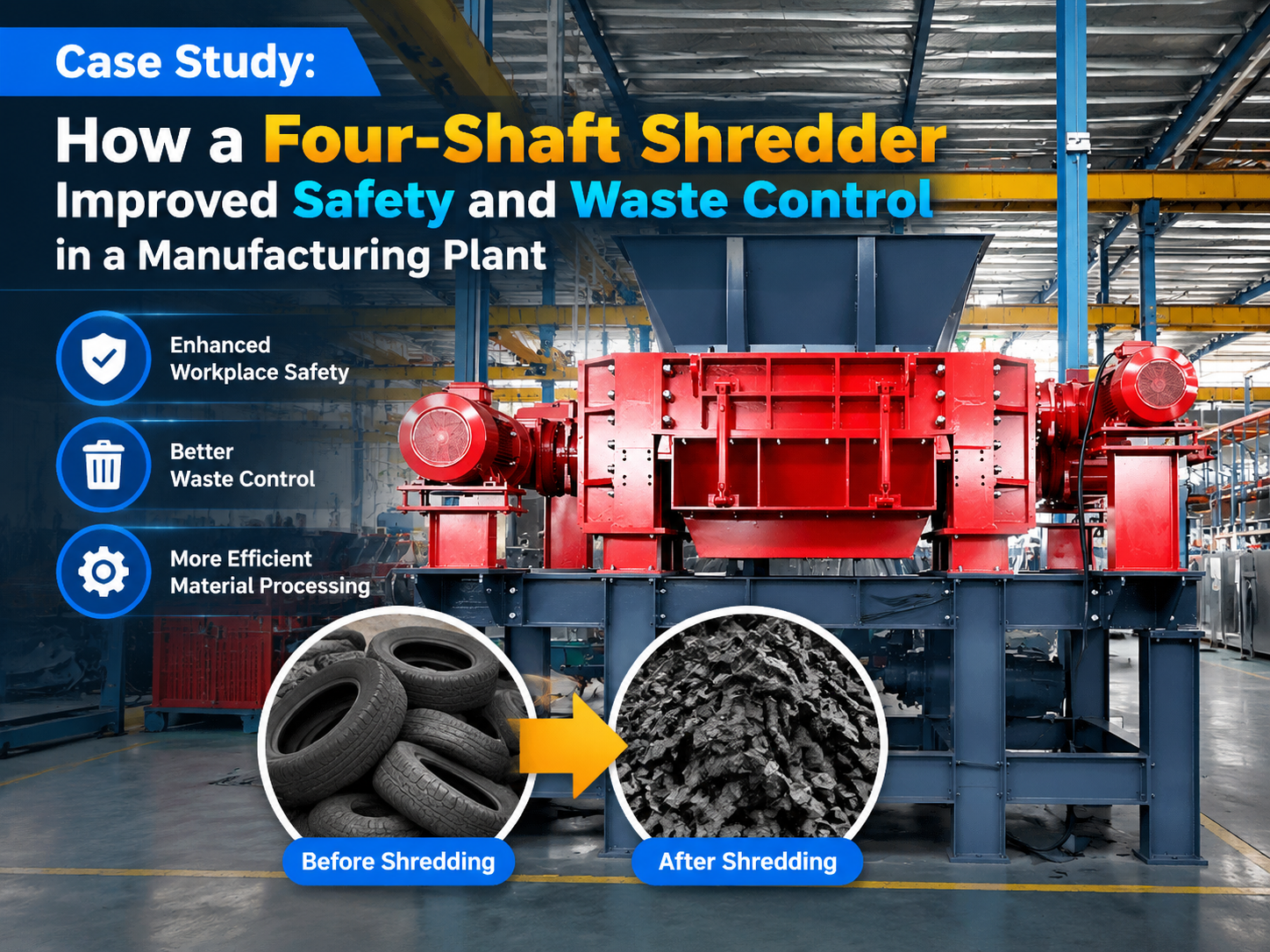
In the modern manufacturing landscape, the efficiency of waste management is no longer just an operational concern; it is a critical pillar of profitability and workplace safety. For many facilities, the accumulation of scrap metal, bulky industrial waste, and hazardous offcuts creates significant bottlenecks. This is where the implementation of advanced machinery becomes transformative. Specifically, how a four-shaft shredder improved safety and waste control in a manufacturing plant serves as a benchmark for companies looking to modernize their production floors.
HARSLE has observed that plants transitioning from manual waste handling to automated shredding systems experience a drastic reduction in workplace injuries. When scrap is processed at the source, the need for manual handling—which is often the primary cause of lacerations and musculoskeletal strain—is virtually eliminated. Furthermore, the volume reduction achieved by a four-shaft shredder allows for optimized logistics, turning a chaotic waste pile into a streamlined, recyclable commodity.
This article explores the technical advantages, safety implications, and strategic benefits of integrating high-performance shredding technology into your facility. By understanding the mechanics of these machines, plant managers can make informed decisions that align with lean manufacturing principles and environmental sustainability goals.

Key Considerations for Waste Management Integration
Before investing in a four-shaft shredder, plant managers must evaluate their current waste streams. Not all waste is created equal; the density, material composition, and volume of your scrap dictate the required torque and shaft configuration. A four-shaft system is distinct from two-shaft or single-shaft shredders because it utilizes a secondary set of shafts to pull material through the cutting chamber, ensuring a consistent output size regardless of the input shape.
Safety is the primary consideration. In facilities where scrap is left to accumulate, the risk of trip hazards, sharp edges, and fire hazards increases exponentially. By integrating a shredder directly into the production line, waste is processed immediately. This creates a cleaner, more organized environment that inherently reduces the risk of accidents. When we analyze how a four-shaft shredder improved safety and waste control in a manufacturing plant, we see that the reduction in manual labor is the most significant safety gain.
Operational efficiency is the second pillar. Shredded material occupies significantly less space than loose scrap. This means fewer trips to the dumpster, lower transportation costs, and higher revenue from recycling centers that pay a premium for uniform, shredded material. When evaluating your plant, consider the footprint of the shredder and how it can be integrated into existing conveyor systems to minimize human interaction with the waste stream.
Finally, consider the environmental impact. Modern manufacturing is under increasing pressure to adhere to ESG (Environmental, Social, and Governance) standards. Shredding allows for better material separation, which is essential for recycling. By converting waste into a high-density, sorted product, your plant can move closer to a circular economy model, reducing your carbon footprint and potentially qualifying for green manufacturing incentives.
Technical Details: Why Four Shafts Make the Difference
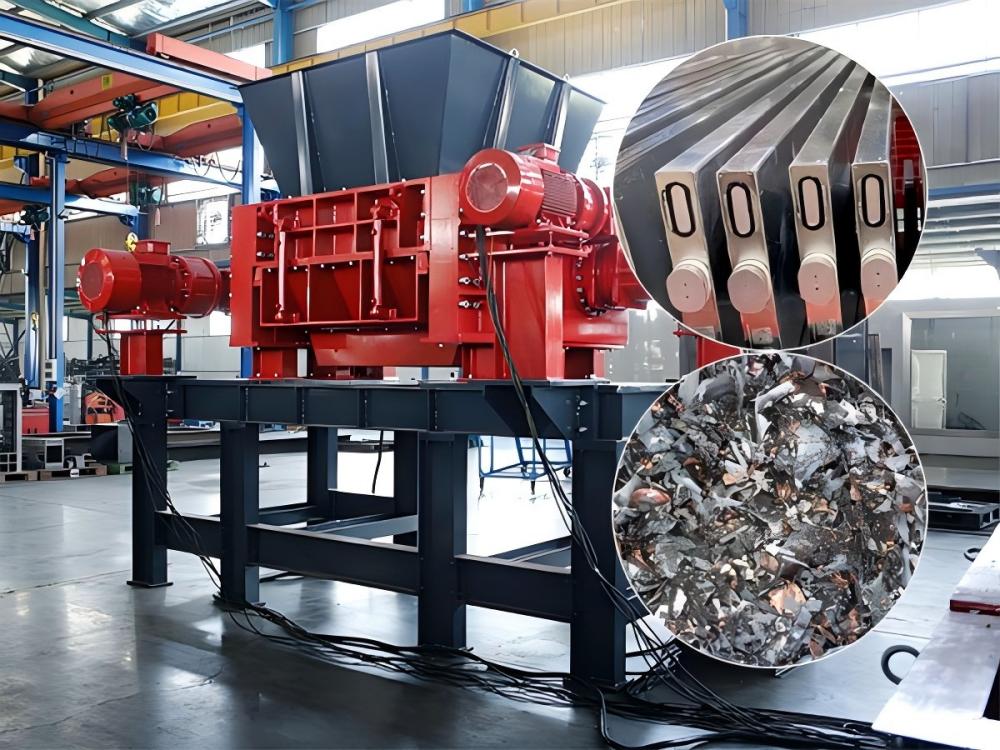
The engineering behind a four-shaft shredder is designed for high-torque, low-speed operation. Unlike high-speed granulators that rely on impact, four-shaft shredders use a shearing action. This is crucial for metal fabrication equipment, as it prevents the machine from jamming when encountering high-tensile materials. The four-shaft design features two primary cutting shafts and two secondary shafts that act as a screen, ensuring that material is only discharged once it reaches the desired size.
The cutting blades are typically manufactured from high-alloy steel, hardened to withstand the abrasive nature of industrial metals. HARSLE’s shredding technology incorporates intelligent PLC controls that monitor the load on the motors. If a piece of material is too hard or too large to process, the system automatically reverses the shafts to clear the obstruction, preventing damage to the drive train and reducing the need for manual intervention.
Another technical advantage is the noise reduction. Because these machines operate at lower speeds, they produce significantly less noise pollution than high-speed shredders. This contributes to a better working environment for employees on the shop floor. Furthermore, the enclosed design of the cutting chamber prevents flying debris, which is a common safety hazard associated with other types of cutting or grinding equipment.
Maintenance is also simplified through modular design. The shafts can be removed and serviced individually, and the cutting teeth can be replaced or sharpened without requiring a complete overhaul of the machine. This ensures that the shredder remains a reliable part of your production line for years, maintaining the safety and waste control standards that were established upon its installation.
Selection Advice: Choosing the Right Shredder for Your Plant
Selecting the right four-shaft shredder requires a deep dive into your specific material requirements. Start by auditing your waste stream. Are you shredding thin aluminum sheets, thick steel plates, or a mix of materials? The thickness and hardness of the material will determine the required motor power and the blade geometry. A machine that is underpowered will lead to frequent jams and increased maintenance costs, while an overpowered machine may be an unnecessary capital expenditure.
Consider the throughput requirements. How much waste does your plant generate per hour? The shredder must be able to handle peak production times without becoming a bottleneck. It is often better to size the shredder for your maximum expected output rather than your average output to ensure the system can keep up during high-volume production cycles.
Integration is another critical factor. Will the shredder be fed by a conveyor, a robotic arm, or manual loading? The feeding mechanism must be compatible with the shredder’s hopper design to ensure a steady flow of material. HARSLE provides custom hopper configurations to suit various loading methods, ensuring that the safety benefits of the shredder are not compromised by an inefficient feeding process.
Finally, look for a manufacturer that offers comprehensive support. A four-shaft shredder is a long-term investment. You need a partner who can provide spare parts, technical training for your staff, and remote diagnostics. When you understand how a four-shaft shredder improved safety and waste control in a manufacturing plant, you realize that the machine is only as good as the support system behind it. Ensure your provider has a proven track record in the metal fabrication industry.
FAQ: Domande frequenti
1. How does a four-shaft shredder differ from a two-shaft shredder?
A four-shaft shredder includes two additional shafts that act as a sizing screen. This ensures that the output material is uniform in size, whereas a two-shaft shredder may produce irregular pieces. This uniformity is critical for recycling and further processing.
2. Is a four-shaft shredder safe for operators?
Yes, when installed correctly with safety interlocks and proper feeding systems, it is very safe. It eliminates the need for manual handling of sharp scrap, which is the leading cause of injuries in metal fabrication plants.
3. Can these shredders handle hardened steel?
Yes, provided the shredder is equipped with the correct blade material and motor torque. HARSLE offers various blade configurations specifically designed for high-tensile and hardened steel scrap.
4. How often does the shredder require maintenance?
Maintenance frequency depends on usage intensity and the type of material being shredded. Generally, daily inspections of the cutting chamber and periodic lubrication of bearings are required. PLC systems often provide alerts for maintenance intervals.
5. Does the shredder help with environmental compliance?
Absolutely. By reducing waste volume and facilitating easier material sorting, it helps plants meet recycling targets and reduce the frequency of waste disposal pickups, lowering the overall carbon footprint.
Conclusion: Investing in a Safer Future
The transition to automated shredding technology is a clear indicator of a forward-thinking manufacturing facility. As we have examined, the implementation of a four-shaft shredder is not merely about waste management; it is a strategic move to enhance workplace safety, improve operational efficiency, and increase the value of scrap material. When you analyze how a four-shaft shredder improved safety and waste control in a manufacturing plant, the benefits are clear: fewer accidents, lower logistics costs, and a more organized production floor.
HARSLE remains committed to providing the metal fabrication industry with the tools necessary to achieve these goals. By choosing the right equipment and integrating it thoughtfully into your workflow, you can transform your waste management from a liability into an asset. The investment in a four-shaft shredder pays dividends in both safety and profitability, setting your plant apart as a leader in modern, efficient manufacturing.
If you are ready to explore how our shredding solutions can be tailored to your specific needs, contact our engineering team today. We provide comprehensive consultations to ensure that your investment aligns with your production capacity and safety objectives. Let us help you build a safer, more efficient future for your manufacturing plant.












