How a Briquetting Machine Helped a Foundry-Adjacent Workshop Cut Waste Volume: A Comprehensive Case Study

Introduction: The Challenge of Metal Waste in Modern Foundries
In the high-stakes world of metal fabrication and foundry operations, the management of metal chips, turnings, and swarf is often treated as an afterthought. However, for a mid-sized foundry-adjacent workshop specializing in aluminum and steel components, the sheer volume of loose metal waste was becoming a logistical and financial bottleneck. The workshop was spending thousands of dollars monthly on waste disposal fees, while simultaneously losing valuable raw material that could have been repurposed. This is where the implementation of a high-performance briquetting machine changed the operational landscape.
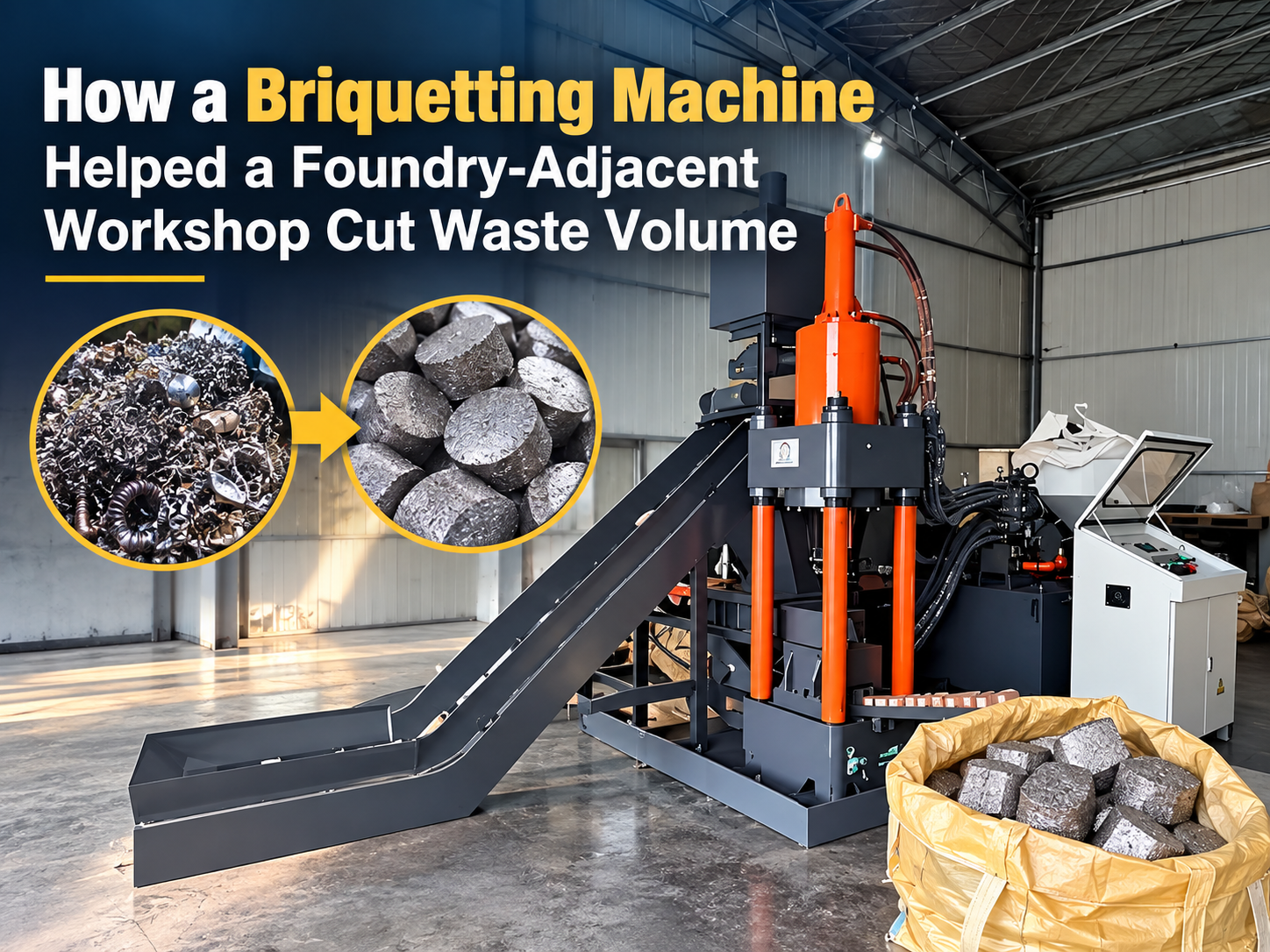
When we examine how a briquetting machine helped a foundry-adjacent workshop cut waste volume, we are looking at a fundamental shift in industrial efficiency. Loose metal chips occupy a massive amount of space, often requiring multiple dumpsters and frequent transport cycles. By compressing these loose materials into dense, manageable briquettes, the workshop was able to reduce the physical volume of their waste by up to 90%. This transformation not only cleared up valuable floor space but also turned a disposal liability into a revenue-generating asset.
The HARSLE approach to this problem involves integrating advanced hydraulic compression technology directly into the production line. By capturing metal chips at the source—before they become contaminated with cutting fluids or mixed with other debris—the workshop ensured that the resulting briquettes were of high metallurgical quality. This case study explores the technical, economic, and environmental impacts of adopting this technology, providing a roadmap for other facilities looking to optimize their waste streams.
As we delve deeper into this analysis, it becomes clear that the adoption of a briquetting machine is not merely a waste management decision; it is a strategic manufacturing upgrade. By reclaiming cutting fluids and increasing the density of scrap, the workshop improved its sustainability profile while significantly lowering its overhead costs. This article serves as a comprehensive guide for facility managers and shop owners who are ready to move beyond traditional scrap disposal methods.
Key Considerations for Waste Management in Metal Fabrication
Before investing in a briquetting system, workshops must evaluate their current waste generation patterns. The first consideration is the type of material being processed. Aluminum, steel, copper, and brass all have different compression ratios and physical properties. A machine that works perfectly for ductile aluminum might require different pressure settings or die configurations for hardened steel turnings. Understanding the metallurgical composition of your waste is the first step in selecting the right equipment.
Logistics and floor space are equally critical. In a foundry-adjacent environment, space is at a premium. The footprint of the briquetting machine, combined with the necessary chip conveyors and storage hoppers, must be carefully planned. The workshop in our case study had to reconfigure its coolant filtration system to ensure that the chips were dry enough for efficient briquetting. This integration is essential, as wet chips can lead to inconsistent briquette density and potential damage to the hydraulic seals of the press.
Another key consideration is the value of the reclaimed cutting fluid. Many metal fabrication processes use expensive synthetic or semi-synthetic coolants. When chips are loose, they are saturated with these fluids, which are then lost during disposal. A briquetting machine acts as a centrifuge, pressing the fluid out of the chips so it can be filtered, treated, and returned to the machine tools. This closed-loop system significantly reduces the cost of purchasing new coolant and minimizes the environmental impact of fluid disposal.
Finally, the labor component cannot be ignored. Manual handling of loose metal chips is dangerous and time-consuming. Workers are exposed to sharp edges and slippery floors, which increases the risk of workplace injuries. By automating the chip collection and briquetting process, the workshop was able to reallocate labor to more productive tasks. This shift in human resources is a hidden benefit that often pays for the machine faster than the scrap value alone.
Technical Details: How the Briquetting Process Works
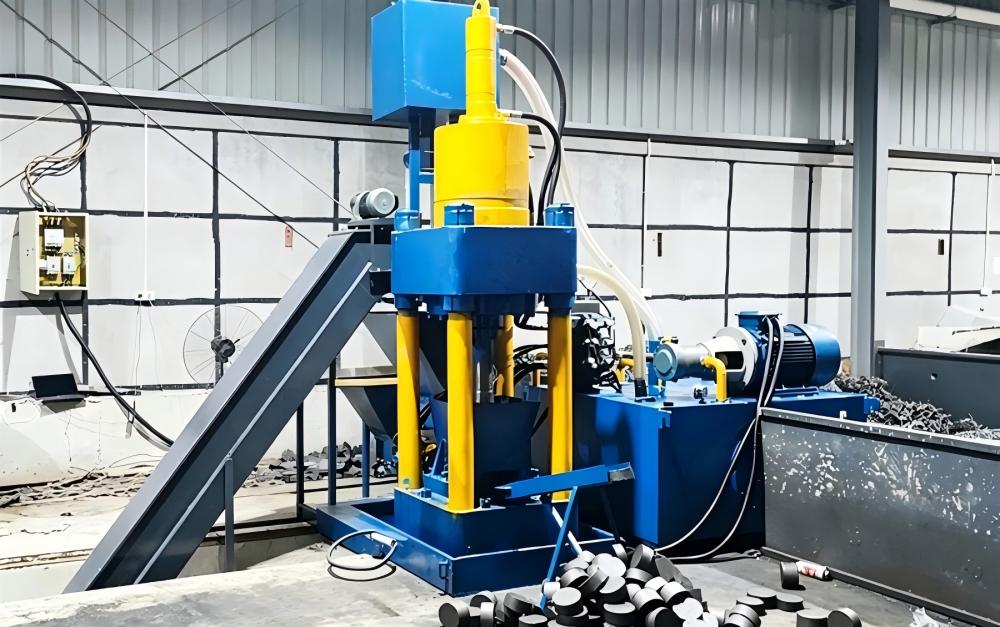
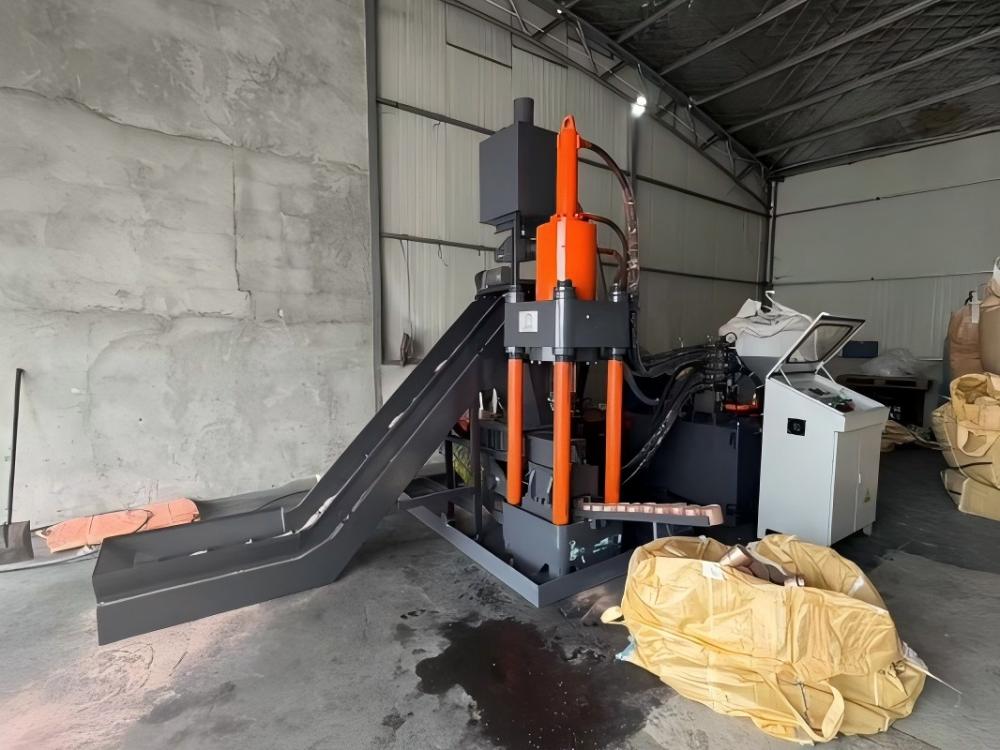
The core of a briquetting machine is its hydraulic press system. Unlike mechanical presses, hydraulic systems provide the sustained, high-pressure force required to overcome the spring-back effect of metal turnings. The process begins with a hopper that feeds the loose chips into a pre-compression chamber. Here, the material is agitated to ensure a consistent feed rate, preventing bridging or clogging, which are common issues with light, stringy turnings.
Once the material enters the main compression chamber, a hydraulic ram exerts immense pressure, typically ranging from 200 to 400 bar depending on the material density requirements. This pressure forces the metal particles to interlock at a molecular level, creating a solid, dense briquette. The shape and size of the briquette are determined by the die set, which can be customized based on the requirements of the foundry that will eventually melt the material down. For many foundries, a standard cylindrical briquette is preferred for its ease of handling and uniform melting characteristics.
The technical sophistication of modern HARSLE briquetting machines includes advanced PLC control systems. These controllers monitor the pressure, cycle time, and hydraulic temperature in real-time. If the material density fluctuates, the system automatically adjusts the stroke length to maintain consistent briquette quality. This level of automation ensures that the machine can operate continuously with minimal oversight, making it ideal for high-volume production environments.
Maintenance of these machines is straightforward but essential. The hydraulic oil must be kept clean and at the correct viscosity to ensure the longevity of the pump and valves. The die sets, which are subject to high wear, are designed for quick replacement. By following a scheduled maintenance program, the workshop in our case study was able to maintain an uptime of over 95%, ensuring that the briquetting process never became a bottleneck for their primary production lines.
Selection Advice: Choosing the Right Equipment for Your Workshop
When selecting a briquetting machine, the first metric to analyze is the throughput capacity. You must calculate the volume of chips generated per shift. If you choose a machine that is too small, you will be forced to run it overtime, increasing wear and energy costs. Conversely, a machine that is too large will be an unnecessary capital expenditure. HARSLE offers a range of capacities, and our technical team recommends a 20-30% buffer above your current peak production to account for future growth.
The second factor is the level of automation required. For smaller workshops, a semi-automatic system where the hopper is loaded via a forklift or manual bin tipper might be sufficient. However, for larger foundry-adjacent operations, a fully automated system with integrated chip conveyors and automatic briquette discharge is highly recommended. This reduces the need for manual intervention and ensures a steady flow of material, which is critical for maintaining consistent briquette density.
Material compatibility is the third pillar of selection. If your workshop handles a mix of materials, you need a machine that can handle the transition between different metals without cross-contamination. Some advanced systems feature quick-change die sets and automated cleaning cycles to prevent the mixing of aluminum and steel, which is vital for maintaining the metallurgical integrity of the scrap for the foundry. Always consult with the manufacturer about the specific alloys you are processing.
Finally, consider the support and service infrastructure. A briquetting machine is a long-term investment. You need a partner who provides comprehensive training for your operators, readily available spare parts, and responsive technical support. HARSLE prides itself on providing detailed documentation and remote diagnostic capabilities, ensuring that if a problem arises, it can be resolved quickly to minimize downtime. Don’t just buy a machine; buy a partnership that supports your operational goals.
FAQ: Common Questions About Briquetting Technology
What is the primary benefit of using a briquetting machine?
The primary benefit is the significant reduction in waste volume, which lowers disposal costs and logistics expenses. Additionally, it allows for the recovery of expensive cutting fluids and increases the resale value of metal scrap, as foundries prefer dense, clean briquettes over loose, contaminated chips.
Can a briquetting machine handle all types of metal chips?
Most machines are designed to handle common metals like aluminum, steel, copper, and brass. However, the material’s physical form (e.g., long stringy turnings vs. short chips) and the alloy composition will dictate the specific machine configuration and pressure requirements. It is best to perform a material test before finalizing your purchase.
How much space does a typical briquetting system require?
The footprint varies based on the capacity and the inclusion of peripheral equipment like conveyors and filtration systems. A compact unit might require as little as 50 square feet, while a fully automated, high-capacity system could require 200-300 square feet. We provide detailed layout drawings to help you plan your installation.
Does the briquetting process affect the quality of the metal?
No, the process is purely mechanical. It does not involve heat or chemical changes, so the metallurgical properties of the metal remain intact. In fact, because the briquettes are dense and free of contaminants, they are often considered higher-quality scrap than loose chips.
How often does the machine require maintenance?
Routine maintenance, such as checking hydraulic fluid levels and inspecting die wear, should be performed weekly. A more comprehensive service, including filter changes and system calibration, is typically scheduled every 500 to 1,000 operating hours. Following the manufacturer’s maintenance schedule is key to long-term reliability.
Conclusion: Transforming Waste into Value
The story of how a briquetting machine helped a foundry-adjacent workshop cut waste volume is a testament to the power of modern industrial engineering. By moving away from the traditional, inefficient model of scrap disposal, the workshop was able to reclaim valuable resources, improve workplace safety, and significantly boost its bottom line. The transition was not just about buying a machine; it was about adopting a mindset of efficiency and sustainability.
For any metal fabrication facility, the accumulation of chips and swarf is an inevitable byproduct of production. However, it does not have to be a burden. With the right technology, this waste can be transformed into a high-density product that is easier to store, transport, and sell. The HARSLE briquetting machine provides the precision, power, and reliability needed to make this transformation a reality.
As the industry moves toward more sustainable manufacturing practices, the role of briquetting technology will only become more prominent. Facilities that invest in these systems today will be better positioned to meet environmental regulations, reduce operational costs, and maintain a competitive edge in the global market. If you are ready to optimize your waste management strategy, the time to act is now. Contact the HARSLE team to discuss your specific requirements and learn how we can help you turn your metal waste into a valuable asset.