How a Briquetting Machine Reduced Coolant Loss in a Turning and Milling Workshop

Introduction: The Hidden Cost of Metal Chips
In the high-precision world of turning and milling, the efficiency of a workshop is often measured by its output speed and surface finish quality. However, beneath the surface of these operations lies a significant, often overlooked financial drain: the loss of expensive cutting fluids trapped within metal chips. For many shop owners, the accumulation of loose, oil-soaked metal shavings represents not just a disposal problem, but a direct hit to the bottom line. This is where the implementation of a briquetting machine changes the game.
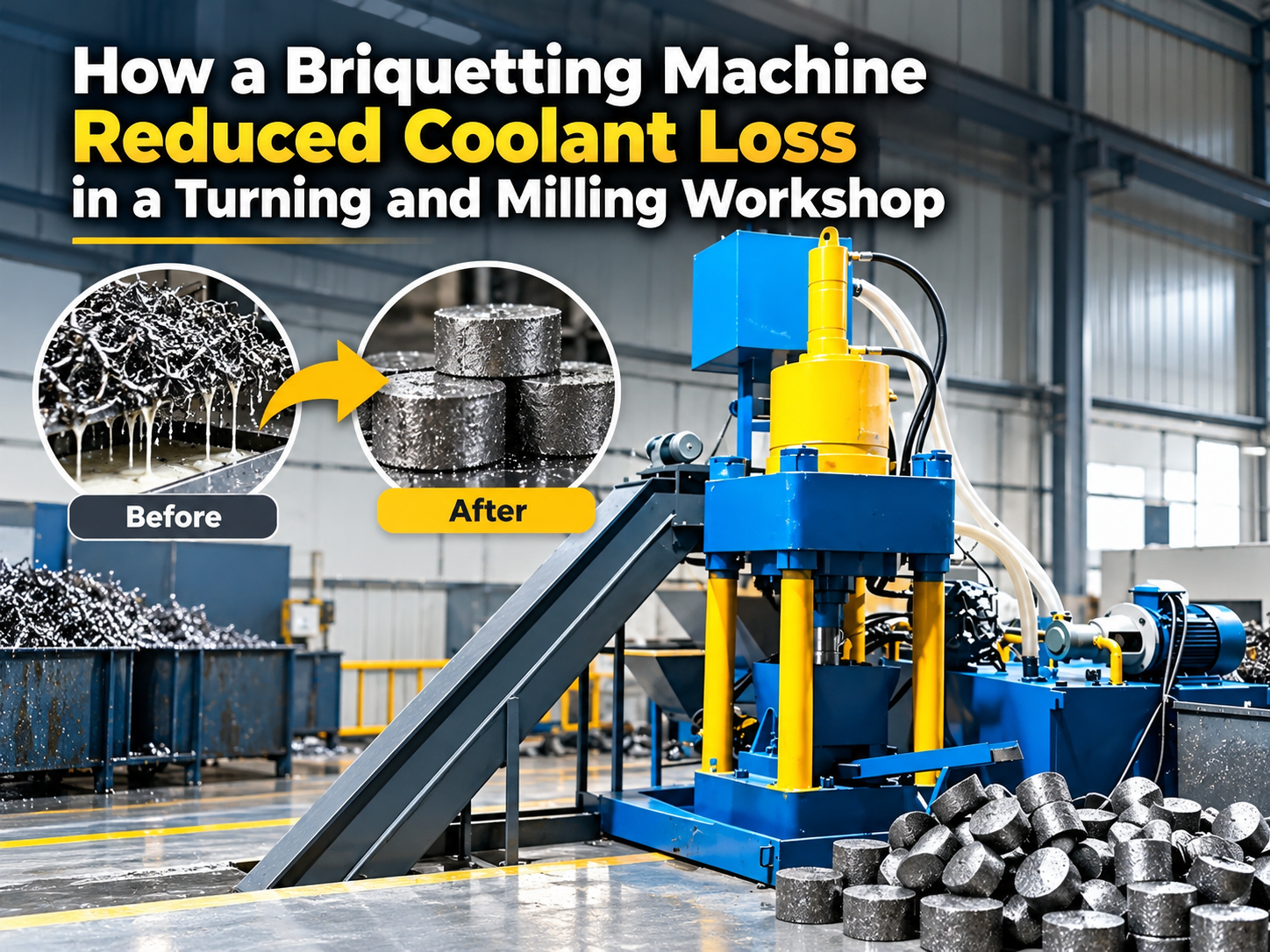
When we examine how a briquetting machine reduced coolant loss in a turning and milling workshop, we are looking at a fundamental shift in resource management. Traditional methods of handling metal chips—such as shoveling them into bins—allow vast quantities of coolant to drip away, evaporate, or remain trapped in the porous structure of the scrap. This not only wastes money on fluid replenishment but also creates environmental hazards and housekeeping nightmares. By compressing these chips into dense, dry briquettes, workshops can reclaim up to 95% of the cutting fluid that would otherwise be lost to the landfill.
HARSLE has observed that the transition from loose scrap management to briquetting technology is one of the most effective ways to improve the sustainability and profitability of a metal fabrication facility. This article explores the technical mechanics, economic benefits, and operational considerations of integrating a briquetting system into your turning and milling workflow. We will delve into why this investment is no longer a luxury, but a necessity for competitive manufacturing.
The following sections will provide a comprehensive guide on how this technology functions, how to select the right equipment for your specific metal types, and the long-term impact on your workshop’s operational efficiency. Whether you are running a small job shop or a large-scale production facility, understanding the mechanics of coolant recovery is essential for modern metalworking success.
Key Considerations for Coolant Recovery
The primary driver for adopting briquetting technology is the high cost of modern synthetic and semi-synthetic coolants. In a typical turning and milling environment, chips are coated in fluid. When these chips are stored in open hoppers, the fluid drains slowly, often ending up on the shop floor or in the waste stream. This loss is cumulative; over a year, a medium-sized shop can lose thousands of dollars in fluid costs alone. A briquetting machine acts as a mechanical filter, using high pressure to squeeze the coolant out of the chips before they are ejected as solid pucks.
Beyond fluid recovery, there is the issue of scrap value. Metal recyclers pay significantly more for clean, dry, and uniform briquettes than they do for loose, oil-laden shavings. Loose chips are bulky, difficult to transport, and often classified as hazardous waste due to the oil content. By briquetting, you transform a waste product into a high-density commodity. This shift not only reduces your disposal fees but often turns your scrap bin into a revenue stream, effectively paying for the machine over time.
Safety and housekeeping are equally critical considerations. Oil-soaked chips are a major slip hazard and a potential fire risk. They also require more frequent floor cleaning and specialized waste handling procedures. By consolidating chips into briquettes, you minimize the surface area exposed to air and reduce the volume of material that needs to be moved. This leads to a cleaner, safer, and more organized shop environment, which directly correlates to higher employee morale and better operational focus.
Finally, consider the environmental impact. Many regions have strict regulations regarding the disposal of metal scrap contaminated with cutting fluids. By removing the fluid at the source, you ensure that your waste stream is compliant with environmental standards. This proactive approach to waste management protects your business from potential fines and positions your workshop as a responsible, sustainable player in the metal fabrication industry.
Technical Details: How the Process Works
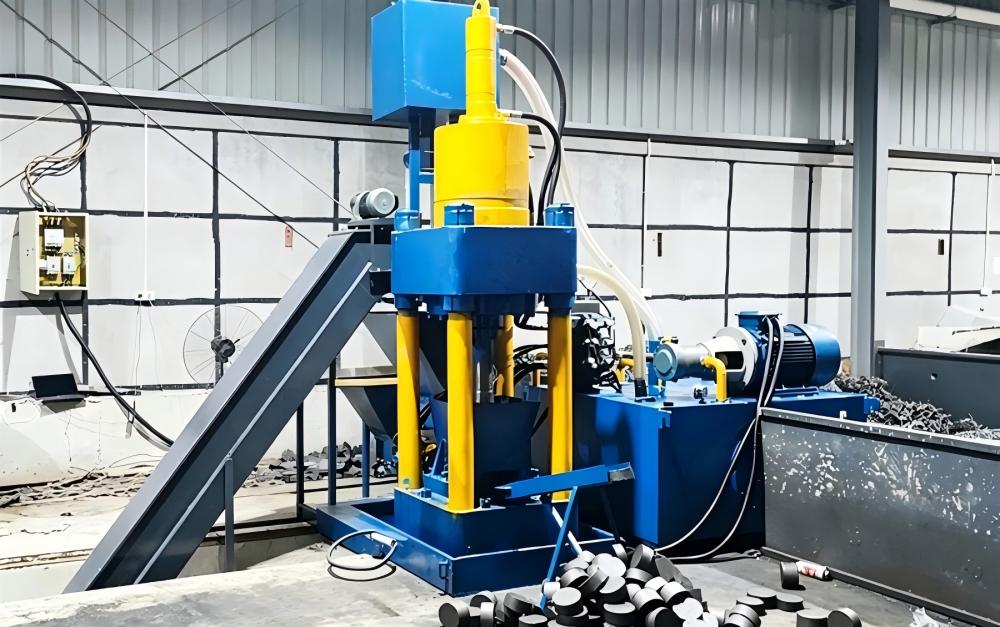
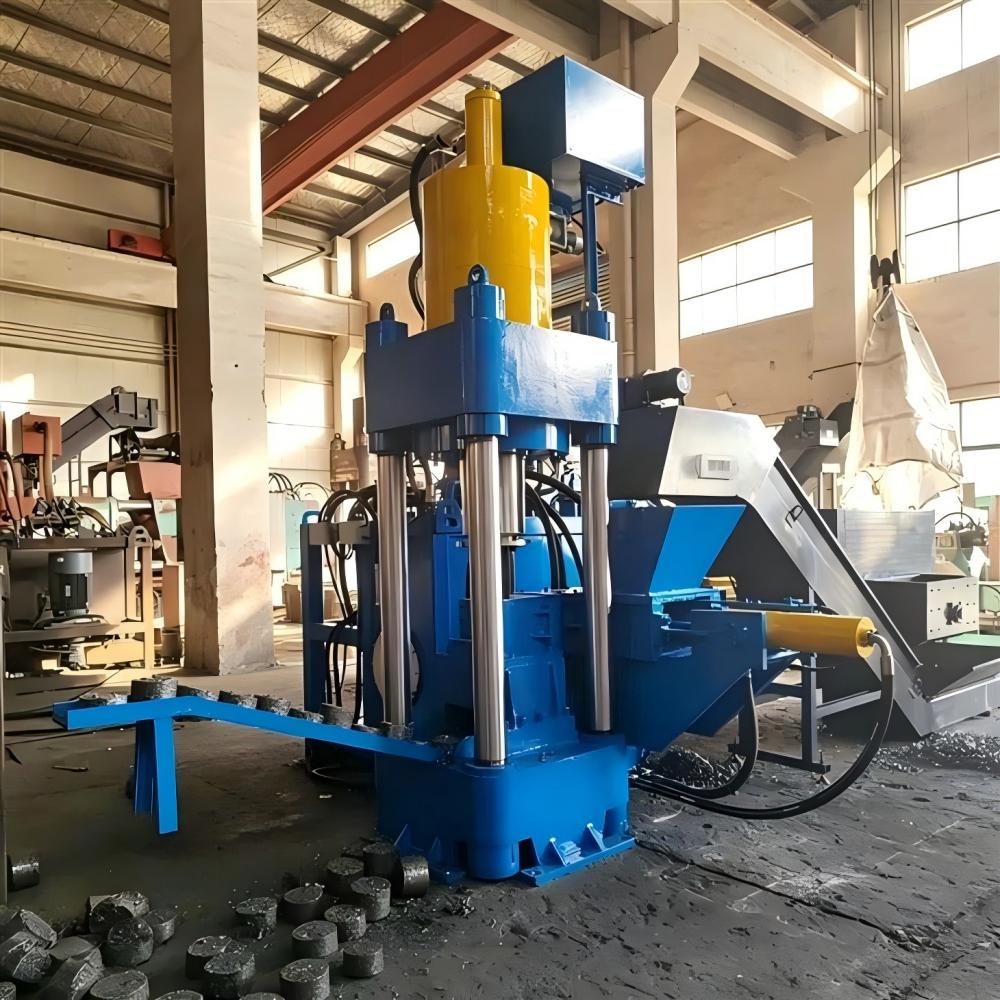
The core of the briquetting process is the application of extreme hydraulic pressure. A HARSLE briquetting machine utilizes a robust hydraulic cylinder to force metal chips into a compression chamber. As the pressure builds, the air is expelled, and the cutting fluid is forced out of the microscopic pores of the metal. The fluid is then collected in a dedicated reservoir, filtered, and returned to the machine’s coolant system for reuse. This closed-loop process is the secret to the dramatic reduction in fluid consumption.
The machine’s design is specifically engineered to handle the abrasive nature of metal chips. The compression chamber is typically lined with hardened, wear-resistant materials to ensure longevity despite the constant friction of steel, aluminum, or brass shavings. The hydraulic system is calibrated to provide consistent pressure, which is essential for creating uniform briquettes that are easy to stack and transport. The density of the briquettes can be adjusted based on the material type, ensuring that the machine operates at peak efficiency regardless of the alloy being processed.
Automation plays a significant role in modern briquetting systems. Many HARSLE units feature integrated conveyor systems that feed chips directly from the CNC machine or a central chip hopper into the briquetting press. This eliminates manual labor and ensures that the briquetting process keeps pace with the production speed of the turning and milling machines. Sensors monitor the chip level and the pressure levels, automatically adjusting the cycle time to optimize energy consumption and output quality.
Maintenance of these systems is relatively straightforward but critical. Because the machine is constantly dealing with metal debris, regular cleaning of the filter screens and inspection of the hydraulic seals are necessary. However, compared to the manual labor required to manage loose chips, the maintenance of a briquetting machine is minimal. The long-term reliability of these machines is a testament to the advancements in hydraulic engineering and material science, making them a staple in modern metal fabrication equipment lineups.
Conseils de sélection : Choisir le bon équipement
When selecting a briquetting machine for your workshop, the first factor to consider is the volume of chips generated. A high-production shop with multiple CNC turning and milling centers will require a high-capacity, automated system. Conversely, a smaller shop might benefit from a compact, semi-automatic unit. HARSLE offers a range of models designed to scale with your production needs, ensuring that you do not over-invest in capacity you do not need, or under-invest in a system that becomes a bottleneck.
Material compatibility is another crucial factor. Different metals have different compression characteristics. Aluminum chips, for instance, are lighter and more voluminous than steel chips, requiring a different compression ratio to achieve the desired density. Ensure that the machine you choose is rated for the specific alloys you process most frequently. Some machines are versatile enough to handle a variety of materials, while others are optimized for specific types of metal fabrication equipment.
Consider the physical footprint of the machine. In many workshops, floor space is at a premium. Look for a design that integrates well into your existing layout. Some briquetting machines are designed to be placed directly under the chip discharge of a CNC machine, while others are designed for centralized processing. A centralized system is often more efficient for larger shops, as it allows for the consolidation of all chip waste into one location, simplifying the logistics of scrap removal.
Finally, evaluate the support and service provided by the manufacturer. A briquetting machine is a long-term investment. You need a partner who provides comprehensive technical support, readily available spare parts, and expert guidance on installation and operation. HARSLE prides itself on offering not just machinery, but complete solutions that include training and maintenance support to ensure that your investment pays off in the shortest possible time.
FAQ: Common Questions About Briquetting
- How much coolant can I realistically recover? Most workshops see a recovery rate of 85% to 95% of the fluid that would otherwise be lost to the scrap bin.
- Une seule machine peut-elle traiter différents types de métal ? Yes, most HARSLE briquetting machines are designed to handle various metals, though you should avoid mixing different alloys in the same batch to maintain the value of your scrap.
- Does the briquetting process affect the quality of the coolant? The process itself does not degrade the coolant. In fact, by filtering the chips, you often remove fine metal particles that can contaminate your coolant, potentially extending the life of the fluid.
- Is the briquetting machine loud? Modern hydraulic briquetting machines are designed with noise-reduction technology, making them suitable for standard workshop environments.
- How long does it take to see a return on investment? Depending on your chip volume and the cost of your coolant, many shops see a full return on investment within 12 to 24 months.
Conclusion : Investir dans l'efficacité
The question of how a briquetting machine reduced coolant loss in a turning and milling workshop is answered by the simple physics of pressure and recovery. By transforming loose, messy, and fluid-heavy chips into compact, dry briquettes, workshops can reclaim valuable resources, increase their scrap revenue, and create a safer, more efficient working environment. It is a rare example of an industrial upgrade that pays for itself through both cost savings and improved operational standards.
As the manufacturing industry continues to move toward leaner, more sustainable practices, the adoption of briquetting technology will become increasingly standard. HARSLE remains committed to providing the high-quality metal fabrication equipment necessary to help shops navigate this transition. By choosing the right machine and integrating it effectively into your workflow, you are not just buying a piece of equipment; you are investing in the long-term profitability and environmental responsibility of your business.
If you are ready to take the next step in optimizing your turning and milling operations, consider the impact that a dedicated briquetting solution could have on your bottom line. Analyze your current chip volume, calculate your annual coolant loss, and reach out to the HARSLE team to discuss the best configuration for your facility. The path to a more efficient, cleaner, and more profitable workshop starts with the right technology.