
Four-Shaft Shredder Case Study: A Practical Solution for Industrial Volume Reduction

Introduction
In the modern landscape of metal fabrication and industrial manufacturing, waste management has transitioned from a secondary concern to a core operational pillar. As production volumes increase, so does the accumulation of scrap, offcuts, and bulky industrial waste. This is where the Four-Shaft Shredder Case Study: A Practical Solution for Industrial Volume Reduction becomes essential for facility managers and plant owners. By implementing advanced shredding technology, companies can transform unmanageable waste streams into high-density, recyclable materials, significantly reducing logistics costs and environmental impact.
HARSLE has long been at the forefront of providing robust metal fabrication equipment, and our four-shaft shredders are engineered to handle the most demanding industrial environments. Unlike two-shaft or single-shaft alternatives, the four-shaft configuration offers superior control over particle size and throughput, making it the gold standard for complex material processing. This article explores the technical nuances, operational benefits, and strategic advantages of integrating these machines into your production line.
Volume reduction is not merely about saving space; it is about optimizing the entire supply chain. When scrap metal is shredded, it occupies significantly less space in storage bins and transport vehicles. This leads to fewer trips to the recycling center, lower fuel consumption, and a smaller carbon footprint. Furthermore, processed scrap often commands a higher market value due to its uniform size and purity, providing a direct return on investment for the machinery itself.
Throughout this guide, we will analyze a real-world application of this technology. We will examine how a mid-sized fabrication plant utilized a HARSLE four-shaft shredder to solve a bottleneck in their waste disposal process. By understanding the mechanics of these machines, you can better appreciate why they are considered the ultimate solution for industrial volume reduction in the metal fabrication sector.
Key Considerations for Industrial Volume Reduction
When evaluating the need for a four-shaft shredder, the first step is to conduct a thorough audit of your current waste stream. Not all industrial waste is created equal; the density, hardness, and shape of your scrap will dictate the required torque and blade configuration of your shredding equipment. A Four-Shaft Shredder Case Study: A Practical Solution for Industrial Volume Reduction highlights that successful implementation begins with understanding material characteristics.
Another critical factor is the throughput requirement. Industrial facilities often face pressure to process waste at the same rate it is generated. If the shredder cannot keep up with the production line, it becomes a bottleneck rather than a solution. We recommend calculating your peak waste generation per hour and selecting a machine that offers at least a 20% buffer to account for surges in production or unexpected material density variations.
Space constraints within the facility also play a major role. While four-shaft shredders are powerful, they require adequate footprint for loading mechanisms, discharge conveyors, and maintenance access. Planning the layout of your shredding station is as important as the machine selection itself. Proper integration with existing material handling systems, such as magnetic separators or dust collection units, can further enhance the efficiency of your volume reduction strategy.
Safety and compliance cannot be overlooked. Industrial shredders are powerful machines that require strict adherence to safety protocols. From emergency stop systems to automated feed controls, the equipment must meet international safety standards. Furthermore, noise levels and vibration management are essential considerations, especially in facilities located near office areas or residential zones. HARSLE designs its equipment with noise-dampening features to ensure a safer and more comfortable working environment.
Technical Details of Four-Shaft Shredders
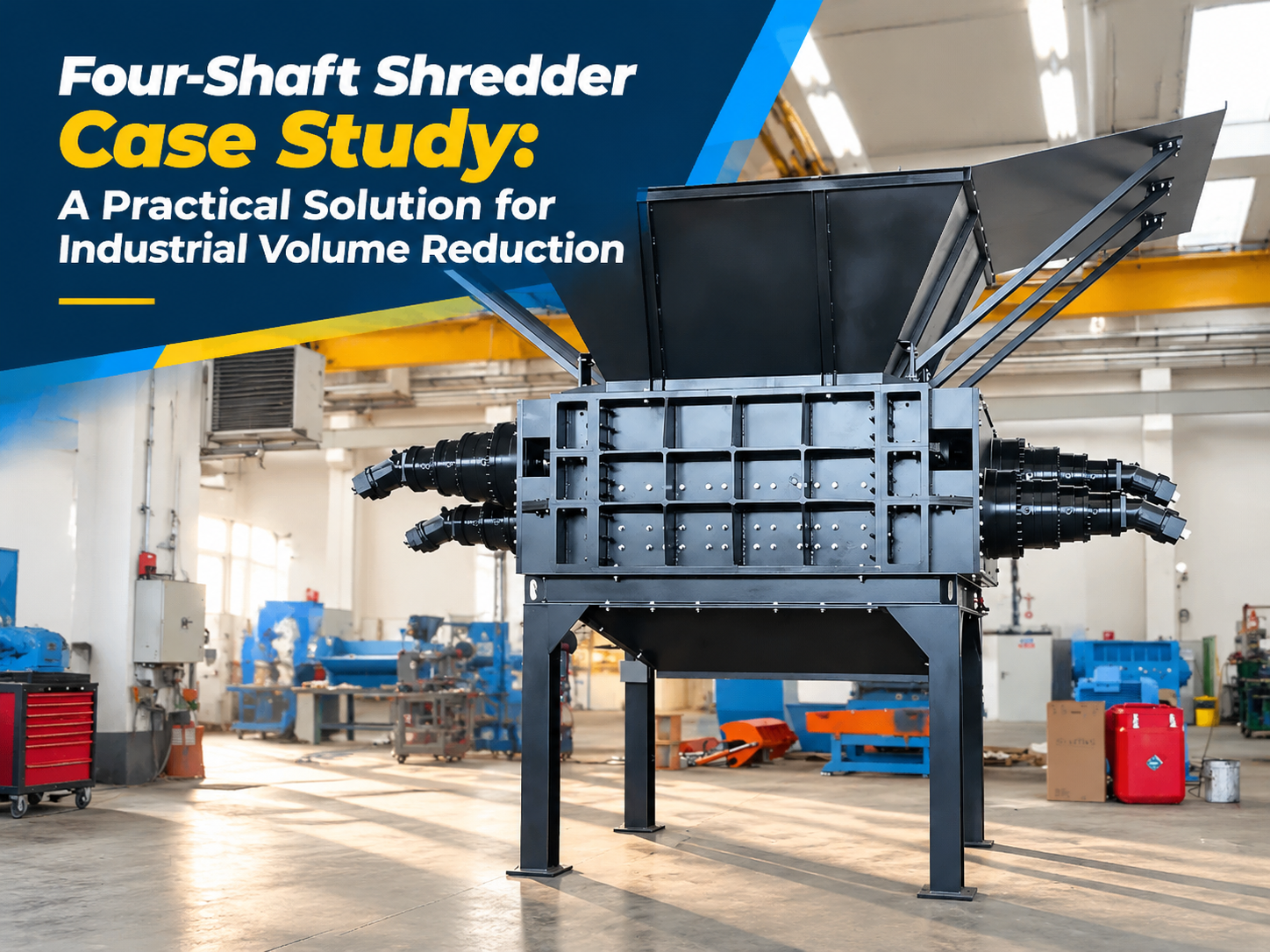
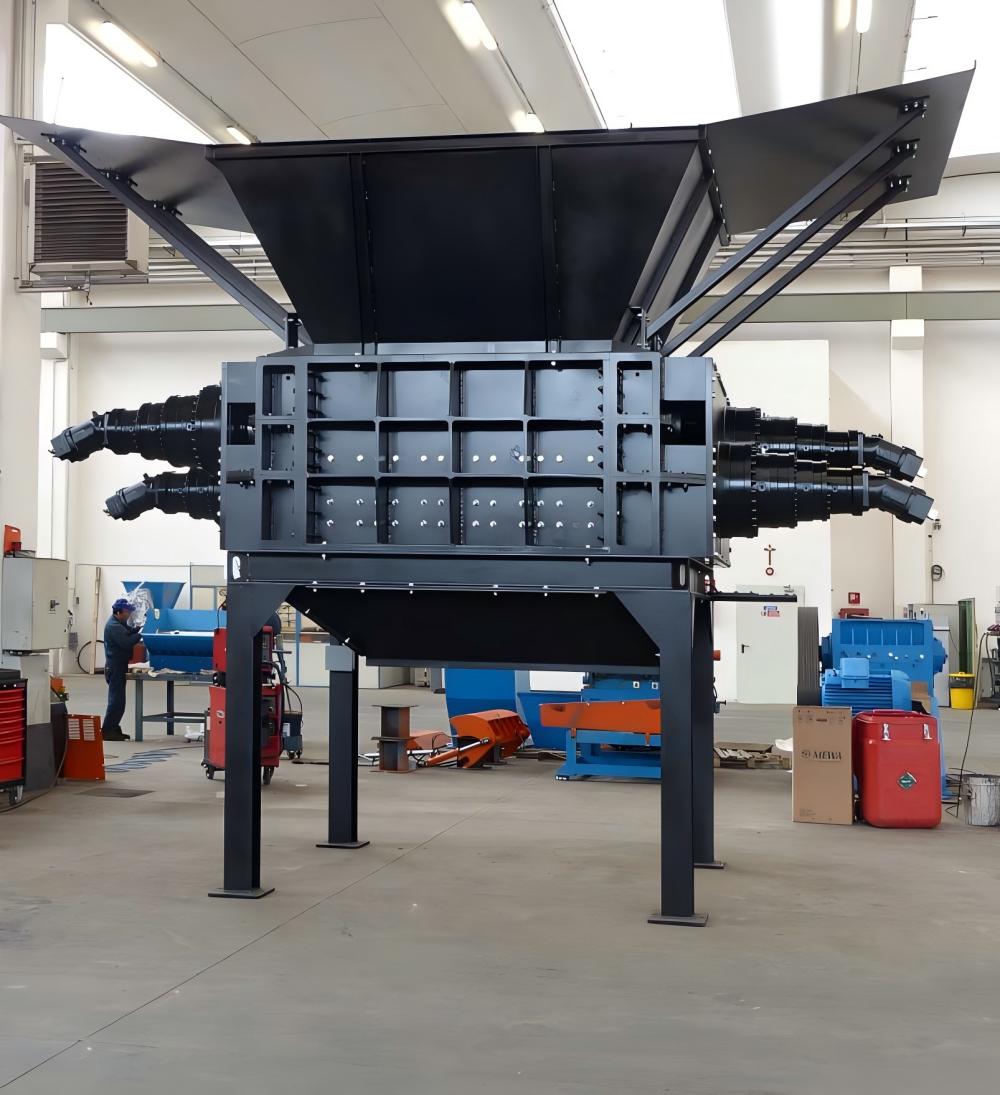
The core advantage of a four-shaft shredder lies in its unique mechanical design. Unlike two-shaft shredders that rely on a simple tearing action, four-shaft shredders utilize two primary shafts for initial shredding and two secondary shafts for sizing. This dual-stage process ensures that the material is reduced to a consistent, uniform size, which is critical for downstream processing or direct recycling.
The cutting blades are typically manufactured from high-alloy steel, heat-treated to withstand the abrasive nature of metal scrap. In a typical HARSLE configuration, the blades are designed with specific hook profiles that grab and pull material into the cutting chamber. This “positive displacement” action prevents the material from bridging or clogging, a common issue in less advanced shredding systems. The ability to customize blade thickness and tooth count allows operators to fine-tune the output size based on specific recycling requirements.
Drive systems in these machines are equally impressive. HARSLE utilizes high-torque gearboxes paired with heavy-duty electric motors. This combination provides the necessary force to shred thick steel plates, hollow tubes, and complex metal assemblies without stalling. The intelligent control system monitors the load on the motors in real-time, automatically reversing the shafts if a jam is detected, thereby protecting the drivetrain from damage and reducing downtime.
Maintenance is simplified through modular design. The cutting chamber is accessible for blade inspection and replacement, and the lubrication points are strategically located for easy access. By utilizing high-quality seals and bearings, HARSLE ensures that the internal components are protected from metal dust and debris, extending the service life of the machine even in the harshest industrial environments.

Selection Advice for Metal Fabrication Equipment
Selecting the right shredder is a significant capital investment. To ensure you are making the right choice, start by requesting a material test. Many manufacturers, including HARSLE, offer the ability to process a sample of your specific waste. This test provides invaluable data on throughput, power consumption, and the final particle size, allowing you to verify the machine’s performance before finalizing the purchase.
Consider the long-term scalability of your operations. If you anticipate growth in your fabrication business, it may be wise to invest in a machine with a slightly higher capacity than currently needed. Upgrading a shredder later is often more expensive than purchasing a robust unit from the start. Additionally, look for machines that offer modularity, allowing you to change screen sizes or blade configurations as your waste stream evolves.
Evaluate the manufacturer’s support network. A shredder is a critical piece of infrastructure; if it goes down, your waste management process stops. Ensure that the supplier provides comprehensive training for your operators, readily available spare parts, and responsive technical support. HARSLE prides itself on a global service network that ensures our clients receive the assistance they need, whenever they need it.
Finally, look at the total cost of ownership rather than just the initial purchase price. This includes energy efficiency, maintenance frequency, and the cost of replacement parts. A cheaper machine that requires frequent repairs and consumes excessive electricity will quickly become more expensive than a premium, high-efficiency unit. Focus on reliability and build quality to maximize your ROI over the machine’s lifecycle.
FAQ: Industrial Shredding Solutions
- What materials can a four-shaft shredder process?
Four-shaft shredders are highly versatile and can process a wide range of materials, including scrap metal, electronic waste, plastic drums, wood, and hazardous waste. Their high torque makes them particularly effective for dense metal fabrication offcuts. - How does a four-shaft shredder differ from a two-shaft model?
The primary difference is the addition of two secondary shafts that act as a sizing screen. This results in a much more uniform output size compared to the irregular shapes produced by two-shaft shredders. - Is the shredder difficult to maintain?
While they are heavy-duty machines, HARSLE shredders are designed for ease of maintenance. Regular lubrication and periodic inspection of the cutting blades are the main requirements to keep the machine running optimally. - Can the shredder be integrated into an automated line?
Yes, our shredders are designed to be integrated with conveyors, magnetic separators, and balers to create a fully automated waste processing system. - What safety features are included?
Our machines include emergency stop buttons, overload protection, automatic jam reversal, and safety interlocks on all access panels to ensure operator safety.
Conclusion
The Four-Shaft Shredder Case Study: A Practical Solution for Industrial Volume Reduction demonstrates that effective waste management is a key driver of industrial efficiency. By choosing the right equipment, fabrication facilities can turn a logistical burden into a streamlined, profitable process. HARSLE remains committed to providing the metal fabrication industry with the tools necessary to succeed in an increasingly competitive and environmentally conscious market.
Investing in a four-shaft shredder is not just about buying a machine; it is about adopting a strategy for long-term operational excellence. Whether you are looking to reduce transport costs, improve recycling revenue, or simply clear up valuable floor space, our shredding solutions provide the power, reliability, and precision required to get the job done. We invite you to contact our technical team to discuss your specific requirements and see how we can help you optimize your industrial volume reduction efforts.
As we look toward the future of manufacturing, the integration of smart, efficient, and durable machinery will continue to be the hallmark of successful companies. HARSLE is proud to be your partner in this journey, providing the equipment and expertise to keep your operations running smoothly and sustainably. Let us help you transform your waste management challenges into opportunities for growth and efficiency.












