
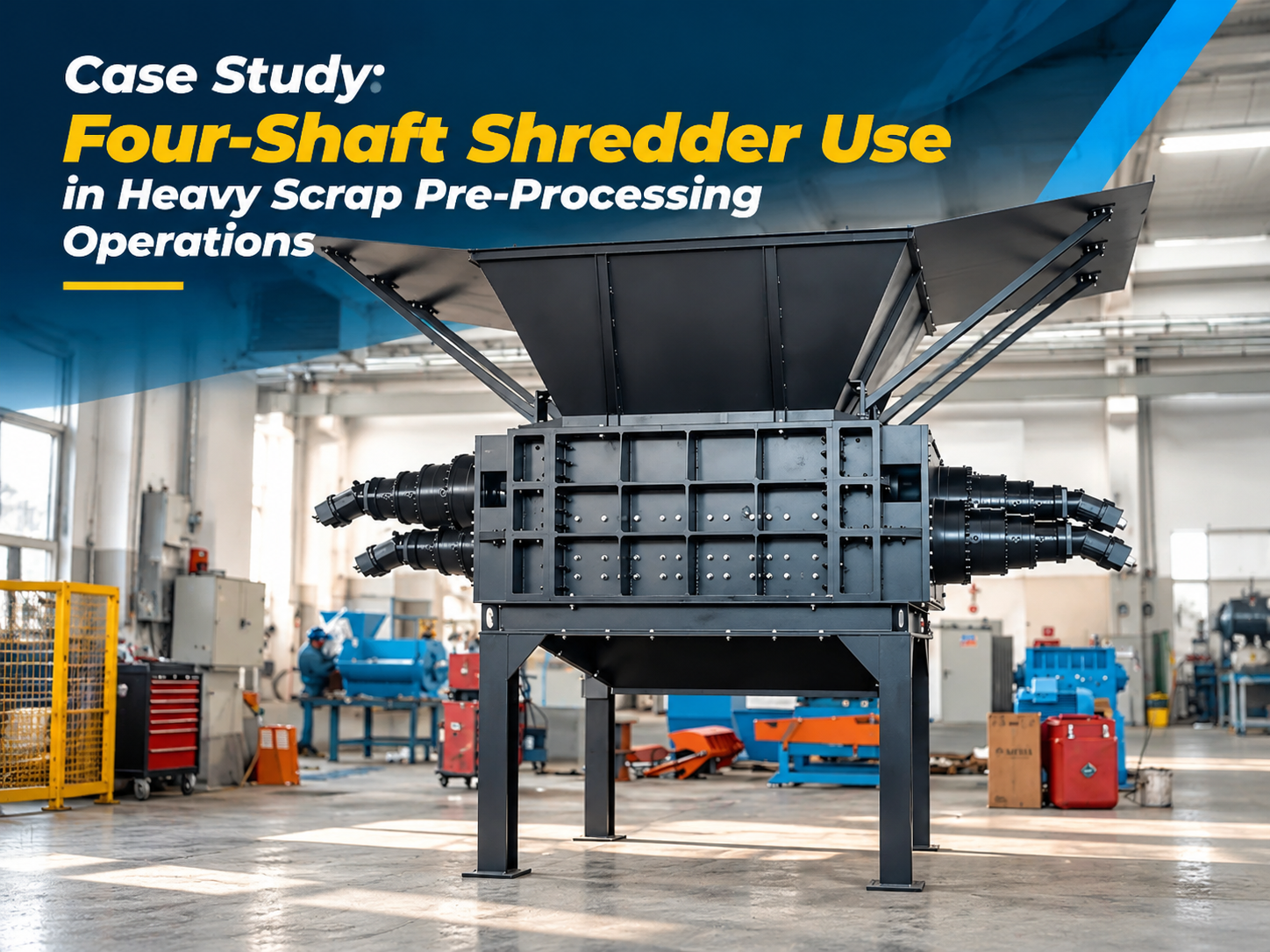
Case Study: Four-Shaft Shredder Use In Heavy Scrap Pre-Processing Operations

Introducción
In the modern landscape of metal fabrication and industrial recycling, the efficiency of pre-processing operations determines the overall profitability of the entire supply chain. As global demand for recycled steel and non-ferrous metals continues to climb, facilities are increasingly turning to advanced size-reduction technology. The Case Study: Four-Shaft Shredder Use In Heavy Scrap Pre-Processing Operations highlights how HARSLE’s engineering solutions address the challenges of high-volume, high-density scrap management.
Heavy scrap, ranging from industrial offcuts and automotive components to thick-walled piping and structural steel, presents a unique set of challenges. Traditional two-shaft shredders often struggle with the torque requirements and the tendency for long, stringy materials to wrap around the shafts. By contrast, the four-shaft shredder configuration offers a superior mechanical advantage, providing consistent throughput and precise particle sizing that is essential for downstream smelting and sorting processes.
This article explores a real-world application where a mid-sized metal recycling facility integrated a HARSLE four-shaft shredder into their existing line. We will analyze the technical specifications, the operational improvements observed, and the strategic advantages of choosing a multi-shaft system for heavy-duty industrial applications. Through this examination, we aim to provide a comprehensive guide for facility managers looking to optimize their scrap processing workflows.
Key Considerations for Heavy Scrap Processing
When evaluating the implementation of shredding technology, the nature of the input material is the primary variable. Heavy scrap is characterized by high tensile strength, varying thicknesses, and unpredictable shapes. A facility must consider the ‘feed-to-output’ ratio, ensuring that the shredder can handle the physical dimensions of the scrap without requiring excessive manual pre-cutting, which is both labor-intensive and dangerous.
Another critical consideration is the throughput capacity versus the power consumption. In heavy scrap pre-processing, the shredder must maintain high torque at low speeds to prevent stalling when encountering hardened steel or high-density alloys. HARSLE’s design philosophy focuses on high-torque gearboxes that allow the machine to ‘chew’ through dense materials without the need for constant reversing, which preserves the life of the cutting blades and the drive motor.
Environmental and safety factors also play a significant role. Heavy scrap processing is inherently noisy and produces significant dust and vibration. Modern four-shaft shredders are designed with sound-dampening enclosures and integrated dust suppression systems. Furthermore, the safety of the operators is paramount; automated feeding systems and emergency stop protocols are non-negotiable features in any industrial-grade shredding installation.
Finally, the integration of the shredder into the existing facility layout is a logistical challenge. The footprint of the machine, the height of the discharge conveyor, and the accessibility for maintenance must be planned during the design phase. A well-integrated system minimizes material handling time, reducing the ‘dead time’ between the arrival of raw scrap and the production of high-value, shredded output ready for the furnace.
Technical Details of Four-Shaft Shredder Systems
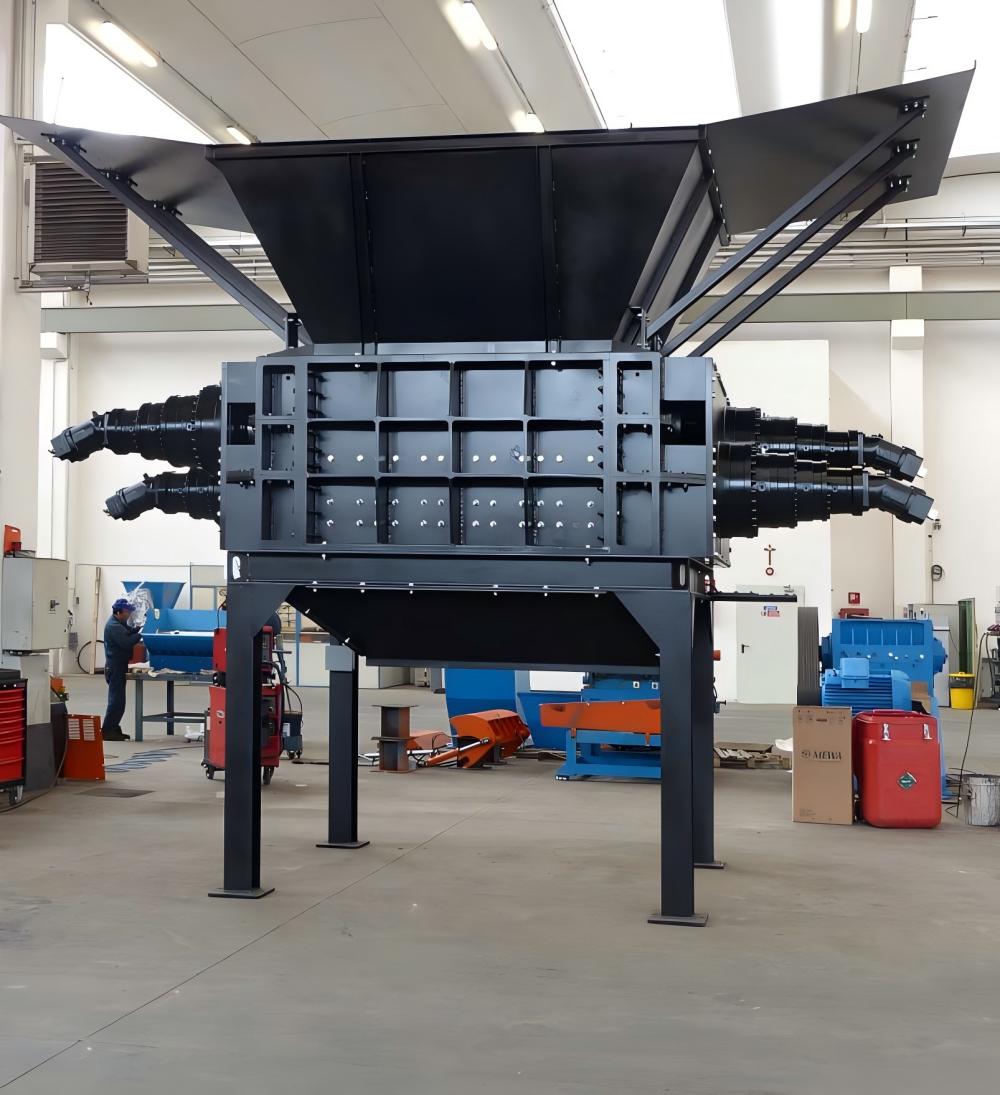
The core advantage of the four-shaft shredder lies in its unique architecture. Unlike two-shaft models, which rely on a primary cutting action, the four-shaft system utilizes two main cutting shafts and two auxiliary shafts. This configuration creates a ‘pre-shredding’ zone followed by a ‘sizing’ zone, which ensures that the output material is uniform in size—a critical requirement for downstream magnetic separators and eddy current separators.
HARSLE’s four-shaft shredders are equipped with high-alloy steel cutters that are heat-treated to withstand the abrasive nature of metal scrap. The geometry of these cutters is specifically engineered to ‘hook’ the material and pull it into the cutting chamber, preventing the ‘riding’ effect where scrap sits on top of the blades without being processed. This positive displacement action is what allows the machine to handle bulky, irregular items with ease.

The drive system is the heart of the machine. HARSLE utilizes independent motor drives for the shafts, allowing for differential speed control. This is particularly useful when processing mixed-metal streams, as the system can adjust the torque distribution dynamically based on the load detected by the sensors. This intelligent control system not only optimizes energy usage but also protects the machine from catastrophic failure in the event of non-shreddable material (like solid tool steel or concrete) entering the chamber.
Maintenance accessibility is another technical hallmark. The HARSLE design includes a modular screen system that allows operators to change the output size by simply swapping out the sizing screen. The shafts are mounted on heavy-duty bearings that are sealed against dust and debris, ensuring a long service life even in the harsh environments typical of scrap yards and metal fabrication plants.
Selection Advice: Choosing the Right Equipment
Selecting the right shredder requires a deep dive into your facility’s specific needs. Start by auditing your current scrap stream. Are you processing mostly light-gauge sheet metal, or are you dealing with heavy structural beams and engine blocks? The density of your input material will dictate the required motor horsepower and the thickness of the cutting blades.
Consider the throughput requirements. It is often better to slightly oversize your shredder to allow for future growth and to ensure that the machine is not running at 100% capacity at all times. Running a machine at 70-80% of its rated capacity significantly extends the interval between maintenance cycles and reduces the risk of overheating. HARSLE provides comprehensive capacity charts that help buyers match their volume requirements to the correct model size.
Look for manufacturers that offer robust after-sales support and spare parts availability. A shredder is a long-term investment, and the ability to source replacement cutters, bearings, and control boards quickly is essential to minimizing downtime. HARSLE prides itself on a global support network, ensuring that technical assistance is available regardless of the facility’s location.
Finally, evaluate the total cost of ownership (TCO). While the initial purchase price is important, the TCO includes energy consumption, maintenance labor, and the cost of replacement parts. A cheaper machine with high energy consumption and frequent breakdown intervals will end up costing significantly more over a five-year period than a premium, high-efficiency HARSLE shredder.
FAQ: Common Questions About Four-Shaft Shredders
- What is the main difference between a two-shaft and a four-shaft shredder? A four-shaft shredder provides a secondary sizing stage, ensuring more uniform output and better handling of bulky, complex materials compared to a two-shaft model.
- How often do the blades need to be sharpened? This depends on the material processed. For standard steel scrap, sharpening is typically required every 6 to 12 months, depending on volume.
- Can these machines handle non-metal contaminants? While designed for metal, HARSLE shredders can handle minor contaminants like wood or plastic, though excessive non-metal material may affect blade wear and sorting efficiency.
- What safety features are standard on HARSLE shredders? Standard features include emergency stop buttons, overload protection, reverse-rotation sensors, and safety interlocks on the loading hopper.
- Is the output size adjustable? Yes, by changing the sizing screen located beneath the cutting chamber, you can achieve different output sizes to meet specific downstream requirements.
Conclusión
The Case Study: Four-Shaft Shredder Use In Heavy Scrap Pre-Processing Operations demonstrates that the transition to advanced shredding technology is not merely an upgrade—it is a strategic necessity for modern metal fabrication and recycling facilities. By investing in a HARSLE four-shaft shredder, businesses can achieve higher throughput, improved material quality, and greater operational safety.
As the industry moves toward more circular economic models, the ability to efficiently process and recycle heavy scrap will become a key competitive advantage. HARSLE remains committed to providing the robust, reliable, and intelligent machinery required to meet these challenges. Whether you are looking to replace an aging system or establish a new processing line, understanding the technical nuances of four-shaft shredding is the first step toward a more profitable and efficient operation.
For those interested in further exploring how HARSLE can transform your scrap processing capabilities, we encourage you to reach out to our technical team for a site assessment. By analyzing your specific material stream and facility constraints, we can help you select the ideal configuration to maximize your return on investment and ensure long-term success in the demanding world of metal fabrication.












