How to Solve Inconsistent Extrusion Speed in an Aluminium Extrusion Press: A Comprehensive Guide


Introducción
In the high-precision world of metal fabrication, the aluminium extrusion press serves as the backbone of production for everything from architectural window frames to complex automotive components. However, even the most robust machinery can encounter operational hurdles. One of the most frustrating and costly issues for plant managers is the fluctuation in output velocity. When you need to solve inconsistent extrusion speed in an aluminium extrusion press, you are not just fixing a machine; you are restoring the integrity of your entire production line.
Inconsistent extrusion speed leads to uneven wall thickness, surface defects, and structural weaknesses in the final profile. These defects often result in high scrap rates, wasted raw materials, and missed delivery deadlines. At HARSLE, we understand that reliability is the cornerstone of industrial success. This guide provides a deep dive into the mechanical, hydraulic, and software-driven factors that influence extrusion speed and offers actionable solutions to stabilize your process.
Understanding the root cause of speed fluctuations requires a systematic approach. It involves evaluating the hydraulic system, the billet heating process, the die condition, and the control logic of the press. By addressing these variables, operators can ensure a consistent flow of material, maximizing both throughput and quality. This article serves as a technical manual for maintenance teams and production managers aiming to achieve peak performance in their aluminium extrusion operations.
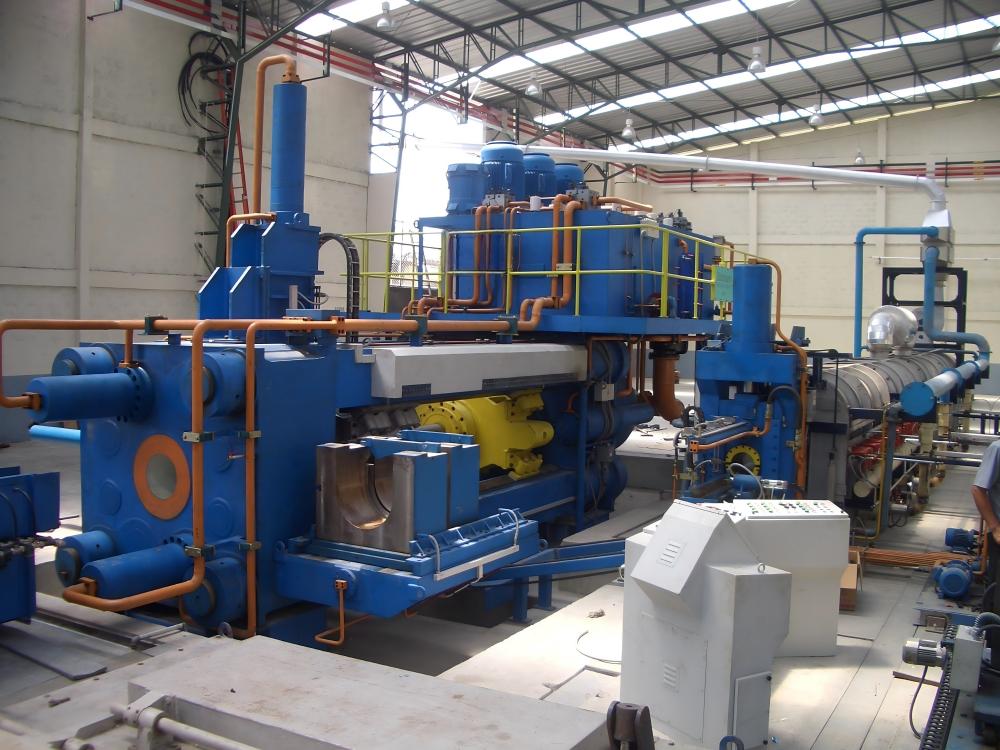
Key Considerations for Extrusion Stability
The first step to solve inconsistent extrusion speed in an aluminium extrusion press is to analyze the thermal profile of the billet. Aluminium is highly sensitive to temperature changes; even a minor deviation in billet temperature can significantly alter the material’s flow stress. If the billet is too cold, the press must exert higher pressure, which can lead to stalling or erratic speed. Conversely, if the billet is too hot, the material becomes overly fluid, leading to uncontrolled speed surges.
Another critical consideration is the lubrication system. The dummy block and the container wall must be properly lubricated to minimize friction. If the lubrication is inconsistent, the friction between the billet and the container wall will fluctuate, causing the press to compensate by varying the hydraulic pressure. This compensation loop often manifests as a jerky or pulsing extrusion speed that is difficult to stabilize without addressing the underlying friction coefficient.
Die design and wear also play a pivotal role. As a die wears down, the resistance to material flow changes. If the die is not properly balanced—meaning the flow channels are not optimized for the specific profile shape—the material will exit at different speeds across the cross-section. This internal resistance variation forces the press to work harder in certain areas, leading to overall speed instability. Regular inspection of die geometry is essential for maintaining a steady extrusion rate.
Finally, the hydraulic oil condition cannot be overlooked. Hydraulic fluid acts as the lifeblood of the extrusion press. If the oil is contaminated with debris, moisture, or air bubbles, the pressure delivery to the main ram will be inconsistent. Air in the system is particularly problematic, as it is compressible, leading to a “spongy” response from the press. Ensuring that the hydraulic system is clean, properly filtered, and free of air is a fundamental step in stabilizing your extrusion speed.
Technical Details: Troubleshooting the Hydraulic System
To effectively solve inconsistent extrusion speed in an aluminium extrusion press, one must look closely at the proportional valves. Modern extrusion presses utilize sophisticated proportional valve technology to control the speed of the main ram. If these valves are clogged with varnish or metal particles, their response time becomes sluggish or erratic. Regular maintenance of these valves, including cleaning and calibration, is necessary to ensure the control signal accurately translates into mechanical movement.
The hydraulic pump performance is equally vital. If the pump is experiencing cavitation or internal leakage, it will fail to provide a constant flow of oil to the main cylinder. Cavitation often occurs when the intake pressure is too low or the oil temperature is too high. By monitoring the pump’s discharge pressure and flow rate, maintenance teams can identify if the pump is the source of the inconsistency. Replacing worn pump seals or upgrading to a more efficient pump system can often resolve chronic speed issues.
The PLC (Programmable Logic Controller) and the feedback sensors form the brain of the extrusion press. The press relies on encoders or linear transducers to monitor the position and speed of the ram. If these sensors are sending noisy or intermittent signals, the PLC will struggle to maintain a steady speed. Checking the wiring, shielding, and mounting of these sensors is a standard troubleshooting procedure. Often, electromagnetic interference (EMI) from nearby high-power equipment can disrupt sensor signals, requiring better cable shielding or grounding.
Furthermore, the pressure relief valves and accumulator systems must be checked. Accumulators are designed to provide a surge of power during the extrusion cycle. If the nitrogen pre-charge in the accumulator is incorrect, the system will not be able to compensate for pressure drops during the extrusion stroke. Maintaining the correct nitrogen pressure is a simple yet highly effective way to ensure that the hydraulic system remains responsive and stable throughout the entire extrusion process.
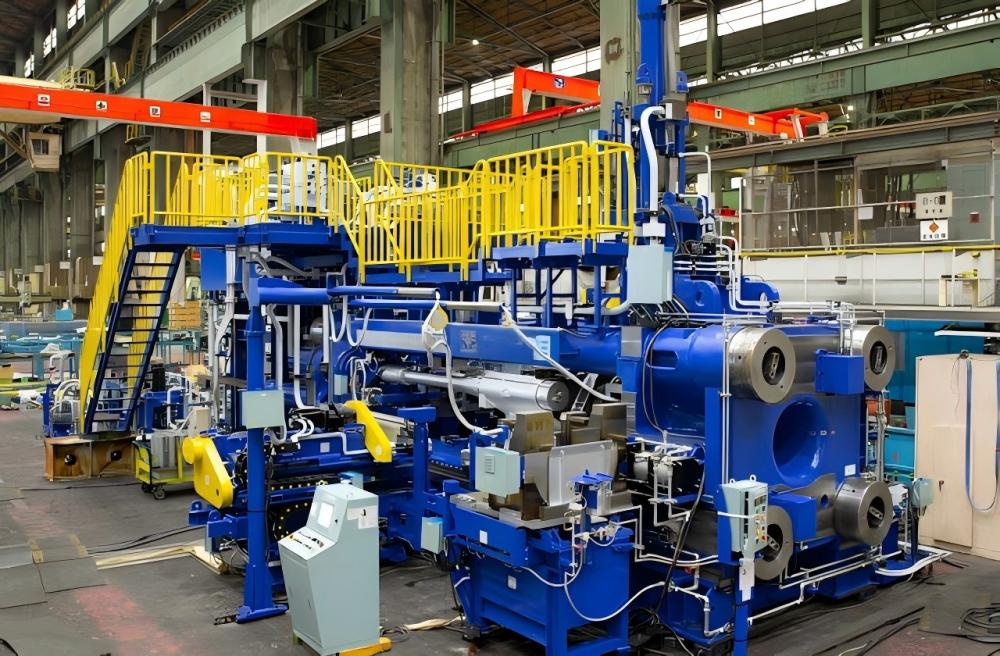
Selection Advice for Reliable Extrusion Equipment
When you are in the market for new metal fabrication equipment, choosing a press with advanced control systems is the best way to prevent speed inconsistencies from the start. Look for presses that feature closed-loop control systems. These systems continuously monitor the extrusion speed and automatically adjust the hydraulic flow in real-time to compensate for any deviations. This level of automation significantly reduces the reliance on manual adjustments and ensures a uniform product finish.
Consider the build quality of the container and the main ram. A rigid, well-engineered frame minimizes deflection under load. If the press frame flexes during the extrusion process, the alignment between the ram, the container, and the die can shift, leading to friction changes and speed fluctuations. Investing in a press with a heavy-duty, stress-relieved frame is a long-term investment in production stability and machine longevity.
Evaluate the manufacturer’s support and the availability of spare parts. Even the best machines require maintenance. A manufacturer that provides comprehensive technical documentation, remote diagnostic capabilities, and quick access to critical components like proportional valves and sensors will help you solve inconsistent extrusion speed in an aluminium extrusion press much faster. HARSLE prides itself on providing not just machinery, but a complete support ecosystem for our clients.
Finally, look for energy-efficient designs, such as servo-driven hydraulic systems. These systems are inherently more precise than traditional constant-displacement pumps. By adjusting the motor speed to match the required flow, servo-driven presses provide superior control over the extrusion speed, resulting in less heat generation, lower energy consumption, and a more stable extrusion process. This is the future of aluminium extrusion technology.
FAQ: Common Questions
- Q: Why does my extrusion speed fluctuate at the end of the billet?
A: This is often due to the “butt” effect. As the billet gets shorter, the friction characteristics change. Ensure your press has a taper heating system to compensate for the temperature gradient along the billet. - Q: Can worn seals cause speed issues?
A: Yes. Internal leakage in the main cylinder seals allows oil to bypass the piston, which can cause the ram to move inconsistently or lose pressure. Regular seal replacement is a critical maintenance task. - Q: How often should I calibrate my extrusion sensors?
A: Calibration should be checked during every major maintenance interval, typically every 500 to 1,000 operating hours, or whenever you notice a deviation in product dimensions. - Q: Does the alloy type affect extrusion speed?
A: Absolutely. Different aluminium alloys have different flow stresses. Always ensure your press parameters are optimized for the specific alloy being processed. - Q: What is the role of the dummy block in speed stability?
A: A worn dummy block allows aluminium to flow back past the ram, causing friction and pressure drops. Using a high-quality, properly sized dummy block is essential for consistent extrusion.
Conclusión
To solve inconsistent extrusion speed in an aluminium extrusion press is to master the balance between thermal management, hydraulic precision, and mechanical integrity. By systematically addressing the variables—from billet temperature and lubrication to sensor calibration and valve health—you can eliminate the fluctuations that compromise your production quality. Remember that consistency is not a one-time fix but a result of diligent maintenance and the use of high-quality, well-integrated machinery.
At HARSLE, we are committed to helping our partners achieve excellence in metal fabrication. Whether you are troubleshooting an existing line or looking to upgrade to a more advanced system, our team is here to provide the technical expertise you need. By focusing on the details of your extrusion process, you can ensure that your facility remains competitive, efficient, and capable of producing the highest quality aluminium profiles in the industry. Do not let speed inconsistencies hold your production back; take control of your process today.