How a Single-Shaft Shredder Improved Regrind Quality in a Plastic Recycling Workflow

Introduction
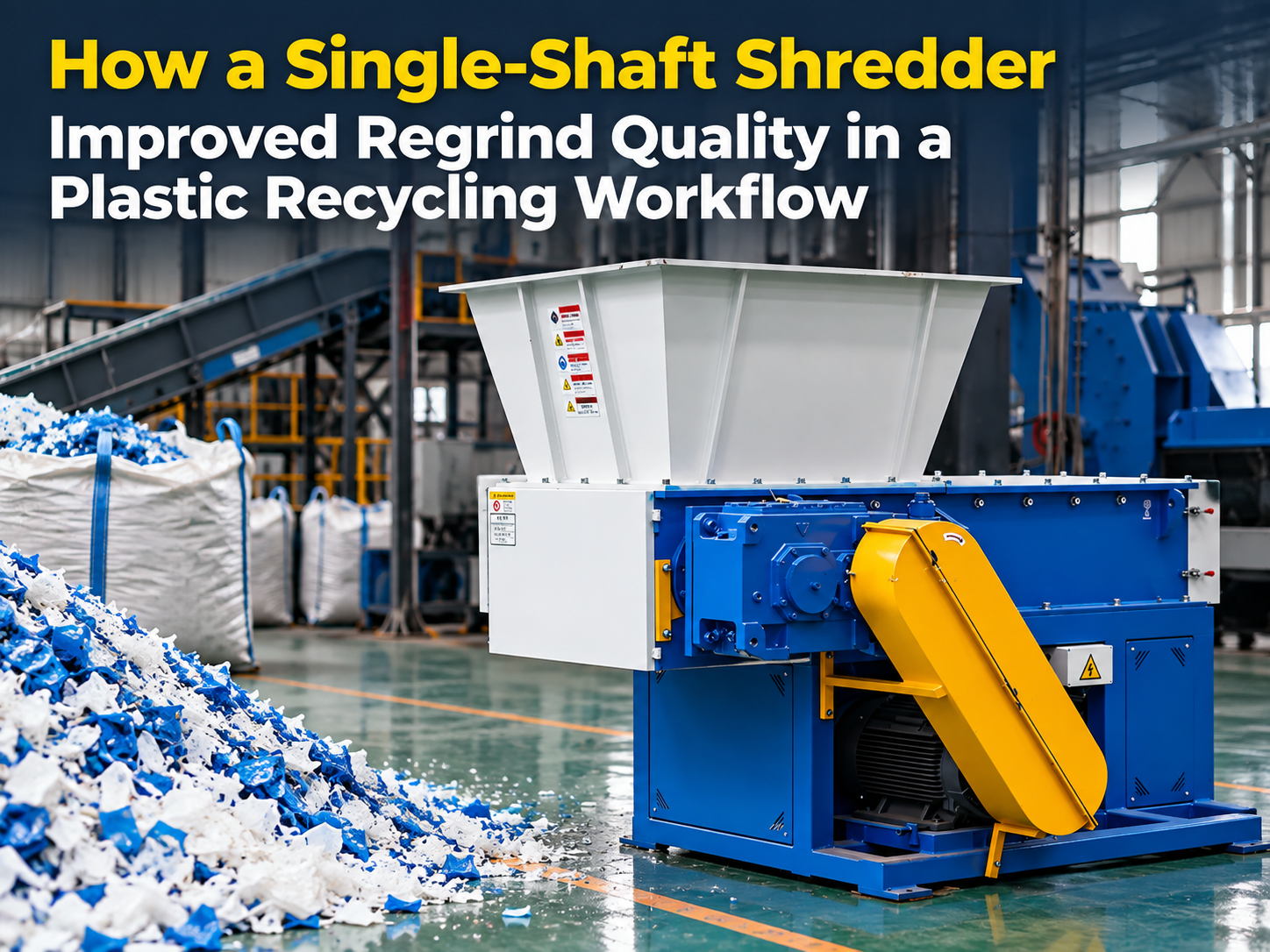
In the modern circular economy, the efficiency of plastic recycling facilities hinges on the quality of the regrind produced. As manufacturers strive for higher purity levels and consistent particle sizes, the role of primary size reduction equipment has come under intense scrutiny. Many facilities have discovered that how a single-shaft shredder improved regrind quality in a plastic recycling workflow is not merely a matter of convenience, but a fundamental shift in operational capability.
HARSLE, as a leader in industrial machinery, recognizes that the transition from bulky plastic waste to high-quality feedstock requires precision engineering. A single-shaft shredder acts as the gatekeeper of the recycling line. By providing a uniform output, these machines ensure that downstream processes—such as granulation, washing, and extrusion—operate at peak efficiency without the risk of contamination or mechanical strain caused by oversized or irregular materials.
This article explores the technical nuances of single-shaft shredding technology. We will examine why this specific equipment configuration is superior for high-volume plastic recycling, how it influences the physical properties of the regrind, and what facility managers must consider when integrating this technology into their existing workflows to maximize ROI and material value.
Understanding the mechanics of size reduction is essential for any plant manager looking to scale operations. Whether dealing with rigid plastics, purge lumps, or thin-walled containers, the single-shaft shredder provides a controlled environment for material processing. By the end of this guide, you will understand the critical link between shredding precision and the final market value of your recycled plastic pellets.

Key Considerations for Plastic Recycling Efficiency
The primary challenge in plastic recycling is the heterogeneity of the input material. Waste streams often contain a mix of densities, shapes, and material types. A single-shaft shredder addresses this by utilizing a low-speed, high-torque rotor that forces material against a stationary counter-knife. This controlled shearing action is the secret behind how a single-shaft shredder improved regrind quality in a plastic recycling workflow.
One of the most significant considerations is the consistency of the particle size. Inconsistent regrind leads to “bridging” in hoppers and uneven melting in extruders. By utilizing a screen-based discharge system, single-shaft shredders ensure that only material reduced to a specific size can exit the cutting chamber. This eliminates the need for secondary screening processes and reduces the energy footprint of the entire facility.
Another key factor is the reduction of heat generation. High-speed granulators often melt the plastic during the cutting process, leading to degradation of the polymer chains and the formation of “fines” or dust. Single-shaft shredders operate at lower RPMs, which keeps the material cool. This preserves the physical properties of the plastic, ensuring that the regrind retains its structural integrity for future manufacturing applications.
Finally, durability and maintenance are paramount. Plastic recycling environments are abrasive and demanding. Choosing equipment built with high-grade wear-resistant alloys is essential. HARSLE emphasizes the importance of modular cutting systems, which allow operators to replace individual teeth or counter-knives rather than the entire rotor assembly, significantly reducing downtime and operational costs over the machine’s lifecycle.
Technical Details of Single-Shaft Shredding
The technical superiority of the single-shaft shredder lies in its rotor design and hydraulic ram system. Unlike twin-shaft shredders that rely on tearing, the single-shaft design uses a positive-feed hydraulic ram that pushes the material into the rotor at a constant, controlled pressure. This ensures that the cutting action is consistent regardless of the material’s density or volume.
The rotor itself is typically equipped with indexable cutting inserts. These inserts are designed to be rotated or replaced once they lose their edge, allowing for a long service life even when processing contaminated plastic streams. The gap between the rotor knives and the counter-knife is adjustable, which is a critical feature for fine-tuning the output quality. A tighter gap results in a cleaner cut and less energy consumption during the shearing process.
Integration with PLC (Programmable Logic Controller) systems allows for automated load sensing. If the shredder detects an overload, the ram automatically retracts to prevent jamming and then resumes the cycle. This intelligence is a major reason why a single-shaft shredder improved regrind quality in a plastic recycling workflow; it prevents the machine from “choking” on material, which would otherwise lead to uneven shredding and potential damage to the cutting tools.
Furthermore, the discharge screen is the final arbiter of quality. These screens are available in various hole sizes, allowing the facility to customize the regrind size based on the requirements of the downstream extruder. Whether the goal is to produce a coarse flake for washing or a fine regrind for direct injection molding, the screen-based system provides the necessary versatility to adapt to changing market demands.

Selection Advice for Recycling Facilities
Selecting the right shredder requires a thorough audit of your current waste stream. Not all plastics behave the same way; for instance, HDPE pipes require different rotor configurations and torque settings compared to thin-film LDPE or bulky automotive bumpers. When evaluating how a single-shaft shredder improved regrind quality in a plastic recycling workflow, you must first define your target output specifications.
Consider the throughput requirements of your facility. A shredder that is undersized will struggle to keep up with the line, leading to operator frustration and potential safety hazards. Conversely, an oversized machine may be energy-inefficient. HARSLE recommends calculating your peak hourly tonnage and adding a 20% buffer to account for variations in material density and potential future growth in your recycling operations.
Evaluate the ease of maintenance. A machine that is difficult to clean or service will inevitably lead to cross-contamination between different plastic batches. Look for features such as hydraulic access doors, quick-change screen systems, and accessible lubrication points. These design elements ensure that your team can perform routine maintenance quickly, keeping the machine running at peak performance.
Finally, consider the support and expertise of the manufacturer. Industrial machinery is a long-term investment. Partnering with a company that provides comprehensive training, readily available spare parts, and technical support ensures that you can maximize the lifespan of your equipment. A high-quality shredder is only as good as the support system backing it, especially when dealing with the complexities of modern plastic recycling.
الأسئلة الشائعة
How does a single-shaft shredder differ from a granulator?
A single-shaft shredder is designed for primary size reduction of large or bulky items, operating at low speeds with high torque. A granulator is typically used for secondary reduction, operating at high speeds to create fine granules. Using a shredder first protects the granulator from damage and improves overall regrind quality.
Can a single-shaft shredder handle contaminated plastic?
Yes, modern single-shaft shredders are built to handle contaminated streams. However, it is recommended to use magnetic separators or metal detectors upstream to remove ferrous and non-ferrous metals, which can damage the cutting knives.
How often should the cutting knives be replaced?
The frequency depends on the type of plastic and the volume processed. Most indexable knives can be rotated several times before needing replacement. Regular inspection of the cutting gap is the best way to determine when maintenance is required.
Why is the hydraulic ram important?
The hydraulic ram ensures that material is fed into the rotor at a consistent pressure. This prevents the machine from jamming and ensures that the material is cut rather than just pushed around the chamber, which is vital for uniform regrind.
Is energy consumption a concern with these machines?
Single-shaft shredders are generally more energy-efficient than high-speed granulators because they use high-torque, low-speed motors. The energy is focused on the shearing action rather than high-velocity impact, resulting in lower power draw per ton of material processed.
Conclusion
The journey toward a more efficient and profitable plastic recycling operation is paved with the right equipment choices. As we have explored, the impact of how a single-shaft shredder improved regrind quality in a plastic recycling workflow is profound. By providing consistent particle size, reducing heat-induced material degradation, and offering the versatility to handle diverse plastic streams, these machines serve as the backbone of high-quality recycling lines.
HARSLE remains committed to providing the industrial machinery necessary to meet these challenges. By focusing on robust design, intelligent control systems, and ease of maintenance, we help our clients turn waste into valuable raw materials. Investing in a high-quality single-shaft shredder is not just an operational upgrade; it is a strategic decision that enhances the quality of your output and the sustainability of your business.
As the industry continues to evolve, the demand for high-purity regrind will only increase. Facilities that prioritize the precision of their primary size reduction equipment will be best positioned to capitalize on these market trends. We invite you to evaluate your current workflow and consider how the integration of advanced shredding technology can elevate your recycling standards to new heights.