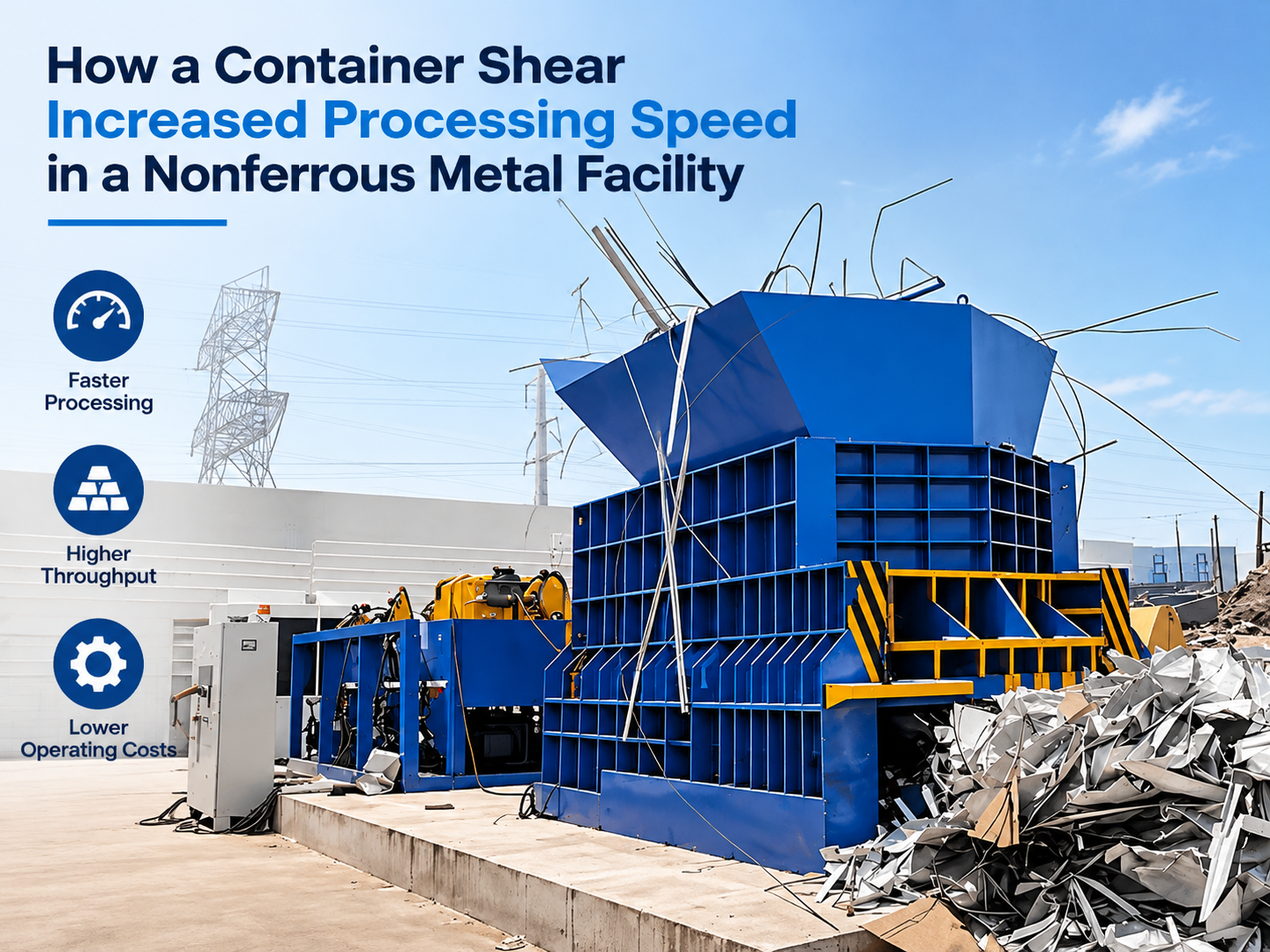
How a Container Shear Increased Processing Speed in a Nonferrous Metal Facility

Introduction: The Evolution of Nonferrous Metal Processing
In the competitive landscape of modern metal recycling and fabrication, the ability to process raw materials rapidly and accurately is the primary differentiator between market leaders and stagnant operations. For many facilities handling nonferrous metals—such as aluminum, copper, brass, and stainless steel—the bottleneck often lies in the initial reduction phase. Traditional cutting methods frequently fail to keep pace with the high volume of incoming scrap, leading to logistical congestion and increased operational costs. This is where the implementation of advanced machinery becomes critical.
The narrative of how a container shear increased processing speed in a nonferrous metal facility is not just a story about a single piece of equipment; it is a testament to the transformative power of industrial automation. By transitioning from manual or semi-automatic cutting processes to a high-capacity container shear, facilities can achieve a seamless flow of material, significantly reducing downtime and labor requirements. HARSLE has observed that the integration of these systems often results in a 30% to 50% increase in throughput within the first quarter of operation.
Nonferrous metals present unique challenges due to their varying densities and shapes. Unlike ferrous scrap, which is often uniform, nonferrous materials can range from thin-walled extrusions to bulky, irregular castings. A container shear is specifically engineered to handle this diversity, providing the necessary force to densify and cut materials into furnace-ready sizes. This article explores the technical nuances, operational benefits, and strategic considerations for facilities looking to upgrade their shearing capabilities.
As we delve into the mechanics of these machines, it is important to understand that the goal is not merely speed, but consistent, high-quality output. A container shear acts as the heart of a recycling facility, synchronizing the intake of raw scrap with the output of high-density, transportable metal. By optimizing this cycle, facilities can maximize their profit margins and improve their overall safety standards.
Key Considerations for Operational Efficiency
When evaluating the impact of a container shear on a nonferrous facility, one must first consider the material handling workflow. The efficiency of a shear is inherently tied to how quickly material can be fed into the compression chamber. Facilities that have successfully increased their processing speed often utilize integrated conveyor systems or automated grab cranes to ensure the shear is never idle. The goal is to create a continuous loop where the shear is constantly engaged in the cutting cycle.
Another critical factor is the material density requirements of the end-user, such as smelters or refineries. Nonferrous metals are often sold based on their purity and density. A container shear allows for precise control over the final size of the sheared material, ensuring that it meets the strict specifications of the buyer. By producing uniform, high-density bales or cut pieces, a facility can command higher prices and reduce shipping costs, as more weight can be packed into a single container.
Maintenance and downtime management are also paramount. A container shear is a heavy-duty machine that operates under immense pressure. Facilities that prioritize preventative maintenance—such as regular blade sharpening, hydraulic fluid analysis, and structural inspections—experience significantly fewer unplanned outages. When a shear is down, the entire facility’s production speed drops to zero, making reliability a core component of the overall processing speed equation.
Finally, the human element cannot be overlooked. Training operators to understand the nuances of the control interface and the specific material characteristics of different nonferrous alloys is essential. A well-trained operator can adjust the shear’s settings in real-time to optimize the cutting cycle for different types of scrap, further enhancing the facility’s overall throughput and efficiency.
Technical Details: The Mechanics of High-Speed Shearing
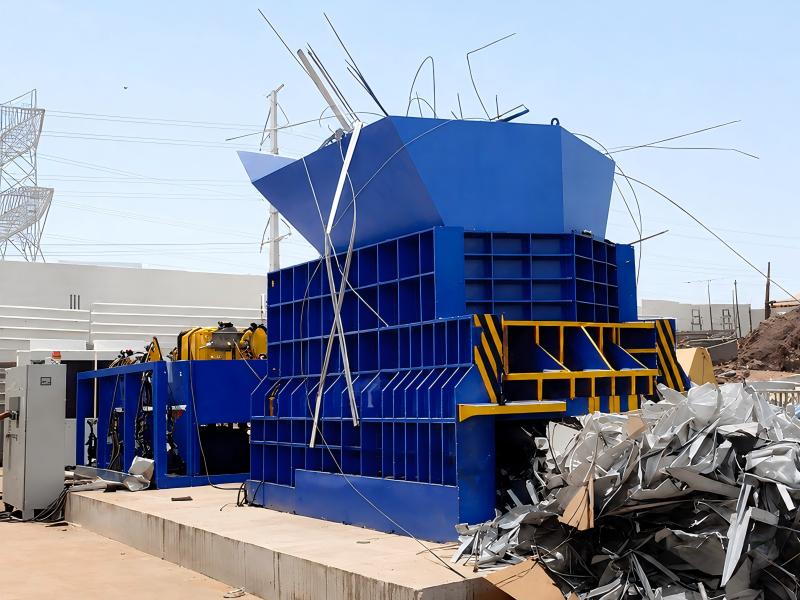
The technical superiority of a modern container shear lies in its hydraulic architecture and blade design. Unlike traditional alligator shears, which are limited by their opening size and manual feeding requirements, a container shear features a large, enclosed compression box. This box uses powerful hydraulic rams to compress the material into a dense log before the main shear blade descends. This pre-compression stage is the secret to the machine’s speed, as it eliminates air gaps and ensures the blade is cutting solid metal rather than empty space.
The shear force is generated by high-pressure hydraulic cylinders, often capable of exerting hundreds of tons of force. This force is distributed through a robust frame designed to withstand the shock loads associated with cutting tough nonferrous alloys. HARSLE’s container shears utilize advanced proportional valve technology, which allows for smooth, rapid movement of the rams, reducing the cycle time between cuts. This precision engineering ensures that the machine can handle high-volume throughput without overheating or mechanical fatigue.
Blade material and geometry are equally important. For nonferrous applications, blades must be made from high-alloy, wear-resistant steel that can maintain a sharp edge even after thousands of cycles. The geometry of the blade—often featuring a slight angle or ‘guillotine’ design—is optimized to slice through metal with minimal resistance. This reduces the power consumption per cut and extends the life of the hydraulic components, contributing to a more sustainable and cost-effective operation.
Furthermore, modern container shears are equipped with sophisticated PLC (Programmable Logic Controller) systems. These systems monitor the pressure, temperature, and cycle counts in real-time. They can automatically adjust the compression force based on the resistance detected, preventing the machine from stalling on particularly dense loads. This level of automation allows the shear to operate at its maximum theoretical speed consistently throughout the workday, regardless of the operator’s fatigue levels.
Selection Advice: Choosing the Right Equipment
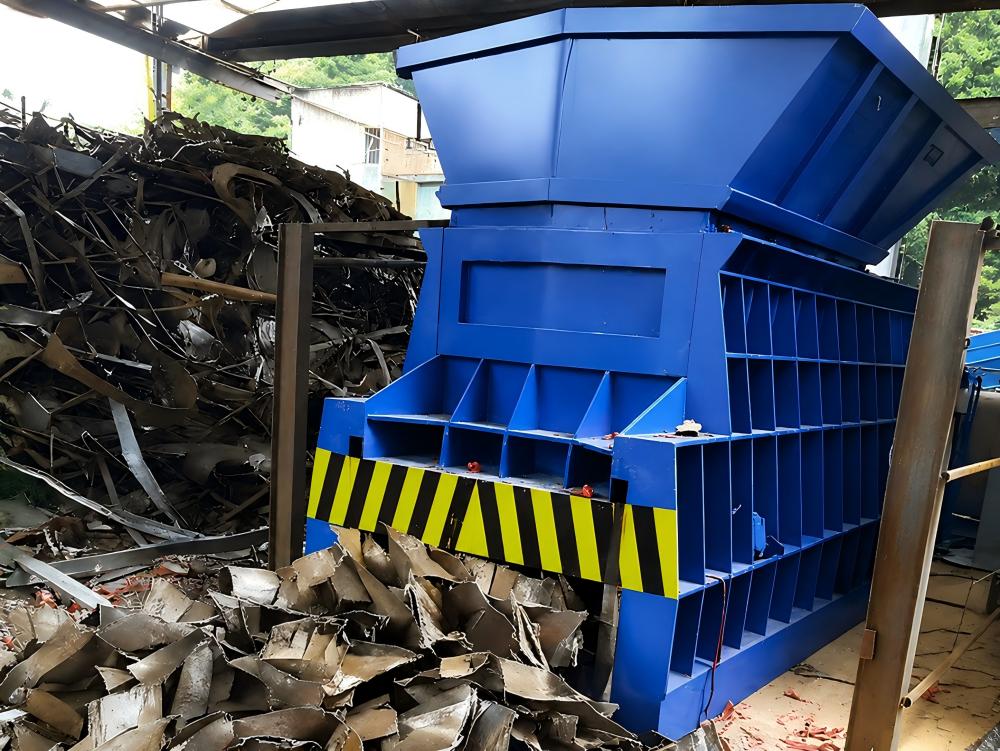
Selecting the right container shear for a nonferrous facility requires a thorough analysis of current and projected throughput. It is not enough to buy the largest machine available; the equipment must be sized appropriately for the facility’s specific material mix. If a facility primarily processes aluminum extrusions, a shear with a larger opening but moderate force might be more efficient than a high-force, small-opening shear designed for heavy steel castings.
Prospective buyers should also consider the footprint of the machine and the layout of their facility. A container shear is a significant investment that requires a solid foundation and adequate space for material staging and finished product removal. HARSLE recommends conducting a site survey to determine the optimal placement of the shear to minimize material handling distances. The integration of the shear into the existing workflow should be seamless, with clear paths for incoming scrap and outgoing processed material.
Another factor is the availability of spare parts and technical support. Because a container shear is a critical asset, the ability to quickly source replacement blades or hydraulic components is vital. Partnering with a manufacturer that provides comprehensive after-sales support and has a local presence ensures that any technical issues can be resolved quickly, minimizing the impact on production speed. Always ask for a detailed maintenance schedule and training program as part of the purchase agreement.
Finally, consider the long-term scalability of the equipment. As a facility grows, its processing needs will evolve. Choosing a modular system that can be upgraded or integrated with additional sorting and feeding technology can provide a competitive advantage. Investing in a high-quality, reputable brand like HARSLE ensures that the equipment will maintain its value and performance over many years, providing a solid return on investment.
FAQ: Common Questions About Container Shears
- How does a container shear differ from an alligator shear? A container shear uses a large, enclosed box to compress material before cutting, allowing for much higher throughput and safer, automated operation compared to the manual feeding required by alligator shears.
- What types of nonferrous metals can be processed? These machines are highly versatile and can process aluminum, copper, brass, lead, and various alloys, provided the material is within the shear’s rated capacity.
- How often should the shear blades be sharpened? Blade life depends on the material being cut and the volume of throughput. Regular inspections are recommended, and sharpening intervals should be established based on the facility’s specific usage patterns.
- Can a container shear be integrated into an existing conveyor line? Yes, most modern container shears are designed to be integrated into automated systems, allowing for a continuous flow of material from the sorting area to the shear and then to the storage bins.
- What is the typical lifespan of a container shear? With proper maintenance and regular servicing, a high-quality industrial container shear can provide 15 to 20 years of reliable service in a demanding recycling environment.
Conclusion: Driving Future Growth
The implementation of a container shear is a strategic move that fundamentally changes the operational dynamics of a nonferrous metal facility. By addressing the core challenges of material density and processing speed, these machines enable businesses to scale their operations, improve their product quality, and ultimately increase their profitability. The transition from manual or outdated cutting methods to a modern, automated container shear is a clear pathway to achieving industry-leading efficiency.
As the demand for recycled nonferrous metals continues to rise globally, the pressure on processing facilities to perform at higher levels will only increase. Facilities that invest in the right technology today will be the ones that thrive in the future. HARSLE remains committed to providing the industrial machinery and expert guidance necessary to help our clients navigate these challenges and reach their full production potential.
In summary, the question of how a container shear increased processing speed in a nonferrous metal facility is answered by the synergy of hydraulic power, smart automation, and strategic workflow integration. Whether you are looking to replace an aging machine or expand your current capacity, a container shear represents a foundational investment in the future of your metal fabrication business. By focusing on quality, maintenance, and operator training, you can ensure that your facility remains at the forefront of the recycling industry for years to come.