
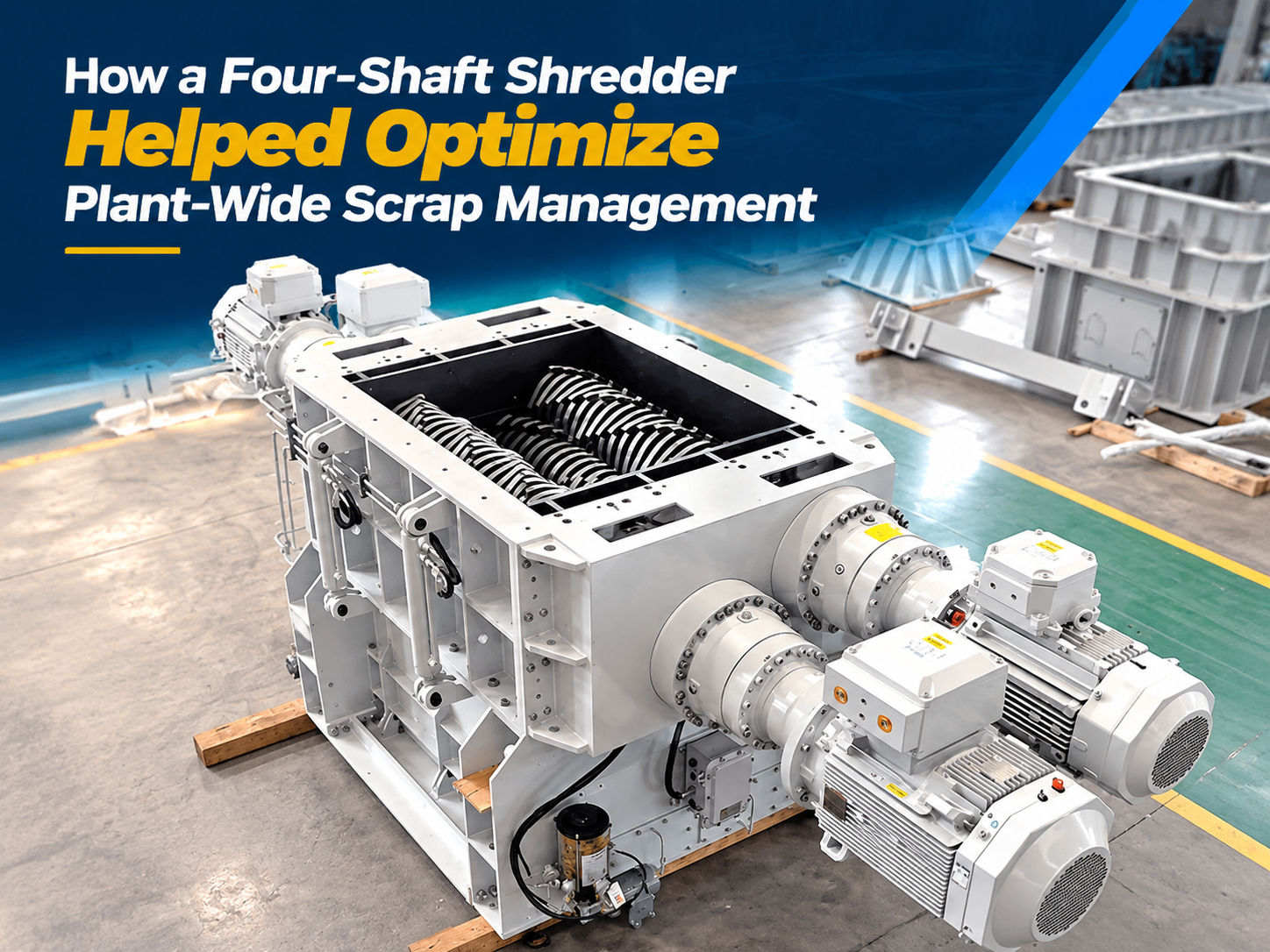
How a Four-Shaft Shredder Helped Optimize Plant-Wide Scrap Management: A Comprehensive Guide

Introduction
In the modern landscape of metal fabrication, the efficiency of a facility is often measured not just by its output, but by its ability to manage the byproduct of production: scrap metal. For many manufacturers, scrap management is an overlooked cost center that drains profitability through logistics, storage, and disposal fees. However, a transformative shift occurs when a facility integrates advanced size-reduction technology. Specifically, how a four-shaft shredder helped optimize plant-wide scrap management has become a benchmark for operational excellence in the industry.
HARSLE has observed that the transition from manual scrap handling to automated, high-torque shredding systems represents a fundamental change in how fabrication plants view waste. Instead of treating scrap as a burden, forward-thinking managers now view it as a manageable, high-density commodity. By reducing the volume of bulky metal offcuts, turnings, and skeletons, plants can reclaim valuable floor space and significantly lower transportation costs.
This article explores the technical nuances and operational advantages of implementing a four-shaft shredder. We will delve into why this specific configuration outperforms dual-shaft or single-shaft alternatives in high-volume environments and provide a roadmap for facilities looking to modernize their scrap processing workflow. Whether you are dealing with aluminum skeletons, steel turnings, or complex mixed-metal waste, understanding the mechanics of shredding is the first step toward a leaner, more profitable plant.
Key Considerations for Scrap Management
Before investing in heavy-duty machinery, plant managers must conduct a thorough audit of their current waste stream. The primary challenge in scrap management is the low bulk density of raw metal waste. When scrap is left in its original form, you are essentially paying to transport air. A four-shaft shredder addresses this by transforming irregular, bulky shapes into uniform, dense particles that are easier to convey, store, and sell to recyclers.
Another critical consideration is the safety and labor cost associated with manual handling. Sharp metal edges, heavy skeletons, and tangled turnings pose significant risks to personnel. By automating the shredding process, facilities can move toward a “hands-off” scrap management system. This not only reduces the likelihood of workplace injuries but also frees up skilled labor to focus on high-value fabrication tasks rather than waste sorting.
Environmental compliance and sustainability goals are also driving the adoption of shredding technology. Many regions now enforce strict regulations regarding the storage and disposal of industrial waste. A four-shaft shredder allows for better segregation of materials, which is essential for maximizing the value of scrap metal. When materials are shredded and cleaned, they command higher prices from secondary smelters, turning a waste management cost into a revenue stream.
Finally, the integration of a shredder into the existing plant layout requires careful planning. You must consider the flow of materials from the fabrication line to the shredder and then to the storage bins. A well-designed system uses conveyors or pneumatic systems to move scrap directly from the source to the shredder, minimizing the need for forklift traffic and reducing the overall footprint of the scrap management area.
Technical Details of Four-Shaft Shredders
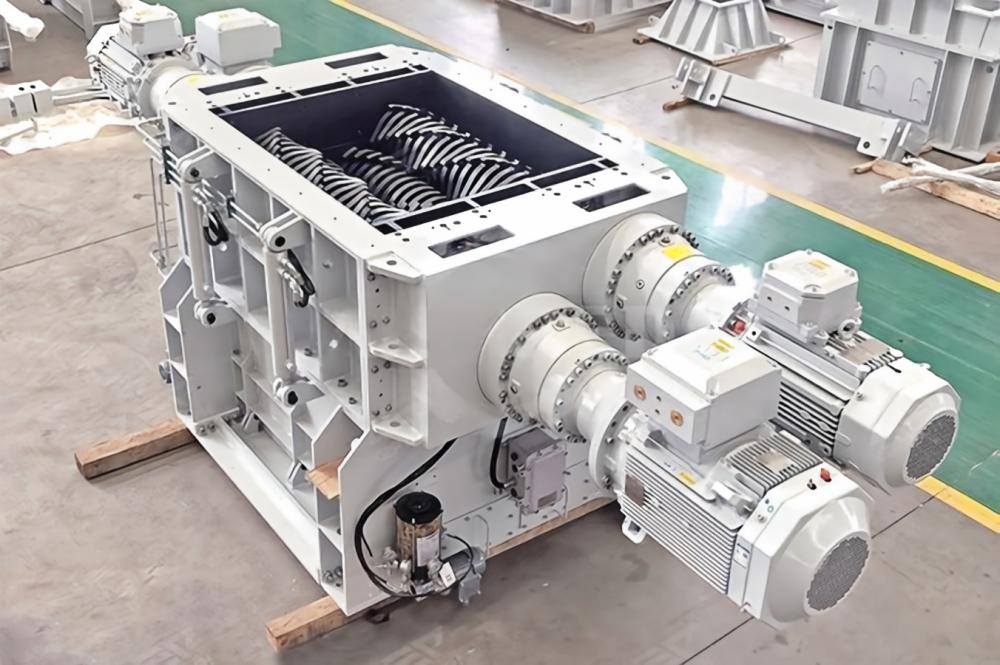
The core advantage of a four-shaft shredder lies in its unique mechanical design. Unlike dual-shaft shredders, which rely on a simple shearing action, four-shaft shredders utilize two primary shafts and two secondary shafts. This configuration creates a more aggressive cutting action that is capable of handling tougher, more resilient materials with greater precision. The secondary shafts act as a screen, ensuring that only material of a specific size passes through the cutting chamber.
The cutting blades are typically manufactured from high-alloy, wear-resistant steel, designed to withstand the abrasive nature of metal fabrication waste. These blades are arranged in a specific pattern to maximize the “hooking” and “tearing” force. Because the four-shaft system provides a more controlled discharge, it produces a consistent particle size, which is critical for downstream processes like magnetic separation or eddy current sorting.

Torque management is another technical highlight. HARSLE four-shaft shredders are equipped with high-torque gearboxes that allow the machine to process heavy-gauge steel without stalling. The PLC-controlled system monitors the load on the motors; if a particularly dense piece of metal is detected, the machine automatically reverses the shafts to clear the jam before resuming the shredding process. This self-clearing capability is vital for maintaining continuous operation in a high-throughput environment.
Maintenance is simplified through modular design. The cutting shafts can be removed and serviced as a unit, reducing downtime during blade replacement. Furthermore, the lubrication systems are designed for industrial environments, featuring sealed bearings that prevent metal dust and debris from compromising the internal components. This level of engineering ensures that the shredder remains a reliable workhorse for years, even under the most demanding conditions.
Selection Advice: Choosing the Right Equipment
Selecting the right shredder requires a clear understanding of your material throughput and the physical characteristics of your scrap. Not all scrap is created equal; thin-gauge aluminum sheets require different blade geometry than thick steel plate offcuts. When consulting with HARSLE, we recommend starting with a material analysis to determine the required motor power and blade configuration.
Consider the throughput capacity of your plant. If your fabrication lines operate 24/7, you need a shredder with a robust duty cycle and a cooling system capable of handling continuous operation. Conversely, if your scrap generation is intermittent, a smaller, more energy-efficient model might be sufficient. It is always better to slightly oversize the machine to allow for future growth in production capacity.
Integration features are also paramount. Look for a shredder that offers flexible input options, such as wide hoppers for forklift dumping or conveyor-fed chutes. The output should also be compatible with your existing logistics. Do you need the shredded metal to fall into a roll-off container, or do you require a discharge conveyor that can load directly into a trailer? These logistical details can make or break the efficiency of your scrap management system.
Lastly, evaluate the support and service capabilities of the manufacturer. A shredder is a significant investment, and you need a partner who can provide spare parts, technical support, and training for your maintenance team. HARSLE provides comprehensive documentation and remote diagnostic capabilities, ensuring that your equipment remains operational and that your scrap management system continues to deliver the expected ROI.
FAQ: Frequently Asked Questions
- Why choose a four-shaft shredder over a dual-shaft model? A four-shaft shredder provides superior particle size control and higher throughput for difficult materials, thanks to the secondary shafts that act as a sizing screen.
- How much space does a four-shaft shredder require? While the footprint varies by model, most industrial shredders are designed to be compact. We recommend a dedicated area of at least 20-30 square meters to allow for safe loading and unloading.
- Can a four-shaft shredder handle mixed metals? Yes, these machines are excellent at processing mixed scrap, though it is always best to segregate materials if you intend to maximize the resale value of the shredded metal.
- What is the typical maintenance schedule? Maintenance depends on usage, but generally involves daily inspections of the cutting blades, monthly lubrication of the drive train, and annual deep-cleaning of the gearboxes.
- Does shredding scrap increase its value? Absolutely. Shredded, clean, and uniform scrap is much easier for smelters to process, which often leads to higher price points compared to loose, bulky scrap.
Conclusion
The question of how a four-shaft shredder helped optimize plant-wide scrap management is answered by the tangible results seen in modern fabrication facilities: reduced logistics costs, reclaimed floor space, improved safety, and increased revenue from scrap sales. By moving away from the traditional, inefficient methods of handling bulky metal waste, manufacturers can transform their scrap management from a logistical headache into a streamlined, automated process.
HARSLE remains committed to providing the industrial machinery necessary to achieve these goals. Our four-shaft shredders are engineered for durability, performance, and ease of integration, ensuring that your plant can handle the challenges of modern metal fabrication with confidence. As the industry continues to evolve toward greater efficiency and sustainability, investing in the right shredding technology is not just an operational upgrade—it is a strategic necessity.
If you are ready to optimize your scrap management workflow, we invite you to reach out to our technical team for a consultation. We can help you analyze your current waste stream and design a system that fits your specific needs, ensuring that your facility remains at the cutting edge of productivity and profitability.












