Why Aluminium Profiles Show Twisting After Extrusion and How to Stop It: A Comprehensive Guide


Introduction: The Challenge of Precision in Aluminium Extrusion
In the high-stakes world of metal fabrication, the quality of the final product is defined by its dimensional accuracy. For manufacturers utilizing an Aluminium Extrusion Press, one of the most persistent and costly challenges is the phenomenon of twisting. When aluminium profiles show twisting after extrusion, it compromises structural integrity, complicates downstream assembly, and leads to significant material waste. Understanding the root causes of this deformation is essential for any facility aiming to maintain high throughput and tight tolerances.
Twisting, or torsional deformation, occurs when the metal flow through the die is non-uniform. Because aluminium is a highly malleable material at elevated temperatures, even minor imbalances in pressure, temperature, or cooling rates can result in a profile that exits the press with a spiral or helical shape. This article explores the technical intricacies behind this issue and provides actionable strategies to ensure your production line remains efficient and accurate.
At HARSLE, we emphasize that precision starts with the equipment. An Aluminium Extrusion Press must be calibrated to handle the specific alloy characteristics and die geometry required for each project. By addressing the mechanical, thermal, and metallurgical variables, manufacturers can effectively stop twisting and achieve the high-quality output expected in modern industrial applications.
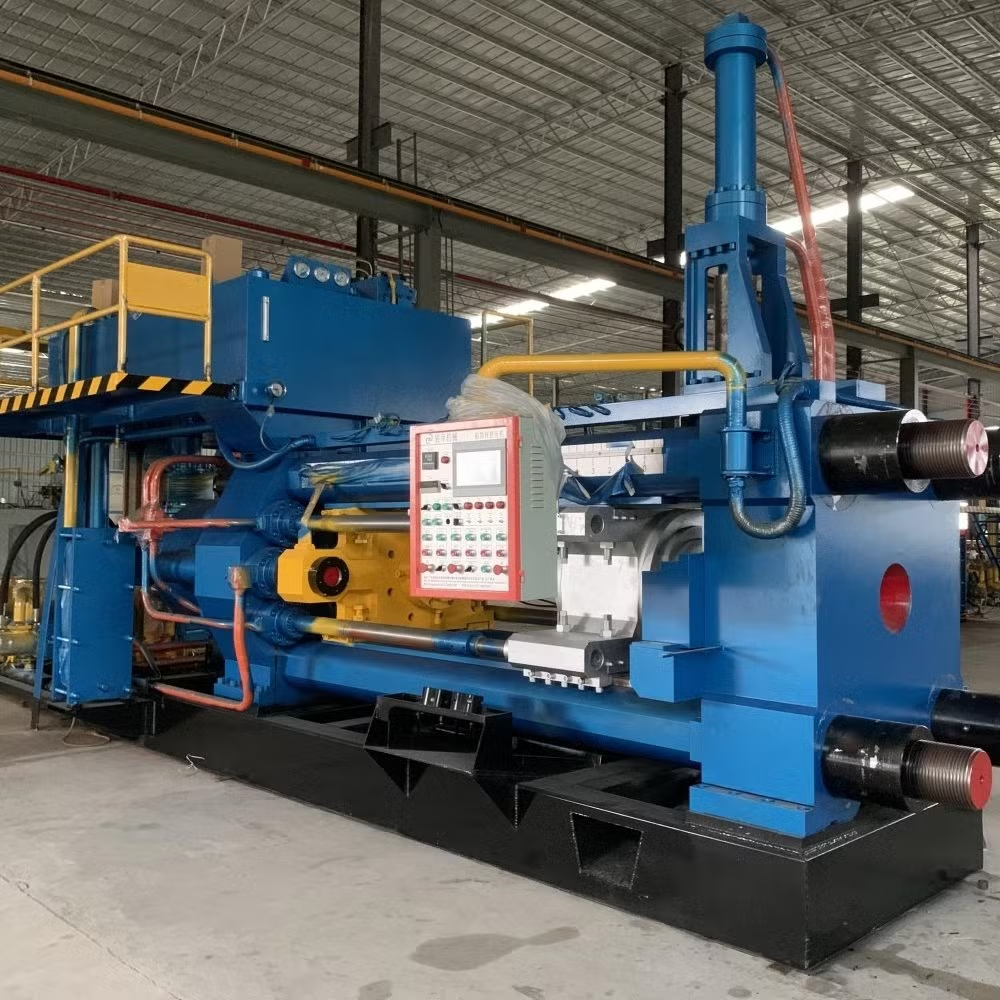
Key Considerations: Why Aluminium Profiles Show Twisting After Extrusion and How to Stop It
The primary reason why aluminium profiles show twisting after extrusion is the uneven flow velocity across the cross-section of the die. If the metal exits one side of the die faster than the other, the resulting differential in velocity creates a torque force that manifests as a twist. This is often exacerbated by die design flaws, where the bearing length is not optimized to balance the flow of the metal.
Temperature management is another critical factor. Aluminium alloys are sensitive to thermal gradients. If the billet temperature is inconsistent, or if the die itself has “hot spots” or “cold spots,” the viscosity of the metal changes across the profile. This leads to uneven resistance within the die channels, causing the profile to pull toward the path of least resistance, resulting in a twist.
Furthermore, the cooling process post-extrusion plays a vital role. If the profile is not supported correctly as it exits the press, or if the cooling air is applied unevenly, the metal will shrink at different rates. This differential cooling causes internal stresses that force the profile to warp or twist as it reaches room temperature. Proper handling and quenching protocols are essential to stop this defect.
Finally, the mechanical alignment of the extrusion press itself cannot be overlooked. If the ram is not perfectly perpendicular to the die face, or if the container is misaligned, the pressure applied to the billet will be asymmetrical. This mechanical imbalance is a common culprit in twisting issues, especially in older machinery that has not undergone regular maintenance or calibration.
Technical Details: Analyzing the Mechanics of Deformation
To understand the mechanics of twisting, one must look at the die bearing surface. The bearing length is the portion of the die that shapes the profile. If the bearing length is too long, it increases friction; if it is too short, it may not provide enough guidance. Engineers must calculate the bearing length precisely to compensate for the flow speed of the aluminium. When profiles show twisting, it is often a sign that the bearing lengths need to be adjusted to “choke” or “relieve” the flow in specific sections.
The extrusion speed also dictates the likelihood of twisting. Pushing the metal through the die too quickly can lead to turbulent flow. While high-speed production is desirable for profitability, it must be balanced against the material’s ability to flow smoothly through the die geometry. If the speed exceeds the material’s flow limit, the resulting shear stresses will inevitably cause the profile to twist as it exits the press.
Alloy selection and billet preparation are equally important. Different aluminium alloys have different flow characteristics. For instance, 6061 and 6063 alloys behave differently under pressure. If the billet is not homogenized correctly, or if there are inclusions within the metal, the flow will be disrupted. These microscopic inconsistencies can lead to macroscopic twisting, making it difficult to maintain straightness in long profiles.
Lubrication of the dummy block and the container wall is another technical detail that impacts profile straightness. If the lubrication is uneven, the friction between the billet and the container wall will vary, causing the billet to shift slightly during the extrusion stroke. This shift translates into a non-uniform pressure distribution at the die face, which is a direct cause of twisting.
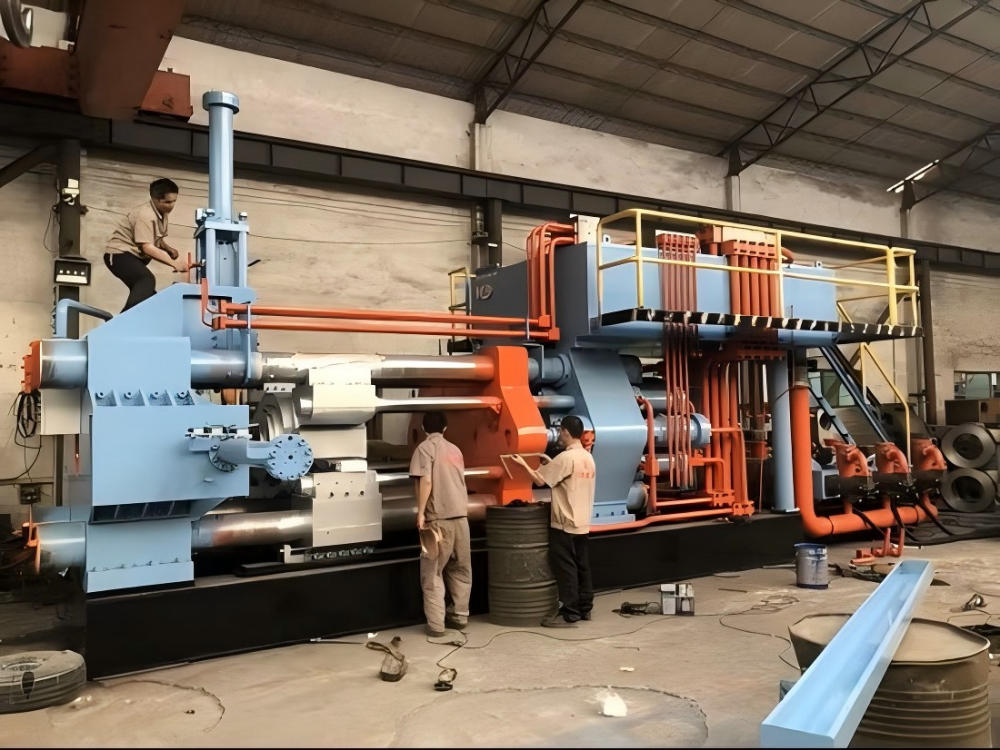
Selection Advice: Choosing the Right Equipment
When selecting an Aluminium Extrusion Press, it is vital to prioritize systems that offer advanced control over pressure and speed. Modern presses equipped with PLC (Programmable Logic Controller) systems allow operators to fine-tune the extrusion cycle, ensuring that the ram speed is consistent throughout the entire stroke. This consistency is the first line of defense against twisting.
Look for equipment that features robust die-heating systems. A die that is preheated to the correct temperature ensures that the aluminium does not experience a sudden drop in temperature upon contact, which would otherwise lead to flow resistance and twisting. HARSLE’s range of metal fabrication equipment is designed with these thermal considerations in mind, providing the stability required for high-precision manufacturing.
Consider the importance of the puller system. A high-quality puller is essential for maintaining tension on the profile as it exits the press. By applying the correct amount of tension, the puller helps to keep the profile straight and prevents the accumulation of torsional stress. Investing in a synchronized puller system is one of the most effective ways to stop twisting in long, complex profiles.
Finally, evaluate the maintenance support offered by the manufacturer. An extrusion press is a complex machine that requires periodic calibration of its hydraulic and mechanical components. Choosing a partner that provides comprehensive documentation, spare parts availability, and technical support ensures that your equipment remains in peak condition, minimizing the risk of defects like twisting over the long term.
FAQ: Common Questions About Extrusion Twisting
- Q: Can die correction fix a profile that is already twisting?
A: Yes, die correction is the standard method for fixing twisting. By adjusting the bearing lengths or adding flow-control features like “chokes” or “relieves,” a skilled die maker can balance the flow and eliminate the twist. - Q: Does the temperature of the cooling table affect twisting?
A: Absolutely. If the cooling table is not level or if the cooling fans are positioned unevenly, the profile will cool at different rates, leading to warping and twisting. - Q: How often should I calibrate my extrusion press?
A: Calibration should be part of a regular preventative maintenance schedule, typically every 6 to 12 months, depending on the volume of production and the complexity of the profiles being extruded. - Q: Is twisting more common in thin-walled profiles?
A: Yes, thin-walled profiles are more susceptible to twisting because they have less structural rigidity to resist the torsional forces generated during the extrusion process. - Q: What role does the dummy block play in preventing twist?
A: A properly functioning dummy block ensures that the pressure is applied evenly across the entire surface of the billet, which is critical for maintaining a balanced flow through the die.
Conclusion: Achieving Perfection in Aluminium Extrusion
The issue of why aluminium profiles show twisting after extrusion and how to stop it is a multifaceted challenge that requires a holistic approach. By focusing on die design, thermal management, extrusion speed, and mechanical alignment, manufacturers can significantly reduce the occurrence of this defect. The goal is to create a stable, predictable environment where the aluminium flows through the die with minimal resistance and uniform velocity.
At HARSLE, we are committed to providing the metal fabrication equipment necessary to achieve these standards. Our Aluminium Extrusion Press solutions are engineered for precision, durability, and ease of control, helping you minimize waste and maximize the quality of your profiles. By implementing the strategies outlined in this guide—from rigorous die maintenance to the use of advanced puller systems—you can ensure that your production line remains competitive and capable of meeting the most demanding customer specifications.
Remember that stopping twisting is not a one-time fix but an ongoing process of monitoring and optimization. As you continue to refine your extrusion techniques, you will find that the investment in high-quality machinery and best-practice maintenance pays dividends in the form of consistent, straight, and high-quality aluminium profiles that stand the test of time.