
Why a Four-Shaft Shredder Solved Mixed-Material Waste Challenges in Industrial Fabrication

Introduction: The Growing Complexity of Industrial Waste
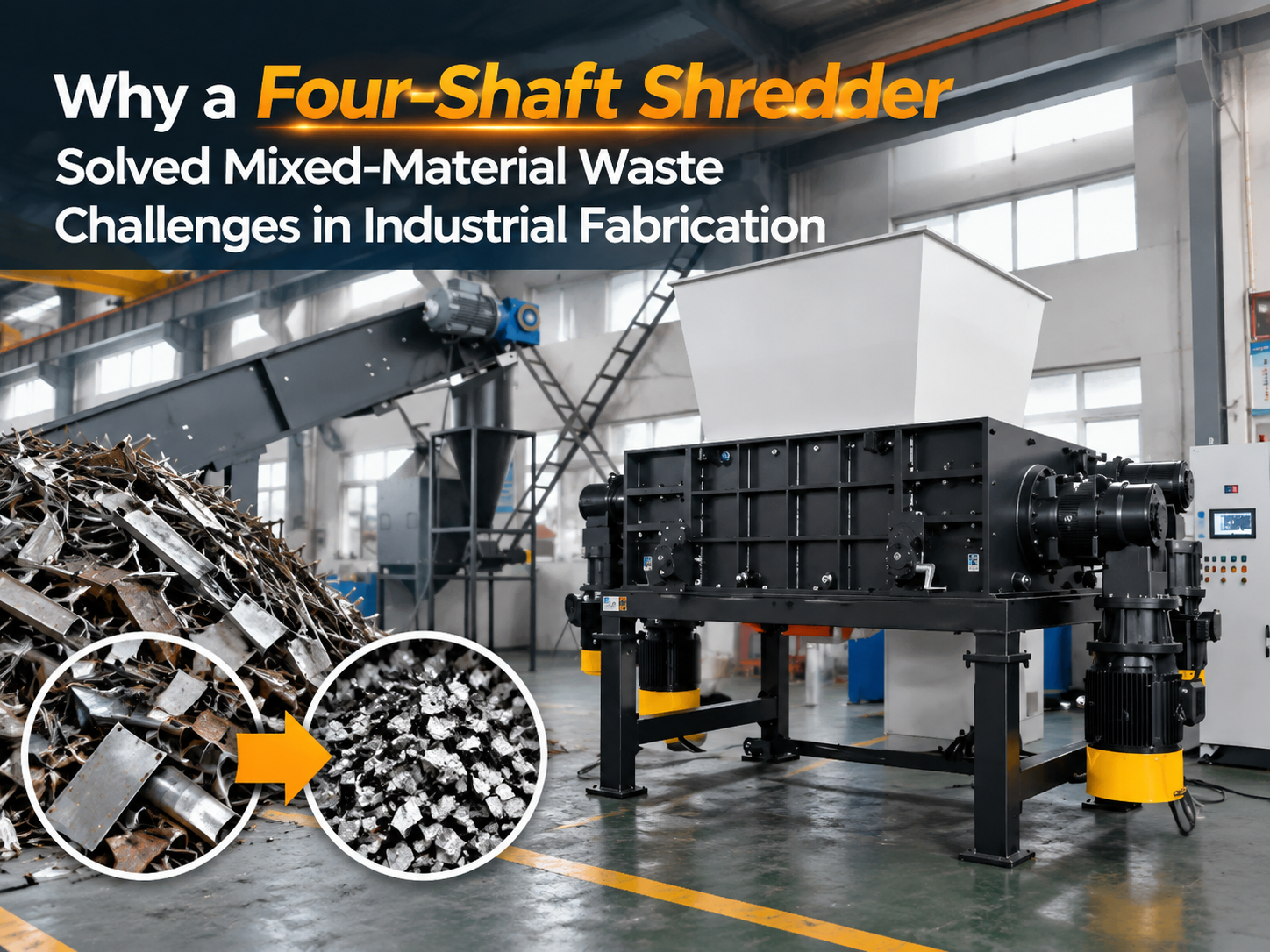
In the modern landscape of metal fabrication, the diversity of materials used has expanded exponentially. From high-strength alloys and stainless steel to composite panels and integrated electronic components, fabrication facilities are now processing a wider array of materials than ever before. This evolution brings a significant operational hurdle: the management of mixed-material waste. When scrap metal is contaminated with plastics, rubber, or wood, traditional disposal methods become costly and environmentally unsustainable. This is exactly why a four-shaft shredder solved mixed-material waste challenges in industrial fabrication for many of our clients at HARSLE.
The challenge of mixed-material waste is not merely about volume; it is about the inability of standard two-shaft shredders to handle the heterogeneous nature of modern industrial scrap. When materials of varying hardness and elasticity are fed into a machine, jamming, uneven wear, and incomplete reduction are common. By transitioning to a four-shaft configuration, fabrication plants have found a robust solution that ensures consistent output size, regardless of the material composition.
This article explores the technical superiority of four-shaft shredders and why they have become the gold standard for facilities looking to optimize their waste management workflows. We will delve into the mechanical advantages, the selection process, and the long-term operational benefits that make this equipment an essential investment for any forward-thinking fabrication shop.
As we navigate the complexities of industrial sustainability, the ability to effectively process and recycle mixed waste is no longer just a regulatory requirement; it is a competitive advantage. By reducing the volume of waste and preparing it for secondary markets, fabricators can turn a cost center into a potential revenue stream. HARSLE remains committed to providing the machinery that makes this transition possible.
Key Considerations for Mixed-Material Processing
When evaluating waste management solutions, the primary consideration must be the versatility of the shredding mechanism. Mixed-material waste often includes “problematic” items such as hydraulic hoses, metal casings with plastic inserts, and bulky composite structures. A standard shredder might struggle with these, leading to frequent downtime for manual clearing. A four-shaft shredder, however, utilizes a secondary set of shafts to pull material through the cutting zone, ensuring that even the most stubborn items are processed efficiently.
Another critical factor is the particle size consistency. In recycling, the value of the scrap is often determined by its purity and the uniformity of the shredded pieces. Four-shaft shredders are equipped with screen systems that prevent material from exiting the cutting chamber until it has reached the desired size. This level of control is vital when dealing with mixed materials, as it ensures that the metal fraction is sufficiently liberated from non-metallic contaminants.
Operational safety and maintenance are also paramount. Mixed-material streams can contain hidden hazards, such as sealed containers or high-tension springs. The slow-speed, high-torque design of a four-shaft shredder minimizes the risk of dangerous projectiles and reduces the wear and tear on the cutting blades. This design philosophy ensures that the machine remains operational for longer periods, even under the stress of processing abrasive or difficult-to-shred materials.
Finally, space and integration must be considered. Modern fabrication plants are often space-constrained. HARSLE’s four-shaft shredders are engineered with a compact footprint relative to their throughput capacity. By integrating these machines directly into the production line or at the end of the scrap collection point, facilities can streamline their logistics and reduce the labor costs associated with moving bulky waste across the shop floor.
Technical Details: Why the Four-Shaft Design Excels
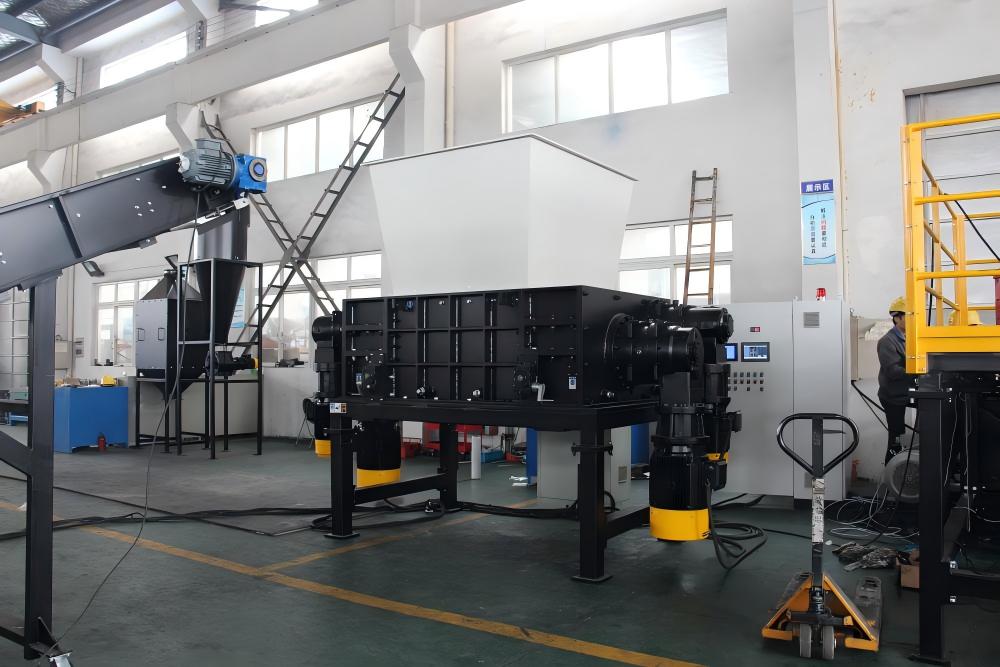
The technical superiority of the four-shaft shredder lies in its unique architecture. Unlike two-shaft shredders that rely on a single pair of cutting rotors, the four-shaft design incorporates two main cutting shafts and two auxiliary shafts. These auxiliary shafts act as a forced-feed mechanism, pulling material into the primary cutters with immense force. This prevents the “bridging” effect, where bulky materials sit on top of the cutters without being engaged, a common issue in lower-tier shredding equipment.
The cutting blades themselves are a masterpiece of metallurgical engineering. In a four-shaft system, the blades are typically made from high-alloy, wear-resistant steel, designed to maintain their edge even when encountering mixed materials like steel bolts embedded in plastic housings. The geometry of these blades is optimized to provide a shearing action rather than a tearing action, which reduces the energy consumption per ton of material processed and minimizes the generation of dust and noise.
The control system of a modern four-shaft shredder is equally sophisticated. HARSLE integrates PLC-based automation that monitors the load on each motor. If the machine detects an un-shreddable object, the shafts automatically reverse to clear the obstruction before resuming operation. This intelligent feedback loop prevents motor burnout and protects the mechanical components from catastrophic failure, ensuring a long service life even in demanding 24/7 fabrication environments.
Furthermore, the modularity of the screen system allows operators to quickly change the output size based on the specific requirements of the downstream recycling facility. Whether the goal is to produce a fine granulate for magnetic separation or a coarser shred for easier transport, the four-shaft shredder provides the flexibility needed to adapt to changing market demands for recycled materials.

Selection Advice: Choosing the Right Shredder for Your Plant
Selecting the right shredder is a significant capital investment. To ensure you get the best return on investment, start by conducting a thorough waste audit. Analyze the composition of your scrap: What is the percentage of metal versus non-metal? What is the maximum thickness of the metal components? How much volume do you generate per shift? This data will dictate the required motor power, shaft speed, and cutting chamber dimensions.
Consider the throughput requirements of your facility. A four-shaft shredder should be sized to handle your peak waste generation periods without bottlenecking your production line. It is often better to slightly oversize the machine to allow for future growth in production volume. HARSLE’s technical team can assist in calculating the necessary throughput based on your specific material density and volume metrics.
Look for ease of maintenance. A machine that is difficult to clean or service will inevitably lead to operational delays. Check for features such as quick-change screen systems, accessible lubrication points, and modular blade assemblies that can be replaced individually rather than as a complete set. These design choices significantly reduce the total cost of ownership over the life of the machine.
Finally, prioritize the manufacturer’s support network. Industrial shredders are heavy-duty machines that require periodic maintenance and occasional spare parts. Partnering with a manufacturer like HARSLE ensures that you have access to technical support, genuine spare parts, and expert advice whenever you need it. Do not compromise on quality for a lower initial price; the long-term reliability of your shredder is what will ultimately solve your waste challenges.
Często zadawane pytania (FAQ)
1. Why is a four-shaft shredder better than a two-shaft model for mixed waste?
A four-shaft shredder uses auxiliary shafts to force-feed material into the primary cutters. This prevents bridging and ensures that mixed materials—which often have varying densities and shapes—are consistently pulled into the cutting zone, resulting in a more uniform output and fewer jams.
2. Can a four-shaft shredder handle hazardous materials?
While four-shaft shredders are robust, they are not designed for hazardous or explosive materials. Always ensure that your waste stream is free from pressurized containers, flammable chemicals, or radioactive materials before feeding them into the machine.
3. How often do the blades need to be sharpened or replaced?
The frequency of blade maintenance depends on the abrasiveness of the materials being shredded. In a typical metal fabrication environment, blades are designed for long-term use. Regular inspection and proper lubrication will extend their life significantly.
4. Does the shredder require a specialized power supply?
Most industrial four-shaft shredders require a three-phase power supply. It is essential to consult with your facility’s electrical engineer and the manufacturer’s specifications to ensure your power infrastructure can support the motor’s starting and running current.
5. How does the shredder help with recycling revenue?
By shredding and separating mixed-material waste, you can achieve a higher degree of purity in your scrap metal. Clean, uniform scrap is significantly more valuable to recycling centers than contaminated, bulky waste, allowing you to recoup some of your operational costs.
Conclusion: Investing in Future-Proof Waste Management
The transition to a four-shaft shredder is more than just a hardware upgrade; it is a strategic move toward a more efficient and sustainable fabrication business. By addressing the core challenges of mixed-material waste—inconsistency, volume, and contamination—these machines provide a reliable path to cleaner operations and better scrap recovery. As we have seen, the technical advantages of the four-shaft design, combined with intelligent automation, make it the ideal solution for modern industrial fabrication.
At HARSLE, we understand that every fabrication plant has unique requirements. Our range of four-shaft shredders is designed to be adaptable, durable, and high-performing. Whether you are looking to reduce your disposal costs, comply with stricter environmental regulations, or simply improve the flow of your shop floor, our equipment is built to deliver results. We invite you to contact our team to discuss your specific waste management needs and discover how our technology can transform your scrap into a valuable asset.
The future of metal fabrication is circular. By investing in the right machinery today, you are positioning your facility to lead in an industry that increasingly values efficiency and environmental responsibility. Let HARSLE be your partner in this journey, providing the tools and expertise necessary to overcome the challenges of mixed-material waste and drive your business forward.












