Four-Shaft Shredder Blade Clearance Problems and How to Adjust Them: A Comprehensive Maintenance Guide


Introduction to Four-Shaft Shredder Blade Maintenance
In the demanding world of industrial waste management and metal fabrication, the four-shaft shredder stands as a cornerstone of efficiency. These machines are engineered to handle high-volume, high-density materials, ranging from scrap metal to complex electronic waste. However, the heart of the machine—the cutting chamber—is subject to extreme mechanical stress. Understanding four-shaft shredder blade clearance problems and how to adjust them is not merely a maintenance task; it is a critical operational necessity that dictates the longevity of your equipment and the quality of your output.
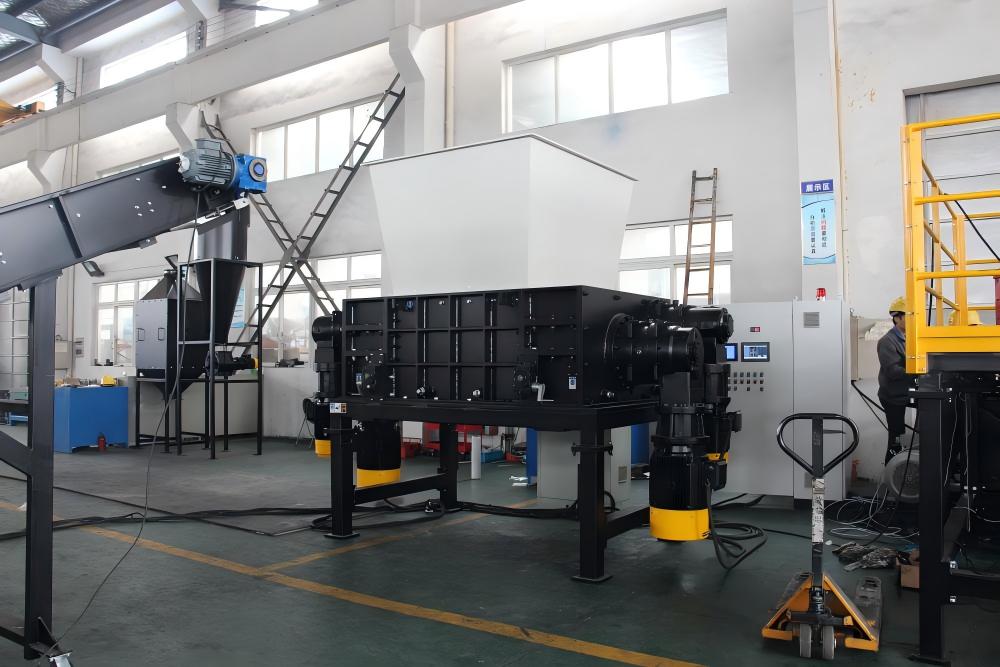
The four-shaft shredder utilizes a complex arrangement of interlocking blades across four rotating shafts. This design allows for a multi-stage shearing process that is significantly more effective than dual-shaft alternatives. Because the blades must pass each other with precise tolerances to achieve a clean cut, any deviation in clearance can lead to catastrophic failure. When the gap between blades becomes too wide, the machine loses its shearing ability, leading to material jamming and increased energy consumption. Conversely, if the clearance is too tight, the blades may collide, causing irreparable damage to the cutting teeth.
For operators of HARSLE machinery, maintaining the integrity of the cutting chamber is paramount. This guide serves as a technical manual for identifying, diagnosing, and rectifying clearance issues. By implementing a proactive maintenance schedule, you can prevent downtime and ensure that your shredder continues to operate at peak efficiency, regardless of the material throughput requirements of your facility.
As we delve into the technical nuances of blade clearance, it is important to remember that every shredder model has specific manufacturer tolerances. While the principles outlined here are universal, always refer to your HARSLE operation manual for specific numerical values. Proper adjustment is a balance of mechanical precision and operational experience, and mastering this skill will significantly reduce your total cost of ownership.

Key Considerations for Shredder Blade Integrity
The primary factor influencing blade clearance is the nature of the material being processed. Harder materials, such as hardened steel or thick-gauge alloys, require different clearance settings compared to softer plastics or wood. When the material is too hard for the current clearance setting, the blades experience deflection. Over time, this deflection causes the metal to fatigue, leading to a permanent widening of the gap. Recognizing the signs of this fatigue early is the first step in effective maintenance.
Another critical consideration is the thermal expansion of the shafts and blades. During continuous operation, the friction generated by the shredding process causes the metal components to heat up. Because the shafts and blades are made of high-strength alloys, they expand at specific rates. If the clearance is set too tightly while the machine is cold, the thermal expansion during operation can cause the blades to bind or strike each other. This is why clearance adjustments should always be performed with an understanding of the machine’s operating temperature.
Vibration is the silent killer of shredder precision. A four-shaft shredder is a high-torque machine, and even minor imbalances in the rotor assembly can lead to harmonic vibrations. These vibrations loosen the locking mechanisms that hold the blades in place. If you notice an increase in noise levels or a change in the pitch of the shredding sound, it is highly likely that your blade clearance has been compromised by these vibrations. Regular inspection of the locking nuts and spacers is essential to prevent this.
Finally, consider the impact of foreign object damage (FOD). Despite the best sorting efforts, non-shreddable materials like heavy steel blocks or concrete can enter the chamber. These objects exert massive point-loads on the blades, causing them to chip or shift on the shaft. When a blade shifts, it creates an uneven clearance profile across the length of the shaft. This unevenness leads to uneven wear, where some parts of the blade are razor-sharp while others are completely dull, further complicating the adjustment process.
Technical Details: Identifying and Measuring Clearance
To address four-shaft shredder blade clearance problems, you must first be able to measure them accurately. The standard method involves the use of feeler gauges. With the machine powered down, locked out, and tagged out, you should rotate the shafts manually to bring the blades into their closest proximity. Insert the feeler gauge between the cutting edges. If the gauge slides in with significant resistance, the clearance is likely within the acceptable range. If it slides in too easily, or if there is a visible gap, adjustment is required.
The measurement should be taken at multiple points along the shaft. Because the blades are mounted on splined or keyed shafts, they can sometimes rotate slightly or shift axially. By measuring at the beginning, middle, and end of the shaft, you can determine if the clearance issue is localized to a single blade or if the entire shaft assembly has shifted. This diagnostic step is crucial for determining whether you need to replace a single blade or perform a full shaft realignment.
Another technical indicator is the “shredding pattern.” If the output material is coming out in long, un-sheared strips rather than uniform pieces, it is a clear sign that the clearance is too wide. The blades are essentially “tearing” the material rather than “shearing” it. This not only reduces the quality of the output but also puts excessive strain on the motor and gearbox, as the machine must work significantly harder to process the same amount of material.
When inspecting the blades, look for signs of “rounding” on the cutting edges. A sharp blade has a distinct, crisp edge. A rounded edge indicates that the blade has been rubbing against its counterpart, which is a sign of clearance that is too tight. If you observe this, you must immediately stop operation and adjust the clearance. Continuing to run the machine with touching blades will lead to rapid heat buildup, which can temper the steel and permanently ruin the hardness of the cutting teeth.
How to Adjust Blade Clearance: A Step-by-Step Approach
Adjusting the clearance on a four-shaft shredder is a methodical process that requires patience. First, ensure the machine is completely isolated from power. Remove the access panels to expose the cutting chamber. Clean the area thoroughly; debris can hide the true position of the blades and lead to inaccurate measurements. Once the chamber is clean, perform the initial measurement using the feeler gauge method described in the previous section.
If the clearance is too wide, you will need to adjust the axial position of the blades or replace the spacers. Most HARSLE four-shaft shredders utilize a system of shims and spacers to maintain the lateral position of the blades. By adding or removing shims, you can move the blades closer together or further apart. This is a delicate process; adding a shim that is too thick can cause the blades to bind, while removing too many can cause them to lose their shearing overlap.
When adjusting, always work from the center of the shaft outward. This ensures that the pressure is distributed evenly across the shaft assembly. If you are adjusting a single blade that has shifted, loosen the locking nut, reposition the blade, and re-torque the nut to the manufacturer’s specification. Never use an impact wrench for the final tightening, as this can cause the blade to jump out of position. Use a calibrated torque wrench to ensure consistency across all blades.
After making adjustments, rotate the shafts by hand for at least two full revolutions. Listen for any metallic clicking or scraping sounds. If you hear anything, stop immediately and re-check your clearance. Once you are confident that there is no contact, perform a “dry run” with the machine under power but without material. Monitor the motor amperage; if the amperage is higher than the idle rating, it indicates that the blades are still too tight or that there is internal friction that needs to be addressed.
Selection Advice for Shredder Blades and Components
When it comes to replacing blades, the quality of the component is just as important as the adjustment process. Not all shredder blades are created equal. For heavy-duty metal fabrication, you should prioritize blades made from high-alloy tool steel, such as D2 or specialized wear-resistant grades. These materials offer the best balance between hardness (to maintain the edge) and toughness (to resist chipping when encountering unexpected debris).
Consider the geometry of the blade teeth. The number of hooks or teeth on a blade determines the shredding force and the size of the output. For general-purpose shredding, a standard tooth profile is sufficient. However, if you are processing specific materials like copper wire or aluminum profiles, you may benefit from custom-engineered blade profiles that are designed to grab and pull the material into the cutting zone more effectively. Consult with your HARSLE representative to discuss the best blade configuration for your specific material stream.
Always maintain a stock of critical spare parts, including spacers, shims, and locking hardware. These components are often overlooked, but they are the foundation of your blade alignment. If a spacer is worn or deformed, no amount of adjustment will keep the blades in the correct position. Replacing these inexpensive components during a blade change-out is a cost-effective way to ensure the longevity of your more expensive cutting blades.
Finally, consider the coating options for your blades. In some high-wear applications, hard-facing or specialized surface treatments can significantly extend the time between sharpenings. While these treatments increase the initial cost of the blades, the reduction in maintenance frequency and downtime often results in a lower total cost of ownership over the life of the machine. Always evaluate your ROI based on the total operational hours rather than just the purchase price of the blades.
FAQ: Troubleshooting Common Shredder Issues
- Q: How often should I check my blade clearance?
A: For high-volume operations, we recommend a weekly inspection. For lighter applications, a monthly check is usually sufficient. Always check after any incident involving a foreign object. - Q: Can I sharpen my own blades?
A: While it is possible to sharpen blades, it requires precision grinding equipment to ensure the profile remains consistent. If the profile is altered, the blades will not interlock correctly, leading to further clearance problems. We recommend professional sharpening services. - Q: What is the most common cause of blade breakage?
A: The most common cause is the introduction of non-shreddable material, such as hardened steel or large chunks of concrete, which exceeds the design capacity of the shredder. - Q: Why does my shredder vibrate excessively?
A: Vibration is usually caused by uneven blade wear, loose locking nuts, or a buildup of material in the cutting chamber. Clean the chamber and check the torque on all blade fasteners. - Q: Is it normal for the motor to draw more power over time?
A: No. Increased power draw is a sign that the blades are dull or that the clearance is incorrect, forcing the motor to work harder to overcome the resistance.
Conclusion: Ensuring Longevity Through Precision
Mastering four-shaft shredder blade clearance problems and how to adjust them is a hallmark of a professional maintenance team. By understanding the mechanical requirements of your HARSLE equipment and adhering to a strict maintenance schedule, you can ensure that your shredder remains a reliable asset for years to come. The investment in time and training required to perform these adjustments correctly will pay dividends in reduced downtime, lower energy costs, and higher-quality output.
Remember that the shredder is a system. The blades, shafts, bearings, and motor all work in concert. When you maintain the clearance of the blades, you are effectively protecting the entire drivetrain of the machine. Do not wait for a catastrophic failure to inspect your equipment. Proactive, data-driven maintenance is the key to industrial success in the competitive field of metal fabrication and waste processing.
If you find that your shredder requires frequent adjustments or if you are experiencing persistent issues that cannot be resolved through standard maintenance, do not hesitate to contact HARSLE support. Our technical team is equipped to provide guidance on complex alignment issues and can assist you in sourcing the correct components for your specific machine model. Keep your operations running smoothly by prioritizing the precision of your cutting chamber today.