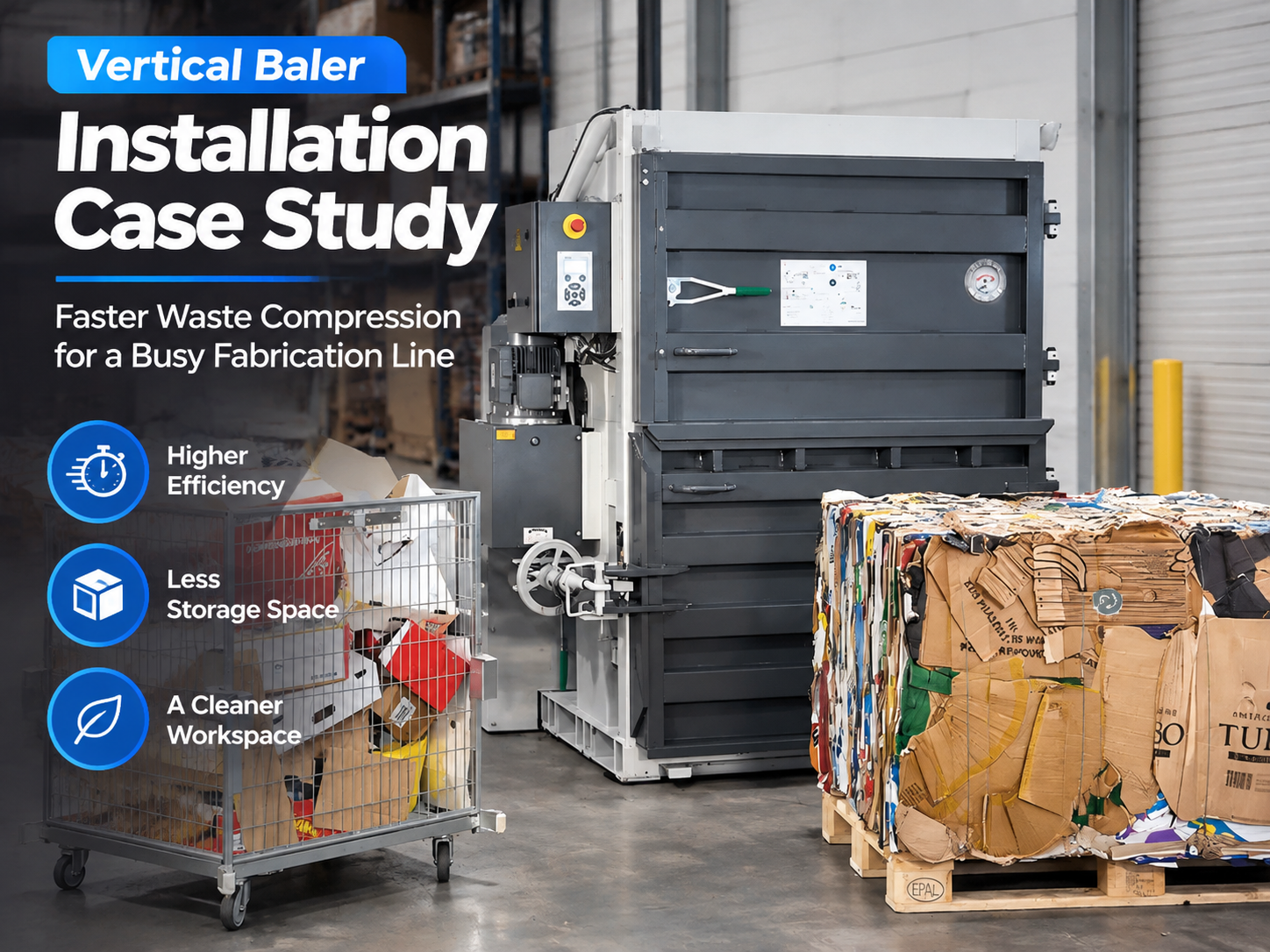
Vertical Baler Installation Case Study: Faster Waste Compression A Busy Fabrication Line

Introduction: The Challenge of Waste in Modern Fabrication
In the high-paced environment of a modern metal fabrication facility, efficiency is measured not just by the speed of the press brake or the precision of the laser cutter, but by the seamless flow of the entire production floor. One of the most overlooked bottlenecks in these facilities is the accumulation of scrap metal, cardboard packaging, and industrial waste. When waste management is inefficient, it clutters the workspace, creates safety hazards, and increases the overhead costs associated with waste removal. This Vertical Baler Installation Case Study: Faster Waste Compression A Busy Fabrication Line explores how HARSLE helped a leading fabrication plant transform its waste management strategy.
For many fabrication shops, the traditional method of handling waste involves manual labor—hauling loose materials to large, overflowing dumpsters. This process is not only time-consuming but also expensive, as waste disposal companies charge based on the volume of the waste rather than its weight. By implementing a high-performance vertical baler, facilities can compress loose waste into dense, manageable bales, significantly reducing the frequency of pickups and reclaiming valuable floor space. This article delves into the technical and operational benefits of such an installation.
HARSLE has long been a leader in providing robust metal fabrication equipment, and our entry into the waste management sector is driven by the same commitment to durability and precision. In this case study, we examine a client who was struggling with a backlog of scrap and packaging materials that threatened to halt their production line. By integrating a HARSLE vertical baler, the client was able to streamline their operations, improve safety, and see a return on investment within the first year of operation.
As we navigate through the technical specifications and installation considerations, it is important to understand that a vertical baler is more than just a machine; it is a strategic asset. Whether you are dealing with aluminum offcuts, steel scraps, or high volumes of shipping cardboard, the right baling solution can redefine your facility’s operational efficiency. Let us explore the journey of this installation and the lessons learned along the way.
Key Considerations for Vertical Baler Integration
Before selecting a vertical baler, the facility must conduct a thorough audit of its waste stream. In this Vertical Baler Installation Case Study: Faster Waste Compression A Busy Fabrication Line, the client initially underestimated the volume of waste generated during peak production cycles. It is critical to categorize the waste—is it primarily metal, plastic, or paper? Each material requires different compression forces and chamber sizes to ensure the bale is stable and meets the requirements of recycling centers.
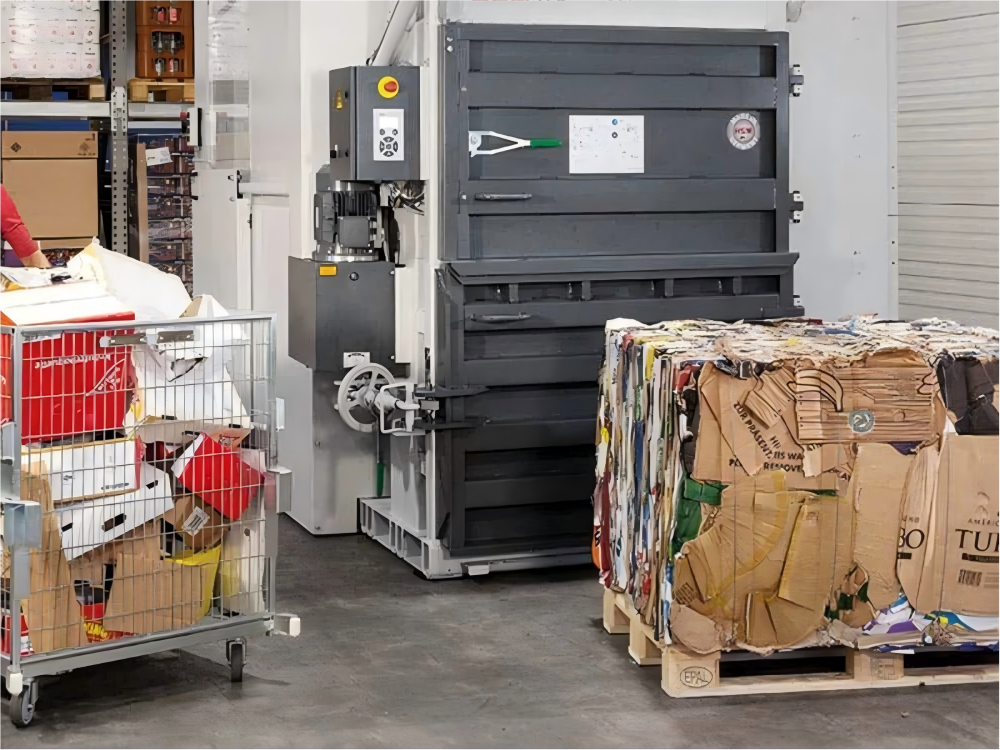
Space constraints are another vital consideration. In a busy fabrication line, every square foot is accounted for. The installation team must evaluate the footprint of the baler, the clearance required for the door swing, and the space needed for the operator to maneuver. HARSLE engineers often recommend placing the baler near the point of waste generation to minimize the distance employees must travel to dispose of materials. This proximity reduces the time spent on non-value-added tasks.
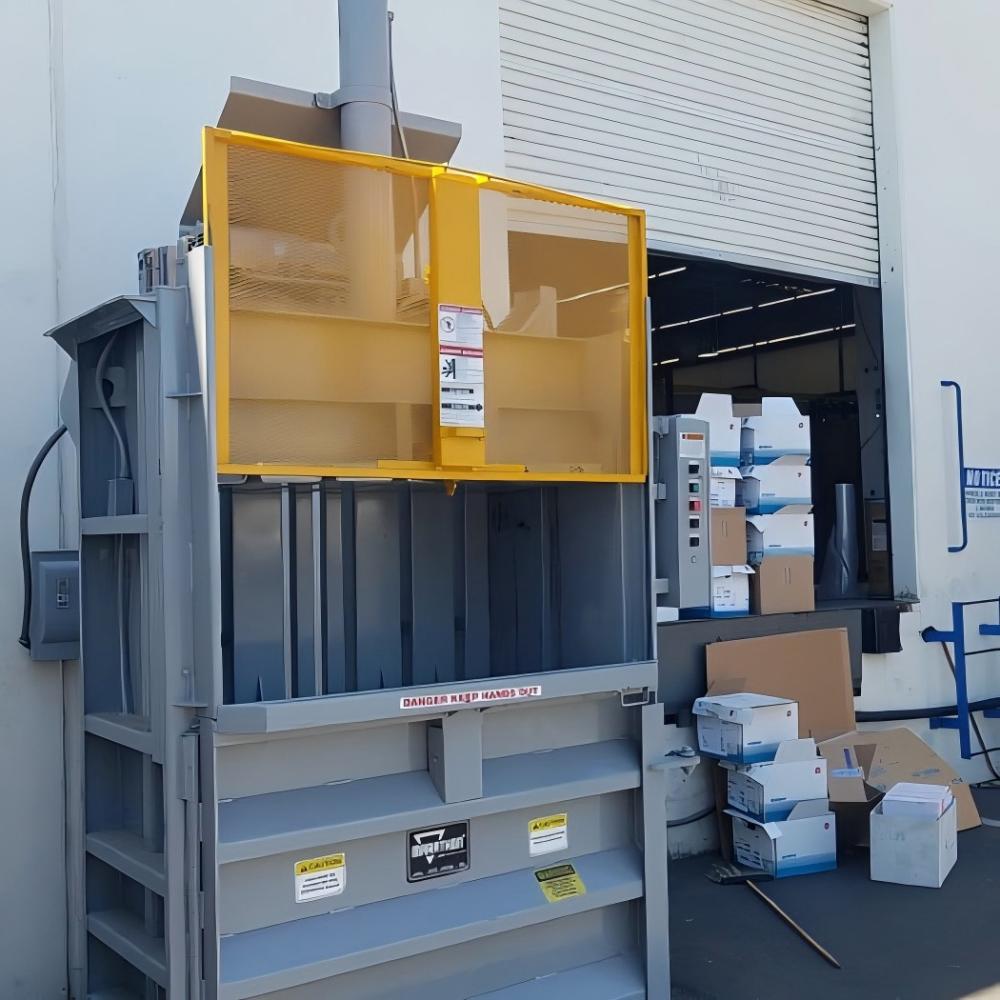
Safety protocols cannot be ignored. A vertical baler is a powerful piece of hydraulic machinery. The installation must include safety interlocks, emergency stop buttons, and proper training for all personnel. In our case study, the client opted for a baler with a dual-hand control system, which ensures that the operator’s hands are clear of the compression chamber during the cycle. This proactive approach to safety is essential for maintaining a productive and accident-free environment.
Finally, consider the power requirements and utility integration. Most industrial vertical balers require a dedicated electrical circuit and, in some cases, specific hydraulic fluid maintenance schedules. By planning the utility layout before the machine arrives, the facility can ensure a quick and seamless installation. The goal is to minimize downtime during the transition period, allowing the fabrication line to continue operating at full capacity while the new equipment is being commissioned.
Technical Details: The HARSLE Advantage
The core of the HARSLE vertical baler lies in its high-pressure hydraulic system, which is designed to handle the rigors of industrial fabrication environments. Unlike standard commercial balers, our industrial-grade units feature reinforced steel chambers and heavy-duty cylinders that can withstand the abrasive nature of metal scraps. The hydraulic power unit is engineered for longevity, featuring high-quality seals and a cooling system that prevents overheating during continuous operation.
One of the standout technical features in this Vertical Baler Installation Case Study: Faster Waste Compression A Busy Fabrication Line is the automated bale ejection system. Once the bale reaches the desired density, the system uses a hydraulic ram to push the bale out of the chamber onto a pallet. This eliminates the need for manual lifting, which is a significant safety improvement. The bale size is also optimized for standard shipping containers, ensuring that the client can maximize the weight per load, thereby reducing transportation costs.
The control interface is another area where HARSLE excels. Our balers are equipped with a PLC (Programmable Logic Controller) that allows for precise adjustments to the compression force and cycle time. This flexibility is crucial when switching between different types of waste. For instance, the pressure required to bale thin aluminum sheets is vastly different from the pressure needed for heavy steel offcuts. The PLC allows the operator to save these settings, ensuring consistency across every bale produced.
Maintenance is simplified through a modular design. Key components, such as the hydraulic pump and the control panel, are easily accessible for inspection and service. We also incorporate a pressure monitoring system that alerts the operator when the hydraulic fluid needs to be changed or when the filter is clogged. These predictive maintenance features ensure that the baler remains operational for years, providing a reliable solution for the fabrication line’s waste management needs.
Selection Advice: Choosing the Right Machine
Selecting the right vertical baler is a strategic decision that impacts your bottom line. When evaluating options, start by calculating your daily waste volume. If your facility generates more than 500 pounds of waste per day, a heavy-duty industrial baler is likely the most cost-effective choice. Smaller units may seem cheaper upfront, but they will require more frequent cycling and maintenance, leading to higher long-term costs.
Consider the material density. If you are primarily baling metal, you need a machine with a higher compression ratio and a reinforced chamber. If you are baling cardboard or plastic, a standard vertical baler may suffice. HARSLE offers a range of models, from compact units for small workshops to large-scale balers for high-volume manufacturing plants. Our team of experts can assist you in analyzing your waste stream to recommend the perfect fit.
Look for build quality and support. A baler is a long-term investment. Check the thickness of the steel used in the chamber and the quality of the hydraulic components. Furthermore, ensure that the manufacturer offers comprehensive after-sales support, including spare parts availability and technical training. A machine is only as good as the support behind it, and HARSLE prides itself on providing world-class service to our global partners.
Finally, think about future-proofing. As your fabrication business grows, your waste output will likely increase. Choosing a baler with a slightly higher capacity than your current needs can save you from having to upgrade the machine in a few years. This scalability is a hallmark of HARSLE equipment, ensuring that your investment continues to provide value as your production demands evolve.
FAQ: Common Questions About Vertical Balers
1. How much space does a vertical baler require?
The footprint varies depending on the model, but generally, you should account for the machine’s base dimensions plus at least 3-4 feet of clearance on all sides for maintenance and operation. Always check the ceiling height as well, as some models have tall cylinders that require significant vertical clearance.
2. Can a vertical baler handle all types of metal scrap?
While vertical balers are excellent for many types of metal, they are not designed for extremely thick, rigid, or oversized metal parts. It is best to consult with our technical team to ensure your specific scrap material is compatible with the baler’s compression capabilities.
3. How often does the baler require maintenance?
Routine maintenance, such as checking hydraulic fluid levels and inspecting seals, should be performed monthly. A full service, including filter changes and system calibration, is recommended every 6 to 12 months, depending on the intensity of use.
4. Does the baler require specialized training to operate?
Yes, safety training is mandatory. Operators must understand the control interface, the emergency stop procedures, and the correct way to tie off and eject a bale. HARSLE provides comprehensive training manuals and video guides to assist with this process.
5. How does a baler help with waste disposal costs?
By compressing waste into dense bales, you significantly increase the weight-to-volume ratio. This means you can fit more waste into a single pickup, reducing the number of trips required by your waste management provider and lowering your overall disposal fees.
Conclusion: Transforming Waste into Value
The Vertical Baler Installation Case Study: Faster Waste Compression A Busy Fabrication Line demonstrates that waste management is an integral part of industrial productivity. By moving away from inefficient, manual waste handling and adopting a HARSLE vertical baler, the client was able to reclaim floor space, improve workplace safety, and significantly reduce their waste disposal costs. This transition is not merely about buying a machine; it is about optimizing the entire fabrication workflow.
As we have explored, the success of such an installation relies on careful planning, understanding your waste stream, and choosing equipment that is built to last. HARSLE remains committed to providing the metal fabrication industry with the tools necessary to thrive in a competitive market. Whether you are looking to improve your environmental footprint or simply want to clear the clutter from your shop floor, our vertical balers offer a proven, reliable solution.
We encourage fabrication facility managers to view waste as a resource that, when managed correctly, can contribute to the overall profitability of the business. With the right equipment, you can turn a chaotic, scrap-filled environment into a streamlined, efficient production line. If you are ready to take the next step in optimizing your facility, contact the HARSLE team today to discuss your specific needs and discover how our vertical balers can make a difference in your operations.
In conclusion, the integration of a vertical baler is a strategic move that pays dividends in safety, efficiency, and cost savings. By following the guidelines outlined in this case study, you can ensure a successful installation that supports your long-term business goals. Let HARSLE be your partner in building a cleaner, faster, and more productive fabrication line.