Single-Shaft Shredder Case Study: Efficient Size Reduction for Rubber Tire Recycling

Introducción
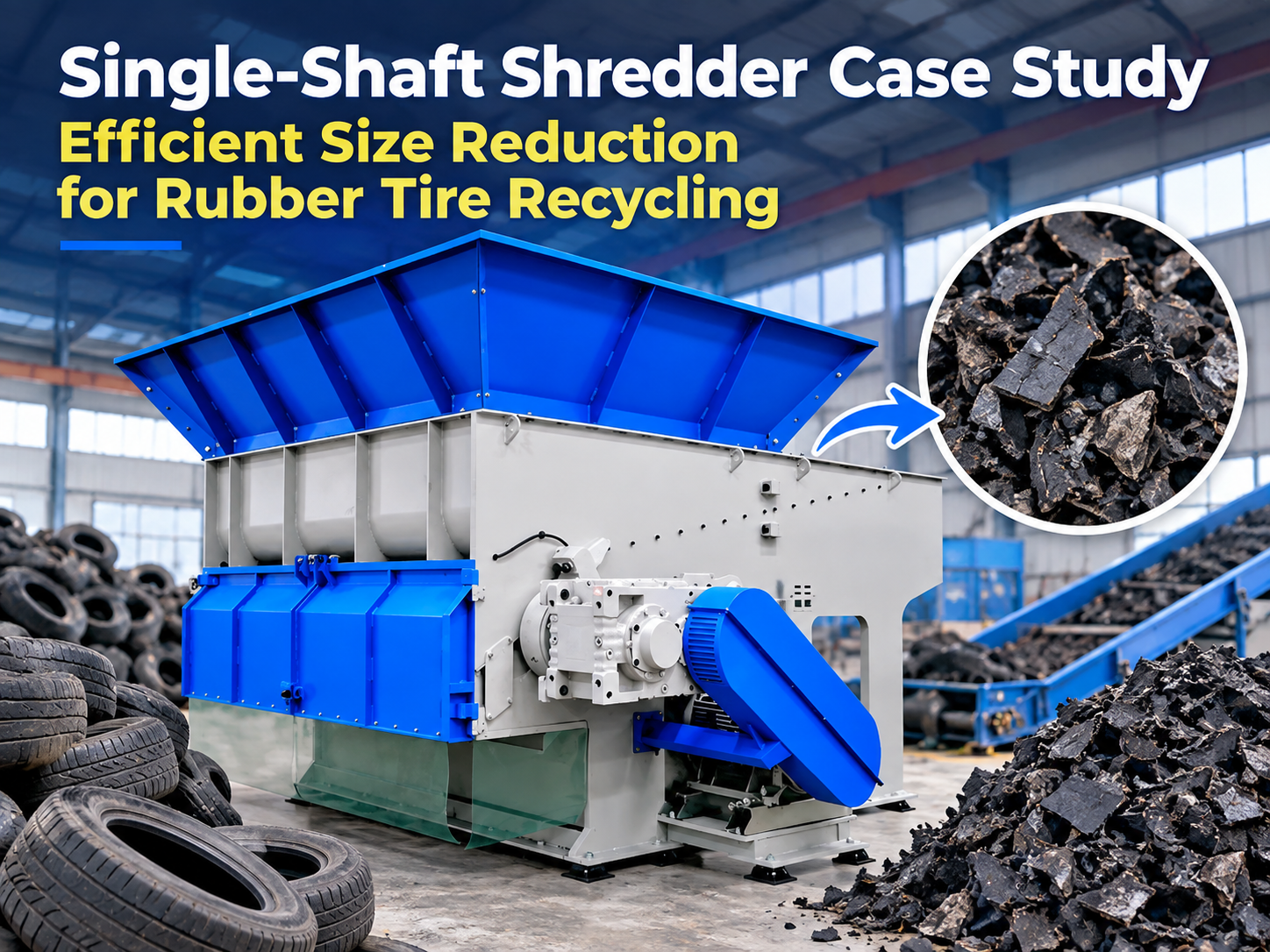
The global challenge of managing end-of-life tires (ELTs) has reached a critical juncture. With millions of tons of rubber waste generated annually, industries are under increasing pressure to implement sustainable recycling solutions. At the heart of this transformation lies the industrial shredder, a machine capable of turning bulky, non-biodegradable tires into valuable raw materials. This article presents a comprehensive Single-Shaft Shredder Case Study: Efficient Size Reduction for Rubber Tire Recycling, highlighting how HARSLE technology provides the precision and durability required for this demanding application.
Rubber tires are notoriously difficult to process due to their complex composition, which includes vulcanized rubber, steel belts, and synthetic fibers. Traditional crushing methods often fail to achieve the uniform particle size necessary for downstream processing, such as pyrolysis or crumb rubber production. By utilizing a high-torque single-shaft shredder, facilities can achieve consistent output while minimizing energy consumption and maintenance downtime.
In this case study, we examine a mid-sized recycling facility that transitioned from a multi-stage grinding process to a streamlined single-shaft shredding system. The results demonstrate significant improvements in throughput, energy efficiency, and material purity. As we delve into the technical specifications and operational strategies, it becomes clear why selecting the right machinery is the most important investment a recycling plant can make.
HARSLE has long been a leader in metal fabrication equipment, and our expertise in heavy-duty machinery design translates directly into the robust construction of our shredding units. By integrating advanced hydraulic systems and wear-resistant cutting tools, our shredders address the specific pain points of the rubber recycling industry. This guide serves as a roadmap for plant managers and engineers looking to optimize their size reduction workflows.
Key Considerations for Rubber Tire Recycling
When approaching rubber tire recycling, the primary objective is to achieve a clean separation of materials. Tires are not just rubber; they are composite structures. A successful shredding operation must account for the high-tensile steel wires embedded within the tire carcass. If the shredder is not designed to handle these metallic inclusions, the blades will dull rapidly, leading to frequent replacement cycles and increased operational costs.
Another critical consideration is the desired output size. Depending on the end-use—whether it is for rubberized asphalt, playground surfaces, or fuel-derived products—the shredder must be capable of producing a specific particle size distribution. This is often achieved through the use of interchangeable screen sizes. A high-quality single-shaft shredder allows for quick screen changes, ensuring that the facility can pivot between different product requirements without significant downtime.
Throughput capacity is the third pillar of efficient recycling. Many facilities underestimate the volume of tires they will process over a five-year period. It is essential to select a machine that not only meets current demand but also provides a buffer for future growth. HARSLE’s engineering team emphasizes the importance of ‘over-engineering’ the drive train to ensure that the machine can handle peak loads during high-volume shifts without overheating or stalling.
Finally, environmental and safety regulations play a major role in equipment selection. Modern shredders must be equipped with noise-reduction features and dust-suppression systems to comply with local industrial standards. Furthermore, the integration of automated feeding systems reduces the need for manual handling, significantly lowering the risk of workplace injuries. By prioritizing these factors, recycling facilities can create a safer, more productive environment.
Technical Details of HARSLE Shredding Systems
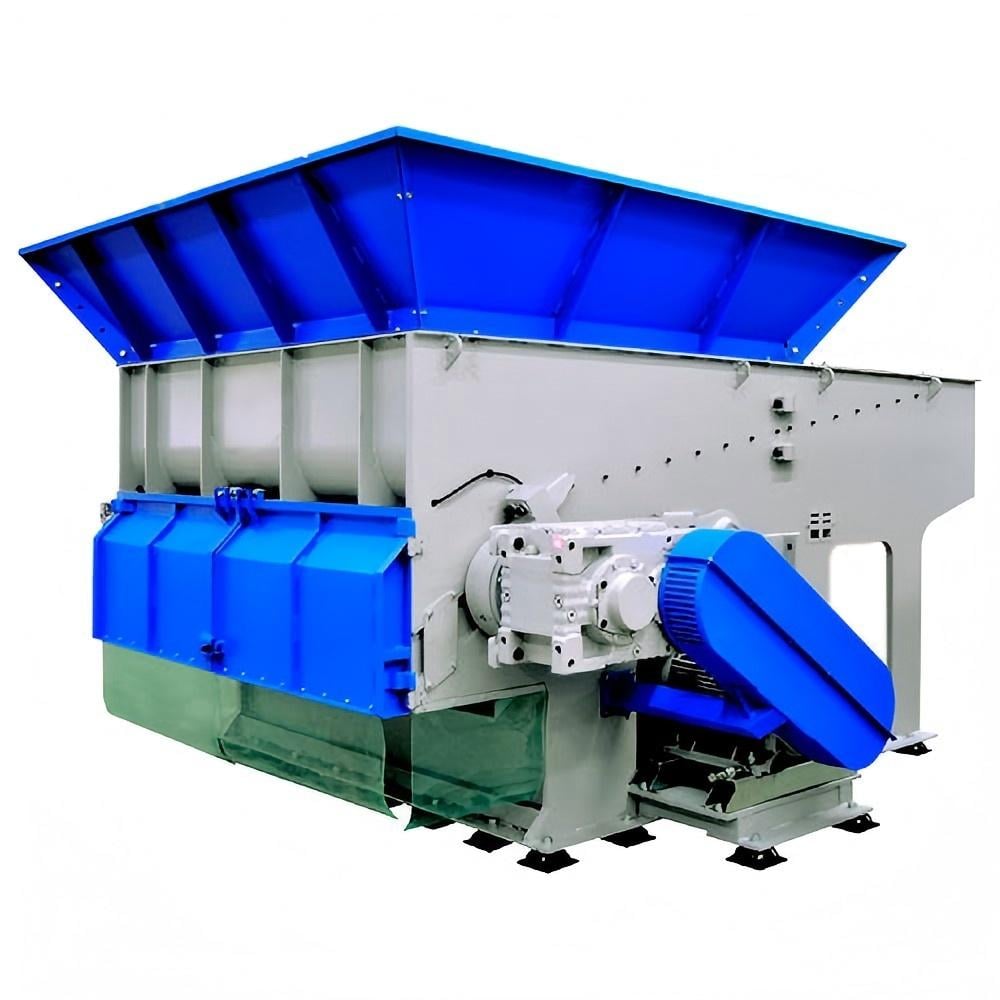
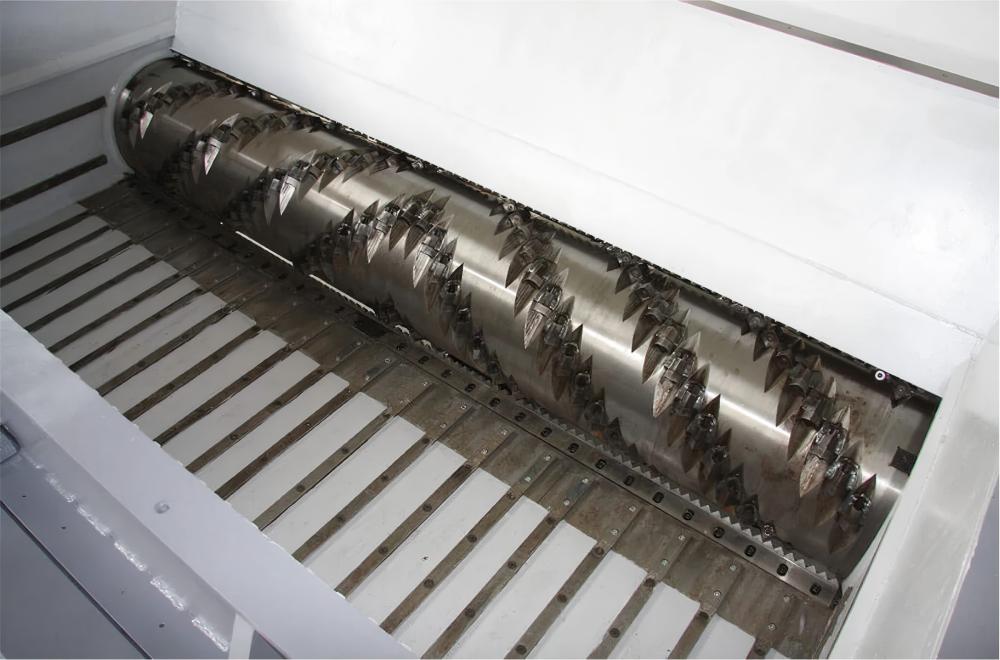
The HARSLE single-shaft shredder operates on a principle of high-torque, low-speed shearing. Unlike high-speed granulators that rely on impact, our shredders use a rotating shaft equipped with hardened steel cutters that work in conjunction with a stationary counter-knife. This design is specifically optimized for tough materials like rubber, as it provides the necessary force to slice through steel-reinforced tires without generating excessive heat.
The rotor design is the heart of the machine. HARSLE utilizes a proprietary alloy steel for the cutters, which is heat-treated to achieve the perfect balance between hardness and toughness. This ensures that the blades maintain their edge even when encountering the abrasive nature of tire rubber and the metallic resistance of steel belts. The rotor is driven by a high-efficiency motor coupled with a heavy-duty gearbox, providing the constant torque required to prevent jams during the shredding process.
Hydraulic ram systems are another critical technical feature. The ram pushes the tires toward the rotor at a controlled rate, ensuring that the shredder is always operating at its optimal capacity. This ‘smart-feed’ technology prevents the machine from being overloaded, which is a common cause of failure in inferior shredding equipment. The hydraulic system is fully adjustable, allowing operators to fine-tune the pressure based on the type of tire being processed—whether it is a passenger car tire or a heavy-duty truck tire.
Control systems in HARSLE shredders are designed for the modern industrial era. Equipped with PLC (Programmable Logic Controller) interfaces, operators can monitor real-time performance metrics, including motor load, temperature, and throughput rates. The system also features an auto-reverse function; if the shredder detects an un-shreddable object, the rotor automatically reverses to clear the jam, preventing damage to the internal components and reducing the need for manual intervention.
Selection Advice: Choosing the Right Equipment
Selecting the right single-shaft shredder is a strategic decision that impacts the long-term profitability of your recycling business. The first step is to conduct a thorough audit of your input material. Are you processing mostly passenger tires, or do you handle large OTR (Off-The-Road) tires? The size of the shredder chamber must be large enough to accommodate the largest tires you intend to process without requiring excessive pre-cutting.
Next, consider the integration of your shredder into the existing production line. A shredder is rarely a standalone unit; it is usually part of a larger system that includes conveyors, magnetic separators, and granulators. HARSLE offers modular design options, allowing our shredders to be easily integrated into existing workflows. We recommend working with our technical consultants to map out the material flow, ensuring that the shredder is positioned to maximize efficiency and minimize bottlenecks.
Maintenance accessibility is often overlooked during the buying process. You should look for machines that offer easy access to the rotor and screen assembly. HARSLE shredders are designed with maintenance in mind, featuring hydraulic opening mechanisms that allow technicians to inspect and replace blades quickly. This reduces the ‘Mean Time to Repair’ (MTTR), which is a vital metric for maintaining high uptime in a 24/7 recycling operation.
Finally, do not base your decision solely on the initial purchase price. The total cost of ownership (TCO) is a much more accurate reflection of value. Consider the energy efficiency of the motor, the durability of the wear parts, and the availability of spare parts and technical support. Investing in a high-quality machine from a reputable manufacturer like HARSLE ensures that you have access to the support and expertise needed to keep your operation running smoothly for years to come.
Frequently Asked Questions (FAQ)
1. How does a single-shaft shredder differ from a double-shaft shredder for tire recycling?
A single-shaft shredder uses a rotor and a screen to produce a uniform output size, making it ideal for secondary processing. Double-shaft shredders are generally used for primary shredding to reduce volume quickly but do not provide the same level of particle size control.
2. How often do the blades need to be replaced?
Blade life depends on the volume and type of material processed. However, HARSLE’s high-grade alloy cutters are designed for longevity. With proper maintenance and regular sharpening, they can handle thousands of tons of rubber before requiring replacement.
3. Can this machine handle the steel wires in tires?
Yes, our shredders are specifically engineered to process steel-belted tires. The high-torque design and robust cutting geometry are capable of shearing through both rubber and steel simultaneously.
4. What is the typical power consumption of a HARSLE shredder?
Power consumption varies based on the model and the material being processed. Our systems are designed with energy-efficient motors and variable frequency drives (VFDs) to optimize power usage based on the actual load, significantly reducing electricity costs.
5. Is the shredder noisy during operation?
While all industrial shredders generate noise, HARSLE incorporates sound-dampening materials and vibration-isolation mounts to keep noise levels within acceptable industrial standards. We also offer optional acoustic enclosures for indoor installations.
Conclusión
The Single-Shaft Shredder Case Study: Efficient Size Reduction for Rubber Tire Recycling demonstrates that success in the recycling industry is not just about having a machine; it is about having the right technology tailored to specific material challenges. By choosing a HARSLE single-shaft shredder, facilities gain a partner committed to durability, efficiency, and innovation. From the precision-engineered rotor to the intelligent PLC control systems, every aspect of our equipment is designed to turn the problem of tire waste into a profitable, sustainable solution.
As the demand for recycled rubber products continues to grow, the importance of reliable size reduction equipment cannot be overstated. Whether you are looking to upgrade your current facility or are planning a new recycling plant, HARSLE provides the expertise and the machinery to help you achieve your goals. We invite you to contact our technical team to discuss your specific requirements and see how our shredding solutions can transform your operations.
Investing in high-quality metal fabrication equipment is the foundation of a successful industrial enterprise. With HARSLE, you are not just buying a shredder; you are investing in a proven system that delivers consistent results, reduces operational overhead, and supports a circular economy. Let us help you take the next step in your recycling journey with confidence and precision.