
Four-Shaft Shredder Application Case Study In Large-Scale Manufacturing Scrap Recovery

Introduction to Advanced Scrap Recovery
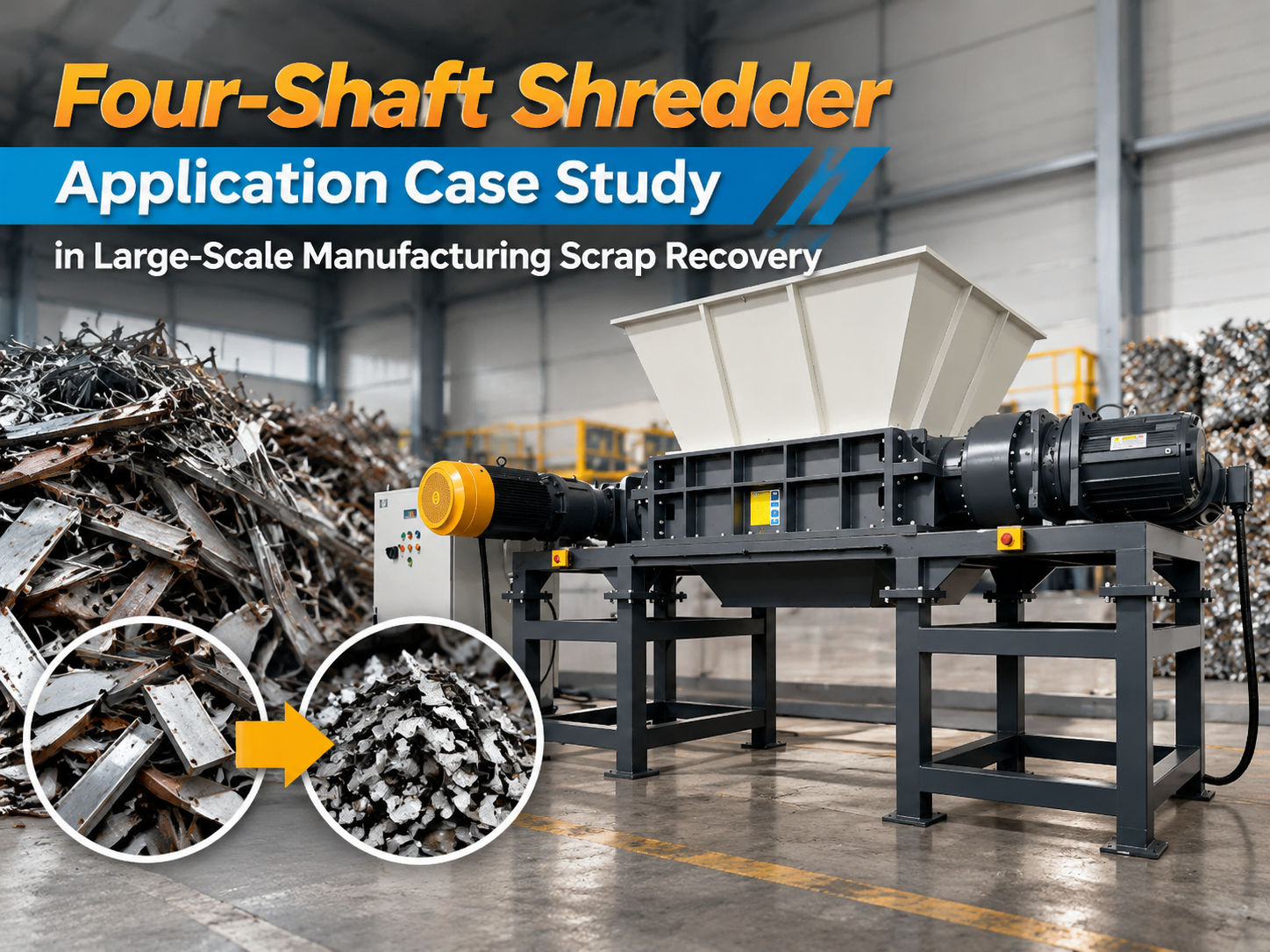
In the modern landscape of large-scale manufacturing, the efficient management of industrial waste is no longer just an environmental obligation; it is a critical component of operational profitability. As metal fabrication facilities produce vast quantities of scrap—ranging from heavy steel offcuts to complex composite materials—the need for high-performance size reduction equipment has become paramount. This article explores a comprehensive Four-Shaft Shredder Application Case Study In Large-Scale Manufacturing Scrap Recovery, highlighting how HARSLE technology transforms waste management into a streamlined, value-added process.
The four-shaft shredder represents the pinnacle of industrial size reduction technology. Unlike dual-shaft or single-shaft alternatives, the four-shaft configuration utilizes a unique interlocking blade system that provides superior torque and precise particle sizing. For large-scale manufacturers, this means the ability to process high-volume, high-density scrap with minimal downtime. By reducing bulky scrap into uniform, manageable pieces, manufacturers can significantly lower transportation costs and increase the market value of their recycled materials.
HARSLE has been at the forefront of engineering these robust systems, focusing on durability, throughput, and safety. This case study examines a specific implementation where a major automotive components manufacturer integrated a HARSLE four-shaft shredder into their production line. The objective was to handle a diverse stream of metallic and non-metallic manufacturing waste, ultimately achieving a closed-loop recycling system that reduced landfill reliance by over 85%.
Understanding the technical nuances of these machines is essential for any facility manager or procurement officer looking to optimize their scrap recovery. Throughout this article, we will delve into the mechanical advantages, the strategic selection process, and the long-term maintenance requirements that ensure these machines remain the backbone of your manufacturing facility. By analyzing real-world application data, we provide a blueprint for success in industrial waste recovery.
Key Considerations for Industrial Scrap Management
When evaluating the implementation of a Four-Shaft Shredder Application Case Study In Large-Scale Manufacturing Scrap Recovery, the primary consideration is the nature of the waste stream. Large-scale manufacturing facilities often deal with heterogeneous waste, meaning the shredder must be versatile enough to handle varying thicknesses, hardness levels, and material compositions. A one-size-fits-all approach rarely works in this environment; instead, the system must be configured with specific blade geometries and motor power ratings tailored to the facility’s output.
Another critical factor is the throughput requirement. In a high-volume manufacturing environment, the shredder must operate in sync with the production line. If the shredder becomes a bottleneck, the entire manufacturing process suffers. Therefore, capacity planning involves analyzing the peak scrap generation rates and ensuring the shredder’s hopper design and discharge mechanisms can handle the surge without clogging or overheating. HARSLE engineers emphasize the importance of automated feeding systems to maintain a consistent flow.
Space constraints and facility layout also play a significant role. Large-scale shredders are heavy, powerful machines that require reinforced flooring and adequate clearance for maintenance access. Integrating a shredder into an existing production floor requires careful planning regarding material handling conveyors, dust extraction systems, and noise mitigation. The goal is to create a seamless flow where scrap is moved from the point of generation to the shredder and then to storage or transport containers with minimal manual intervention.
Finally, the economic justification for the investment must be clear. This involves calculating the return on investment (ROI) based on reduced waste disposal fees, the increased value of shredded scrap metal, and the potential for internal material reuse. In our case study, the manufacturer saw a payback period of less than 18 months, driven largely by the ability to sell shredded scrap at a premium compared to unsorted, bulky waste. This financial clarity is essential for securing stakeholder buy-in for large-scale equipment upgrades.
Technical Details of Four-Shaft Shredder Systems
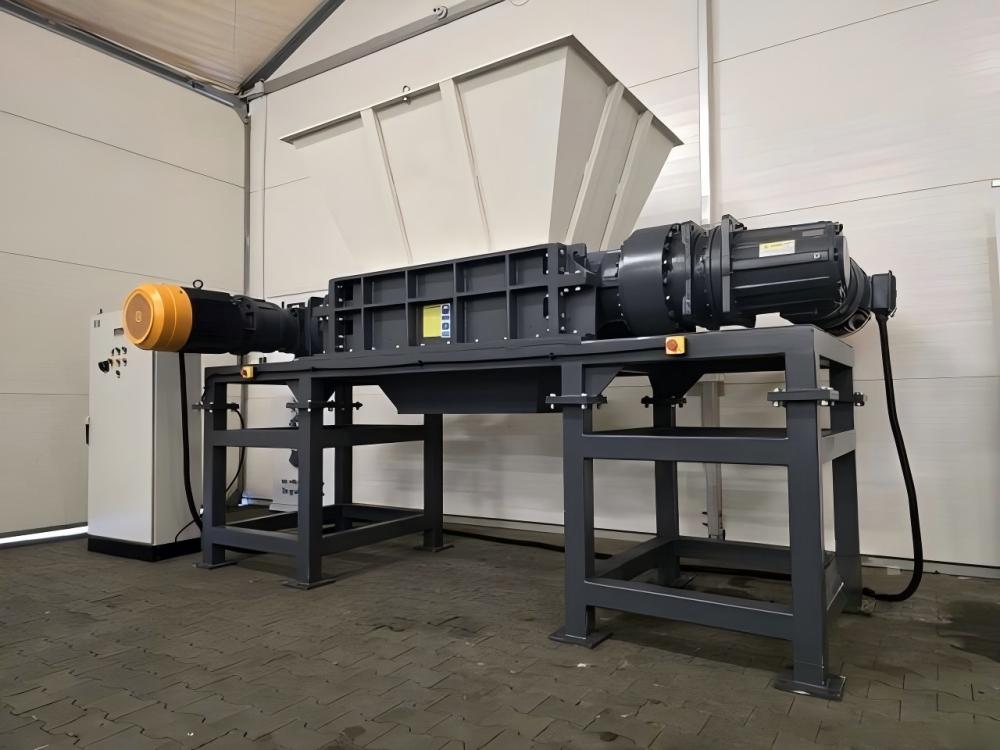
The core of the four-shaft shredder lies in its sophisticated mechanical design. Unlike simpler shredders, the four-shaft system employs two primary cutting shafts and two secondary sizing shafts. The primary shafts perform the initial heavy-duty tearing and shearing, while the secondary shafts act as a screen, ensuring that only material of a specific size passes through the discharge area. This dual-stage process results in a highly uniform output, which is crucial for downstream processing like smelting or briquetting.
HARSLE’s four-shaft shredders are equipped with high-torque, low-speed gearboxes. This design choice is intentional; high torque allows the machine to process dense, hardened steel and thick-walled components without stalling. The low speed minimizes heat generation and dust production, which are common issues in high-speed shredding technologies. Furthermore, the blades are typically manufactured from high-alloy, wear-resistant steel, ensuring a long service life even when processing abrasive materials.
Control systems are another area where technical sophistication is vital. Modern HARSLE shredders feature PLC-based control panels that monitor motor load, shaft speed, and temperature in real-time. If the system detects an overload—such as a piece of material that is too hard or too large—the PLC automatically triggers an auto-reverse function. This clears the jam without human intervention, preventing damage to the blades and reducing downtime. This level of automation is a hallmark of modern industrial machinery.
Maintenance accessibility is a key technical feature. The modular design of the cutting chamber allows for quick blade replacement. In a large-scale manufacturing environment, every hour of downtime is costly. HARSLE designs its shredders with easy-access panels and standardized components, allowing maintenance teams to perform routine inspections and blade swaps efficiently. This focus on maintainability ensures that the shredder remains a reliable asset throughout its operational lifespan.
Selection Advice for Large-Scale Manufacturers
Selecting the right four-shaft shredder requires a deep understanding of your specific material profile. Before making a purchase, conduct a thorough audit of your scrap. Are you primarily dealing with aluminum, steel, or mixed alloys? Are there non-metallic contaminants like plastic or rubber? These factors dictate the blade material, the gap between the blades, and the required motor power. HARSLE offers consultation services to help manufacturers analyze these variables and select the optimal configuration.
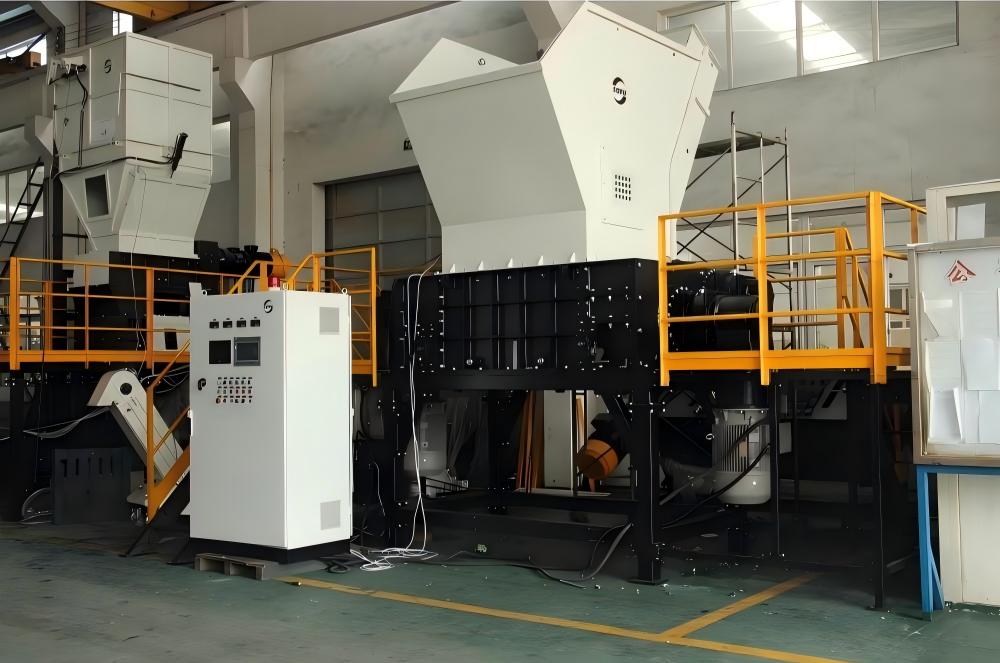
Consider the discharge requirements of your facility. Do you need the shredded material to be conveyed directly into a truck, a baler, or a storage bin? The discharge height and the type of conveyor system required are often overlooked during the initial planning phase. A well-integrated system should include magnetic separators to remove ferrous metals from non-ferrous streams, further increasing the value of your scrap. This level of customization is what separates a standard machine from a high-performance industrial solution.
Safety and compliance are non-negotiable. Ensure that the shredder meets all local and international safety standards, including emergency stop systems, safety interlocks on access doors, and noise reduction enclosures. Large-scale manufacturing environments are high-traffic areas, and the shredder must be designed to operate safely alongside personnel. HARSLE prioritizes these safety features, providing comprehensive documentation and training to ensure your team operates the equipment correctly.
Finally, look for a partner, not just a vendor. The long-term success of your Four-Shaft Shredder Application Case Study In Large-Scale Manufacturing Scrap Recovery depends on the support you receive after the sale. This includes access to spare parts, technical support, and periodic maintenance training. HARSLE’s commitment to customer service ensures that your equipment remains optimized for your changing production needs, providing a scalable solution that grows with your business.
Häufig gestellte Fragen (FAQ)
What makes a four-shaft shredder better than a dual-shaft shredder?
A four-shaft shredder provides superior particle size control. While a dual-shaft shredder is excellent for initial volume reduction, the additional two shafts in a four-shaft system act as a sizing screen, ensuring the output is uniform. This is critical for downstream processes like melting or automated sorting.
How often do the blades need to be sharpened or replaced?
The frequency depends on the material being shredded. Abrasive materials like hardened steel will wear blades faster than aluminum. However, HARSLE uses high-grade alloy steel, and with proper maintenance, blades can last for thousands of hours before requiring service.
Can a four-shaft shredder handle non-metallic materials?
Yes, four-shaft shredders are highly versatile and can process plastics, wood, rubber, and composite materials alongside metals. However, the system must be configured correctly for the specific material mix to prevent jamming.
What is the typical maintenance schedule for this equipment?
Routine maintenance includes daily checks of the lubrication system, weekly inspections of the cutting chamber for debris, and monthly checks of the drive components. HARSLE provides a detailed maintenance manual with every unit to guide your team.
How does the shredder impact the value of scrap metal?
Shredded scrap is significantly more valuable than bulky, unsorted scrap. It is easier to transport, takes up less storage space, and is ready for immediate processing by recyclers or smelters, allowing you to command a higher price per ton.
Fazit
The Four-Shaft Shredder Application Case Study In Large-Scale Manufacturing Scrap Recovery demonstrates that modern recycling is a strategic advantage. By investing in high-performance HARSLE machinery, manufacturers can transform their waste streams into revenue streams, improve operational efficiency, and meet sustainability goals. The combination of high-torque cutting, precise sizing, and robust automation makes the four-shaft shredder an indispensable tool for any large-scale facility.
As the manufacturing industry continues to evolve, the focus on circular economy principles will only intensify. Companies that adopt advanced scrap recovery technologies today will be better positioned to handle future regulatory requirements and resource scarcity. HARSLE remains committed to providing the innovative equipment and expert guidance necessary to navigate these challenges, ensuring that your manufacturing facility remains competitive, efficient, and environmentally responsible.
If you are ready to optimize your scrap recovery process, we invite you to reach out to our engineering team. Whether you are looking to replace an aging system or integrate a new shredder into a greenfield project, HARSLE has the expertise to deliver a solution that meets your specific needs. Let us help you turn your industrial waste into a valuable asset.












